If you're beginning to understand that healthy eating is truly about making smart choices, then you've arrived at the right place!
Medindia's interactive '
Vitamins and Minerals in Food Items' tool can assist you in calculating the precise quantity of vitamins and minerals in your diet.
Developed by Medindia Content Team |
Calculator reviewed by The Medindia Medical Review Team Last Updated on May 15, 2023
Why do we need vitamins and minerals? Our body needs a fresh supply of vitamins and minerals everyday to function properly and for normal growth and development. Vitamins and minerals obtained from a healthy diet work together and separately to maintain the health of tissue, organs, muscles, nerves, bones and blood. In addition, certain
vitamins are necessary to absorb certain minerals. For example Vitamin C helps in the absorption of iron needed to prevent anemia(
1✔) and
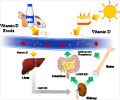
Vitamin D is needed to absorb calcium, essential for strong bones and teeth(
2✔).
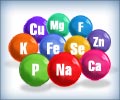
Why do our body need minerals? Minerals help in forming bones, making hormones and regulating the heartbeat. Some
minerals like calcium, phosphorus, and magnesium are needed in large amounts and they are termed as
macrominerals(3✔). On the contrary,
trace elements like chromium, copper, selenium, iron and zinc are very essential, but needed only in small quantities every day.
Interesting Facts about Vitamins and Minerals:
| ❖ | Vitamins can be fat-soluble or water-soluble. Fat-soluble vitamins such as vitamins A, D, E, and K dissolve in fat and are stored in the body. Water-soluble vitamins like the B vitamins (B1, B2, B6, B12) and Vitamin C that dissolve in water, cannot be stored by the body for long, pass through the kidneys and lost in urine(4✔). Except vitamin B12, which is stored in the liver, water soluble vitamins should be taken daily. |
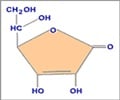
| ❖ | Vitamin E and vitamin C act as an antioxidant that help prevent cell damage caused by the action of free radicals(5✔). |
| ❖ | Vitamin B12 plays a major role in forming red blood cells, synthesizing DNA and proper functioning of neurological system. Deficiency of vitamin B12 may lead to megaloblastic anemia, fatigue, weakness, constipation, loss of appetite and weight loss. It can even cause numbness and tingling in the hands and feet(6✔). |
| ❖ | Vitamin C requirement is increased by 35 mg for smokers and those who are exposed to second hand smoke(7✔). |
| ❖ | Only 1% of the total body calcium is needed for the metabolic functions while remaining 99% is utilized to provide strength and structure for bones and teeth(8✔). |
| ...Read more |
 MEDINDIA
 English
 हिन्दी
 Español
 français
 中文
中文
 Email
Email























Nice to see these information here. Why do we check which mineral is in which food. Just take one NUTRILITE Daily, which will give you 13 Vitamin and 11 Minerals. Check out NUTRILITE Daily.