 MEDINDIA
 English
 हिन्दी
 Español
 français
 中文
中文
 Email
Email
- Personality Disorder - (https://www.ncbi.nlm.nih.gov/books/NBK556058/)
- IPDE - (https://iris.who.int/bitstream/handle/10665/41912/9780521041669.pdf?sequence=1)
- Reliability of the ICD-10 International Personality Disorder Examination (Urdu Translation): A preliminary study - (https://pmc.ncbi.nlm.nih.gov/articles/PMC4320733/#B1)
- Personality disorders - (https://www.mayoclinic.org/diseases-conditions/personality-disorders/symptoms-causes/syc-20354463)
- What are Personality Disorders? - (https://www.psychiatry.org/patients-families/personality-disorders/what-are-personality-disorders )
- Personality Tests - (https://www.opm.gov/policy-data-oversight/assessment-and-selection/other-assessment-methods/personality-tests)
- Personality disorders - (https://www.nhs.uk/mental-health/conditions/personality-disorder)
- Expert Q&A: Personality Disorders - (https://www.psychiatry.org/patients-families/personality-disorders/expert-q-and-a)
- Borderline Personality Disorder - (https://www.ncbi.nlm.nih.gov/books/NBK430883/ )
- Obsessive Compulsive Personality Disorder (OCPD) - (https://www.ocduk.org/related-disorders/obsessive-compulsive-personality-disorder)
- Dissociative Identity Disorder - (https://www.ncbi.nlm.nih.gov/books/NBK568768/)
Are you concerned that you or someone you know may be showing signs of a personality disorder? This free online Personality Disorder Screening Test is a quick, self-assessment tool designed to help you recognize possible warning signs.
This quiz is simple and designed to increase self-awareness and guide you toward medical professional support if needed
Time Required: 5–10 minutes to complete.
Answers: Read each statement carefully, choose the option that best describes how often you experience the thought, feeling, or behaviour. Answer honestly — there are no right or wrong answers.
Disclaimer: Please remember: this test is not a diagnosis . Only a licensed mental health professional can confirm if you have a personality disorder.
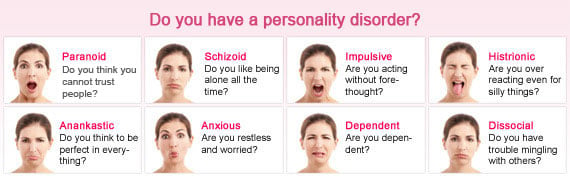
Signs and Symptoms of Personality Disorders
Common indicators that may suggest a personality disorder include:- Persistent difficulty in forming or maintaining relationships
- Extreme mood swings or emotional instability
- Impulsive or risky behavior
- Distorted self-image or sense of identity
- Intense fear of abandonment or rejection
- Lack of empathy or disregard for others
What is a Personality Disorder?
The Diagnostic and Statistical Manual of Mental Disorders (DSM-5), defines a personality disorder as a long-standing and inflexible pattern of behavior, thoughts, and emotions that significantly cause distress or impair daily functioning (1✔).
If you've ever wondered, "Do I have a personality disorder?" or asked yourself, "Which personality disorder do I have?", our personality disorder test which uses a validated formula can help guide you toward understanding your mental health condition.It ensures accuracy in assessing the presence and severity of potential personality disorder traits You can also take Quiz on personality disorders to learn more about the traits linked to it (2✔,3✔).
Types of Personality Disorders
In the DSM-5, personality disorders are categorized into ten specific types, grouped under three clusters based on shared traits. These are:
Cluster A Personality Disorders
- Paranoid Personality Disorder: Distrust and suspicion of others.
- Schizoid Personality Disorder: Detachment from social relationships and limited emotional expression.
- Schizotypal Personality Disorder: Eccentric behavior and discomfort in close relationships.
Cluster B Personality Disorders
- Borderline Personality Disorder : Intense emotions, fear of abandonment, and unstable relationships.
- Narcissistic Personality Disorder : Grandiosity, need for admiration, and lack of empathy.
- Antisocial Personality Disorder: Disregard for others’ rights and social norms.
- Histrionic Personality Disorder: Excessive emotionality and attention-seeking behaviors.
Cluster C Personality Disorders
- Avoidant Personality Disorder: Extreme shyness, fear of rejection, and sensitivity to criticism.
- Dependent Personality Disorder: Excessive reliance on others for decision-making and support.
- Obsessive-Compulsive Personality Disorder (OCPD): Preoccupation with order, perfectionism, and control.
Causes of Personality Disorder
Personality disorders are thought to result from a mix of genetics and life experiences. Genetic factors can make someone more prone to developing a personality disorder, while life events may trigger it.
While the exact causes are unclear, certain factors increase the risk:
- Personality traits, like avoiding harm or seeking risky, adrenaline -filled activities, and poor impulse control.
- Early life experiences, such as an unstable, unsupportive home environment or a history of trauma, including abuse (4✔)
Treatment and Management of Personality Disorders
Effective treatment for personality disorders often involves psychotherapy , where individuals gain insights into their condition, understand their behaviors, and learn coping strategies. The type of therapy used depends on the specific disorder and its severity.
Common Treatment Options:
- Psychotherapy: Includes psychoanalytic/psychodynamic therapy, dialectical behavior therapy (DBT), cognitive behavioral therapy (CBT), and group therapy.
- Psychoeducation: Educating individuals and their families about the diagnosis, treatment, and coping methods.
- Medication: While no medication directly treats personality disorders, antidepressants , anti-anxiety meds, or mood stabilizers may help manage symptoms like anxiety or
depression .
Management Approaches:
- Individual therapy (long-term or brief)
- Family or couples therapy
- Group therapy
- Self-help groups and milieu therapy (a structured group-based residential care approach)
- Mindfulness techniques to manage emotions
- Psychiatric medications for co-occurring conditions
Response to Treatments:
- Cluster A disorders: Schizotypal personality may improve with antipsychotic medication; psychotherapy is usually not very effective.
- Cluster B disorders: Medications like antidepressants and mood stabilizers may help, especially for borderline personality disorder; psychotherapy responses vary.
- Cluster C disorders: Psychotherapy is the most common treatment; responses to medications vary, but they can help with comorbid anxiety and depression.
In addition to professional treatment, adopting self-care strategies can also help manage symptoms and improve quality of life (5✔).
FAQs
1. Is this test accurate?
This test is based on commonly used screening principles but should be considered only as an initial self-assessment, not a substitute for diagnosis.2. Can I diagnose myself with this test?
To be sure you require to consult a licensed psychiatrist or psychologist can provide a diagnosis.3. What should I do if my score is high?
Seek guidance from a mental health professional. Early support can make treatment more effective (6✔).4. Why Take a Personality Disorder Test?
If you're unsure whether you might have a personality disorder, using a personality disorders test or personality disorder screening can provide valuable initial feedback.5. Are personality disorders treatable?
Personality disorders can be treated, but they are typically not "completely" cured. Treatment can help manage symptoms and improve functioning, allowing individuals to lead more fulfilling lives. Psychotherapy, especially approaches like dialectical behavior therapy (DBT) and cognitive behavioral therapy (CBT), is often effective in helping people understand and modify their behaviors, thoughts, and emotions (7✔).6. Can I have from more than one personality disorder?
Yes, it is possible to have more than one personality disorder. This is known as comorbid personality disorders. Individuals can experience traits of multiple personality disorders simultaneously. For example, someone may have Borderline Personality Disorder (BPD) and Narcissistic Personality Disorder (NPD) at the same time. The treatment approach may vary depending on the specific disorders involved, and a mental health professional will typically assess the individual to create a personalized treatment plan.If you have concerns about your mental health, seek professional help to better understand and manage your condition (8✔).








Is there any free therapist I can talk to about this?