MEDINDIA
 English
 हिन्दी
 Español
 français
 中文
中文
 Email
Email
- Travel vaccines throughout history - (https://pubmed.ncbi.nlm.nih.gov/35167951/)
- Travel vaccination - (https://pubmed.ncbi.nlm.nih.gov/17492062/)
- Alan M Spira - (https://www.doximity.com/pub/alan-spira-md)
- Air transport, passengers carried - (https://data.worldbank.org/indicator/IS.AIR.PSGR)
- Which vaccinations for which travel-destination? - (https://pubmed.ncbi.nlm.nih.gov/27268450/)
- Pharmacy travel health services: current perspectives and future prospects - (https://www.ncbi.nlm.nih.gov/pmc/articles/PMC5919161/ )
- Need travel vaccines? Plan ahead. - (https://wwwnc.cdc.gov/travel/page/travel-vaccines)
- INTERNATIONAL TRAVEL AND HEALTH – 01 JULY 2020 - (https://www.who.int/docs/default-source/documents/emergencies/travel-advice/yellow-fever-vaccination-requirements-country-list-2020-en.pdf )
- Preventing and Managing Adverse Reactions - (https://www.cdc.gov/vaccines/hcp/acip-recs/general-recs/adverse-reactions.html )
- Pack Smart - (https://wwwnc.cdc.gov/travel/page/pack-smart )
Planning an international trip-whether for business or pleasure? Use our Travel Vaccination Calculator to find out which vaccines are recommended or required for your destination.
Covering 279 regions (194 countries and 85 territories), this free tool helps ensure you comply with current health regulations and travel safely.
Some countries may require mandatory vaccination certificates-especially if you're arriving from a region with a high risk of infectious diseases (e.g., Yellow Fever, COVID-19)(1✔).
Even if not required, vaccinations are strongly recommended to protect your health and prevent disease transmission while abroad(2✔).
As travel medicine expert Alan Spira wisely said:
*“We cannot make travellers bullet-proof, but we can make them bullet-resistant.”*(3✔)
Stay protected. Plan ahead. Use our travel vaccination calculator before your next trip!
![How to Exercise on a Plane]()
Please Note
Research the necessary vaccinations and drugs to pack in advance to protect yourself. Pregnant women, nursing mothers, those with known vaccination sensitivities, and travellers all need to see a doctor or visit a travel clinic at least four weeks before their trip.
Covering 279 regions (194 countries and 85 territories), this free tool helps ensure you comply with current health regulations and travel safely.
Some countries may require mandatory vaccination certificates-especially if you're arriving from a region with a high risk of infectious diseases (e.g., Yellow Fever, COVID-19)(1✔).
Even if not required, vaccinations are strongly recommended to protect your health and prevent disease transmission while abroad(2✔).
As travel medicine expert Alan Spira wisely said:
*“We cannot make travellers bullet-proof, but we can make them bullet-resistant.”*(3✔)
Stay protected. Plan ahead. Use our travel vaccination calculator before your next trip!

Types of Travel Vaccines:
The idea of pre-travel visit is to minimise health risks specific to the journey. Understand various vaccine requirements-Required Vaccinations
- Vaccinations required for entry into certain countriesRecommended Vaccinations
- Vaccinations that are recommended before travel to particular countries or areas depending upon the risk of diseasesRoutine Vaccinations
- Basic vaccinations used in most national routine programPlease Note
Research the necessary vaccinations and drugs to pack in advance to protect yourself. Pregnant women, nursing mothers, those with known vaccination sensitivities, and travellers all need to see a doctor or visit a travel clinic at least four weeks before their trip.
Travel Vaccination - Must Know Facts
- Global air travel is on the increase. The current projection of global passenger volume in 2023 is approximately 8.6 billion passengers, which is 94.2% of the 2019 level.(4✔).
- Travel vaccination is mandatory where a journey involves destinations with known risk of exposure to vector-borne ( like mosquitoes) and enteric diseases ( like Typhoid and Cholera)(2✔).
- Some vaccines require multiple doses to induce long-lasting protective immunity, and some will only induce protective immunity for a limited period of time
- Travel vaccination will depend on various factors including the exact destination ( developing countries or rural areas), planned activities (backpacker, family visit, business trip), duration of travel, season, age of the traveller and current health status including the current medication and previous vaccinations(5✔).
- Additional vaccinations against hepatitis A and B, typhoid fever, poliomyelitis, rabies or Japanese encephalitis may be recommended depending on your risks(2✔).
- You may be advised to have booster vaccination if you had childhood vaccination Tropical countries are known for vector.
- Typhoid, Cholera and Hepatitis A risk is higher can occur from consuming contaminated food and water or where personal hygiene and sanitation is poor.
- Malaria is prevalent in tropical countries but there is no vaccine against it. However, tablets are advised for prophylaxis.
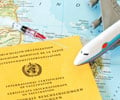
- Visit approved vaccination centre to get the international certificate of vaccination (or a letter of exemption when appropriate)
- International certificate of vaccination may be required when re-entering a country from another country where yellow fever is endemic(5✔).
FAQs
1. How can I find out which vaccines are required for my destination?
You can use tools like the travel vaccination calculator provided by Medindia, which lists the required and recommended vaccinations for 279 regions based on your origin and destination.
2. What is travel medicine?
Travel medicine is a specialized field of healthcare focused on preventing and managing health risks associated with travel. It involves providing travelers with advice, vaccinations, medications, and other preventive measures to protect them from illnesses that they may encounter while traveling, especially to regions with specific health risks. The goal is to ensure a safe and healthy journey (6✔).
3. What is the importance of travel vaccinations?
Travel vaccinations are crucial for protecting yourself against diseases that may be prevalent in your travel destination. They also help prevent the spread of diseases to other regions, especially upon returning home.
4. When should I start planning my travel vaccinations?
It's recommended to start planning your travel vaccinations at least 4 weeks before your trip. This allows enough time for the vaccines to take effect and for any necessary follow-up doses (7✔).
5. Are there any mandatory vaccines required for international travel?
Yes, certain countries require mandatory vaccines for entry, such as the Yellow Fever vaccine for countries where the disease is endemic like areas in Africa or South America . Other vaccines may also be required depending on your travel destination (8✔).
6. What is the difference between required and recommended vaccinations?
Required vaccinations are mandatory for entry into certain countries, while recommended vaccinations are advised based on the specific health risks associated with your travel destination, even though they may not be mandatory.
7. What should I do if I have a known allergy to a vaccine?
If you have a known allergy to any vaccine, you should consult your healthcare provider before traveling. They may recommend alternative preventive measures or provide an exemption certificate if necessary (9✔).
8. Are there side effects to travel vaccinations?
Yes, some travel vaccinations may cause mild side effects such as fever, soreness at the injection site, dizziness, or headaches. Severe side effects are rare, but you should consult a healthcare provider if you experience any unusual symptoms.
9. What should I pack in my medical kit when traveling?
In addition to any prescribed medications, consider packing basic over-the-counter medicines, insect repellent, hand sanitizer, and any specific preventive medications like malaria tablets, depending on your destination (10✔).
10. What should I do if I lose my vaccination certificate while traveling?
If you lose your vaccination certificate, contact the clinic or healthcare provider where you received your vaccinations. They should be able to provide a replacement or a letter confirming your vaccination status. One extra tip is to have a scanned copy of the certificates in your mobile phones for ease of retrieval.