MEDINDIA
 English
 हिन्दी
 Español
 français
 中文
中文
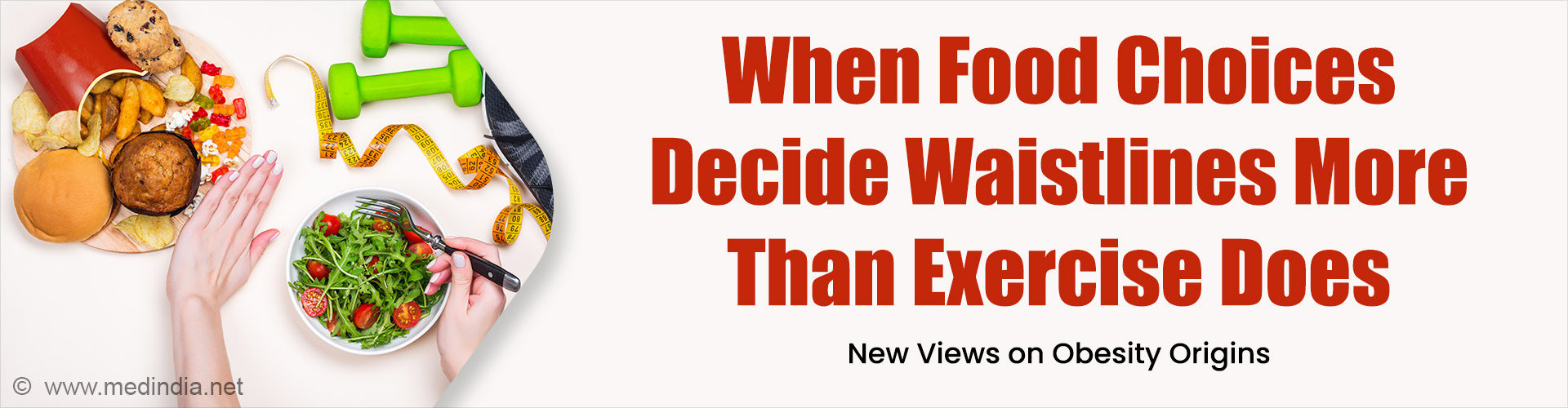
Obesity rates increase primarily due to diet changes in wealthier nations, with caloric intake outweighing declines in physical activity.
Highlights:
Obesity increases in economically prosperous nations are chiefly linked to greater food consumption, not a reduction in physical activity. Evidence indicates that individuals in affluent societies use as much or even more energy each day (1✔ ✔Trusted Source- Higher calorie intake is the major contributor to obesity in wealthy countries
- People in developed economies use as much or more daily energy as those in less developed societies
- Shifting focus to diet is crucial for addressing the global obesity crisis
Energy expenditure and obesity across the economic spectrum
Go to source). A recent publication in the journal Proceedings of the National Academy of Sciences details findings from an analysis conducted by the Pontzer Lab in Duke University's Department of Evolutionary Anthropology (Trinity College of Arts & Sciences).
Ideal Body Weight
Calculate the ideal body weight for adults easily with Medindia’s Ideal Body Weight Calculator.
Calculate the ideal body weight for adults easily with Medindia’s Ideal Body Weight Calculator.
TOP INSIGHT

Did You Know?
Despite staying active, people in wealthy nations #gainweight mainly because of #overeating.
#calories #obesity #developed_nations #medindia
Diet Vs Activity: Shifting the Focus
Attempts to clarify the causes of the obesity crisis have long left public health policymakers uncertain about the roles of nutrition and physical activity. This extensive, multi-country collaboration provides a direct comparison between these factors. Herman Pontzer, head of the Pontzer Lab and professor in the Department of Evolutionary Anthropology, states that changing diets, not reduced movement, are the predominant reason for obesity in the United States and other developed regions.The team compared thousands of adult measurements, including energy expenditure, body fat percentage, and body mass index, among diverse populations aged 18 to 60. Their research encompassed 4,200 individuals representing hunter-gatherers, pastoralists, agriculturalists, and industrialized communities across six continents.

Daily Calorie Requirements
Are you health conscious? If yes, go ahead to find out your approximate daily calorie requirement, which varies depending on the lifestyle and activities. This calculator indicates an approximate calorie requirement for a person having a normal ...
Are you health conscious? If yes, go ahead to find out your approximate daily calorie requirement, which varies depending on the lifestyle and activities. This calculator indicates an approximate calorie requirement for a person having a normal ...
Body Fat, Industrialization, and Dietary Shifts
Amanda McGrosky, a key contributor now at Elon University, explains that only a minimal drop in total, size-adjusted energy output accompanies economic advancement. However, these small energy differences do not account for the entire rise in body fat observed with development. This outcome suggests increases in body fat are more strongly tied to changes in eating habits.
Quiz on Obesity
“We are indeed much more than what we eat, but what we eat can nevertheless help us to be much more than what we are”. - Adelle Davis There are thousands out there battling ‘the bulge’. With childhood obesity on the rise ...
“We are indeed much more than what we eat, but what we eat can nevertheless help us to be much more than what we are”. - Adelle Davis There are thousands out there battling ‘the bulge’. With childhood obesity on the rise ...
Rather, the findings promote a growing consensus that both healthy diet and regular exercise matter, each supporting rather than replacing the other. Ongoing work will aim to identify which specific dietary patterns in developed nations most contribute to the obesity epidemic.
Reference:
- Energy expenditure and obesity across the economic spectrum - (https://www.pnas.org/doi/10.1073/pnas.2420902122)
Source-Medindia
 Email
Email