MEDINDIA
 English
 हिन्दी
 Español
 français
 中文
中文
 Email
Email
- Global, regional, and national prevalence of adult overweight and obesity, 1990-2021, with forecasts to 2050: a forecasting study for the Global Burden of Disease Study 2021 - (https://pubmed.ncbi.nlm.nih.gov/40049186/)
- Abdominal obesity in India: analysis of the National Family Health Survey-5 (2019-2021) data - (https://pubmed.ncbi.nlm.nih.gov/37492420/)
- Insulin Resistance and Body Fat Distribution in South Asian Men Compared to Caucasian Men - (https://journals.plos.org/plosone/article?id=10.1371/journal.pone.0000812)
- Effectiveness of Semaglutide and Tirzepatide in Overweight and Obese Adults with Type 1 Diabetes - (https://pubmed.ncbi.nlm.nih.gov/39745353/)
About
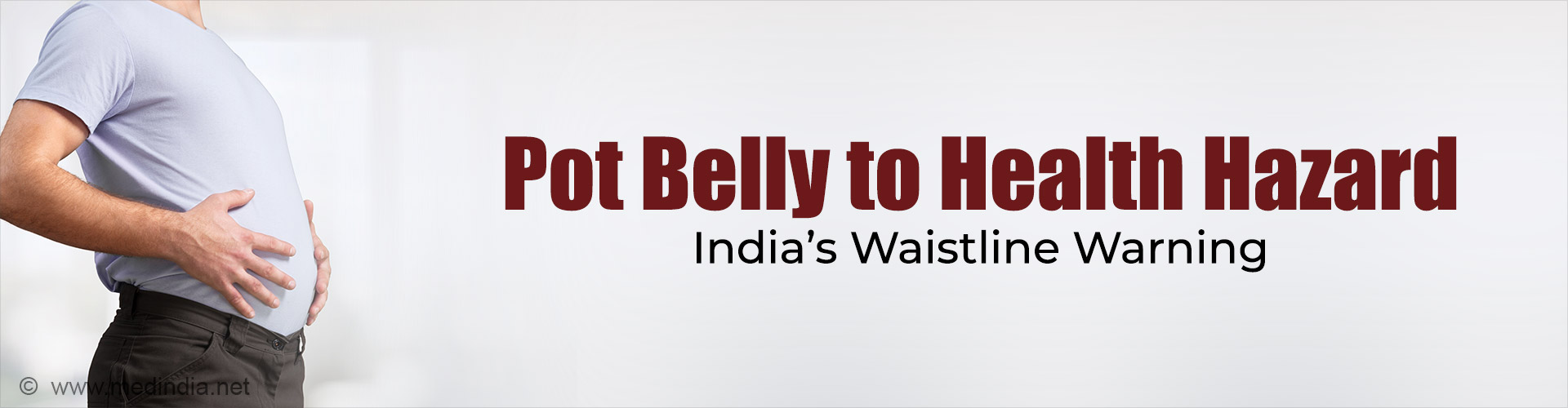
Once seen as a humorous badge of indulgence and prosperity, the Indian pot belly has undergone a dramatic transformation in the national narrative. From being a common trope in films and literature- used to poke fun at lazy government officials, corrupt cops, or gluttonous uncles- it has now become a worrying symbol of a looming public health crisis. The soft curve that once reflected "well-fed comfort" is now a red flag in the fight against obesity, diabetes, and heart disease.
A recent study published in The Lancet paints a grim picture of India’s future. By 2050, nearly 450 million Indians are projected to be overweight or obese- more than double the figure recorded in 2021(1✔ ✔Trusted Source
Global, regional, and national prevalence of adult overweight and obesity, 1990-2021, with forecasts to 2050: a forecasting study for the Global Burden of Disease Study 2021
Go to source). While obesity is a global issue, the Indian experience is shaped quite literally by a different curve: abdominal obesity, also known as central obesity.
Did You Know?
South Asians need 100-150 minutes more exercise per week than Westerners to stay metabolically healthy! #waistnotwantnot #potbelly #obesitycrisis #medindia





What is Abdominal Obesity?
Unlike generalized obesity, which is a more even spread of fat throughout the body, or peripheral obesity which adds mass to the hips and thighs, abdominal obesity or central obesity is defined by fat accumulation around the waist. This form of fat is particularly harmful because it is often associated with metabolic disturbances such as insulin resistance, Type 2 diabetes, and cardiovascular diseases.
Clinically, a pot belly is diagnosed when the waist circumference exceeds 90 cm (35 inches) for men and 80 cm (31 inches) for women. Data from India’s National Family Health Survey (NFHS-5) revealed that 40% of women and 12% of men in the country fall into this category(2✔ ✔Trusted Source
Abdominal obesity in India: analysis of the National Family Health Survey-5 (2019-2021) data
Go to source). The numbers are especially high among urban populations, with middle-aged women (30–49 years) being particularly vulnerable.
Causes of Abdominal Obesity
One of the biological drivers of this crisis lies in how South Asians, including Indians, store fat. Research shows that compared to white Caucasians with the same Body Mass Index (BMI), South Asians tend to accumulate more fat in the abdominal region, often subcutaneously and not always as deep visceral fat(3✔ ✔Trusted Source
Insulin Resistance and Body Fat Distribution in South Asian Men Compared to Caucasian Men
Go to source). This distribution makes them more susceptible to health complications even at what might be considered a ‘normal’ weight by Western standards.
There is a theory that links this tendency to historical patterns of famine and food insecurity. It suggests that over generations, Indian bodies adapted to store fat more efficiently as a survival mechanism. While this adaptation may have been beneficial during times of scarcity, it has turned into a liability in the era of abundance, processed foods, and sedentary lifestyles.
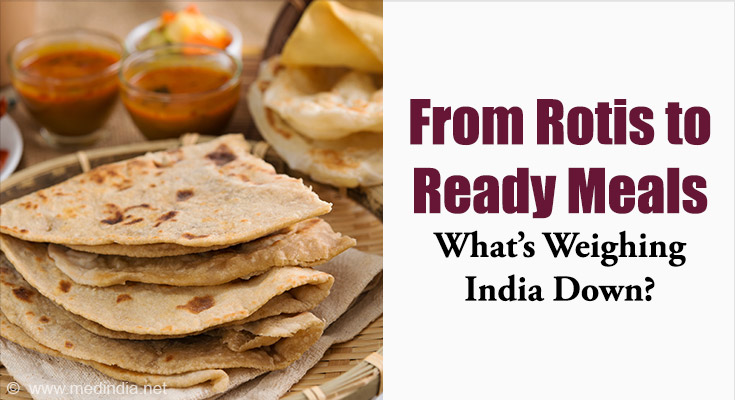
Modern Indian diets have rapidly shifted from traditional home-cooked meals to an increasing intake of ultra-processed foods, sugary beverages, and high-fat convenience foods. Between 2009 and 2019, India saw one of the steepest increases in the sale of ultra-processed foods. Add to that the decline in physical activity- particularly in urban settings- and it becomes clear why abdominal obesity is surging.
Compounding the issue is the fact that South Asians require more exercise than their Western counterparts to maintain metabolic health. While 150 minutes of moderate exercise per week may suffice for a European, South Asians may need at least 250–300 minutes to see comparable benefits.
New Clinical Guidelines to Tackle India's Obesity Crisis
Recognizing the complexity of the obesity crisis, the Indian Obesity Commission in 2023 introduced new clinical guidelines. These move beyond the outdated reliance on BMI and now use a two-stage system based on fat distribution and the presence of related health risks. Stage one includes individuals with high BMI but no metabolic conditions, where lifestyle interventions like diet and exercise can be effective. Stage two signals more danger, with abdominal fat accompanied by comorbidities like diabetes, sleep apnea, or joint issues- requiring more aggressive intervention including medication or surgery.
New medications like semaglutide and tirzepatide are showing promise in reducing abdominal fat by influencing appetite and improving insulin sensitivity(4✔ ✔Trusted Source
Effectiveness of Semaglutide and Tirzepatide in Overweight and Obese Adults with Type 1 Diabetes
Go to source). However, experts caution that no drug can replace the foundational pillars of health- balanced nutrition and regular physical activity.
What’s particularly concerning is that even individuals with normal weight can harbor dangerous levels of abdominal fat, a condition sometimes called "TOFI" (Thin Outside, Fat Inside). This silent threat often goes unnoticed until serious health issues arise.
India is now grappling with a double burden: while it continues to fight undernutrition in some parts of the population, overnutrition is quietly taking a toll on millions of others. The symbolism of the pot belly has shifted. No longer a sign of comfort, it’s now a clear marker of elevated health risks. The message is urgent- our waistlines may well be the window to our well-being. And to reverse this trend, we must act before a once-humorous symbol becomes a national health emergency.