About
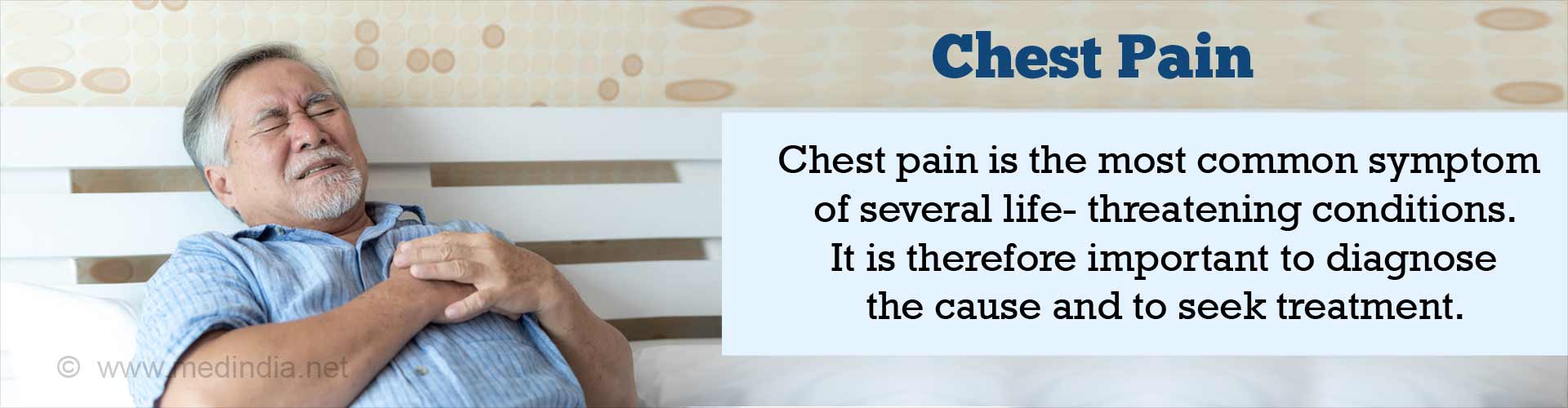
Chest pain is the most common symptom of several life-threatening conditions. It is therefore important to diagnose the cause and to seek treatment.(1✔ ✔Trusted Source
Chest Pain or Discomfort
Go to source)
Other Names: Chest Tightness, Chest pressure, Chest Discomfort
Chest pain to many is synonymous with a heart attack!
In reality it is a non- specific term used to describe pain, pressure, choking, constriction, squeezing or any feeling of discomfort in the chest region. It is often associated with pain in the arm, jaw or head.
Chest pain is a symptom that prompts an individual to seek emergency medical help. It may be due to a trivial problem or alternatively, due to a grave condition and not a diagnosis by itself. Therefore it becomes important to diagnose the cause (s) of the pain and to evaluate it as quickly as possible.
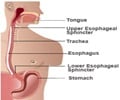
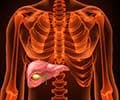
Other causes of chest pain can be evaluated electively, such as spasm of the esophagus, tearing of the aorta, gallbladder attack or inflammation of the chest wall.
Chest pain may occur at frequent intervals or it may occur rarely. It may be sporadic in some cases, while predictable in others.
Chest pain in men primarily occurs due to stress at work or due to stressful life situations.
Chest pain in women could be due to anxiety, depression or stress-related factors.
Earlier, bouts of chest pains in women were considered to be non-specific and referred to as 'Cardiac Syndrome X’! Recent research has revealed that chest pain could have more serious reasons, such as microvascular dysfunction.
Risk factors of chest pain include age, smoking and a sedentary life style, besides family pre-disposition.
Chest pain frequently occurs in children too, but it is rarely heart-related or life-threatening. Studies have revealed that the pain in children is due to depression arising from socio-familial reasons or due to gastric upsets.
Chest pain is prevalent in the young and healthy too, where it manifests as a 'benign pain in the chest wall'. This is a harmless condition, a situation which continues to baffle doctors and causes a lot of anxiety in the patient.
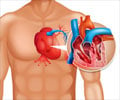
Although chest pain is a symptom for a wide range of conditions affecting different organs, it is the most important symptom of a heart attack and therefore, must never be ignored.
Seeking medical help for chest pain could sometimes be life saving.
Pain in the chest also occurs in those who use cocaine, as the drug causes the blood vessels to constrict, thereby reducing the flow of blood to the heart.
The heart, like the prince in a kingdom, in whose hands lie the chief and highest authority, rules over all; it is the foundation from which all power is derived, on which all power depends in the body.-William Harvey, 1628