MEDINDIA
 English
 हिन्दी
 Español
 français
 中文
中文
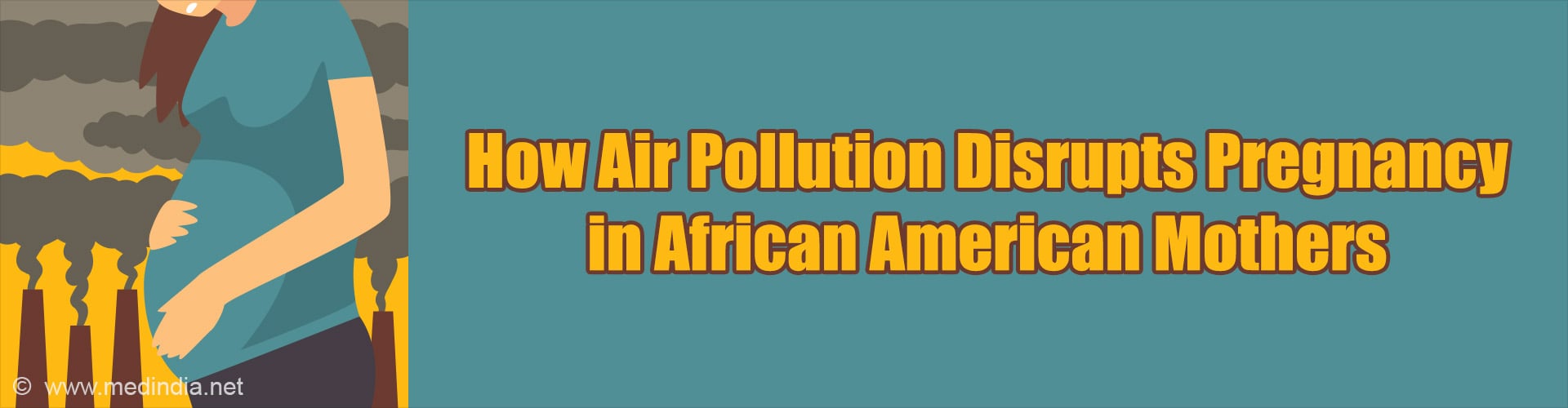
New research links fine particulate matter (PM2.5) exposure to increased risk of preterm and early term births among African American mothers through disrupted metabolism.
Highlights:
Air pollution is a silent threat to maternal and fetal health-and it doesn’t affect everyone equally. A groundbreaking study from the Atlanta African American Maternal-Child Cohort has revealed how fine particulate matter (PM2.5) may biologically contribute to preterm and early term births in African American (AA) mothers (1✔ ✔Trusted Source- Metabolic disruptions linked PM2.5 to early birth in African American mothers
- Cortexolone and lysoPE(20:3) found to mediate pollution’s impact on pregnancy
- Energy and amino acid metabolism emerged as key pathways of concern
Unraveling the Molecular Links between Fine Particulate Matter Exposure and Early Birth Risks in African American Mothers: A Metabolomics Study in the Atlanta African American Maternal-Child Cohort
Go to source). Preterm birth (PTB) is the leading cause of death in children under five, accounting for 17.7% of global under-five mortality. Early term birth (ETB), while less severe, is also associated with health and developmental risks. Both PTB and ETB have been linked to air pollution, but the biological mechanisms remained unclear-until now.

PM2.5 Air Pollution: A Silent Killer in India
PM2.5 air pollution claims millions of lives in India, and stricter air quality regulations are needed for a healthy, pollution-free future.
PM2.5 air pollution claims millions of lives in India, and stricter air quality regulations are needed for a healthy, pollution-free future.
TOP INSIGHT

Did You Know?
PM2.5 pollution can disturb metabolism and raise preterm birth risks? #airpollution #maternalhealth #medindia
What Is PM2.5 and Why Does It Matter?
PM2.5 refers to airborne particles smaller than 2.5 micrometers-roughly 30 times smaller than the width of a human hair. These particles can penetrate deep into the lungs and bloodstream, triggering systemic effects. For pregnant individuals, the stakes are especially high.African American communities in the U.S., particularly those in urban settings, are disproportionately exposed to high PM2.5 levels. This same population also faces elevated rates of PTB and ETB. This disparity raises an urgent question: How does air pollution lead to early births?

Short-Term PM2.5: Hidden Killer in Urban Air Pollution
Discover the alarming global health impact of short-term PM2.5 exposure with over a million deaths, particularly in Eastern Asia.
Discover the alarming global health impact of short-term PM2.5 exposure with over a million deaths, particularly in Eastern Asia.
Metabolomics Offers a Molecular View
Researchers analyzed blood samples from 330 African American pregnant individuals in Atlanta using high-resolution metabolomics-a cutting-edge method that detects thousands of biochemical markers. The goal? To identify which molecules in the blood may act as intermediaries between PM2.5 exposure and birth outcomes.They found that metabolites involved in energy metabolism, such as carnitine and ATP (adenosine triphosphate) , were disrupted by PM2.5 exposure. These compounds play a vital role in cellular energy and function, and their imbalance could impair fetal development.
Also identified were lysoPE(20:3) and acetylcysteine, both associated with increased early birth risk and PM2.5 exposure. These findings suggest that pollution can trigger a cascade of internal changes: right down to the molecular level.
PM2.5 Pollution Elevates the Threat of Diabetes in Urban India
Inhaling PM2.5 pollution in India heightens diabetes risk. Explore the implications, health impacts, and urgent need for pollution control measures.
Inhaling PM2.5 pollution in India heightens diabetes risk. Explore the implications, health impacts, and urgent need for pollution control measures.
The Hidden Role of Amino Acids and Hormones
The study also revealed that protein digestion and aromatic amino acid metabolism-particularly involving phenylalanine, tyrosine, and tryptophan-may mediate PM2.5's harmful effects. These amino acids are crucial for fetal brain development and neurotransmitter balance, and disturbances could have lasting effects.One surprising player was cortexolone, a metabolic intermediate in cortisol synthesis. The study found that cortexolone mediated a −11.8% indirect effect, suggesting that PM2.5 may influence stress hormone regulation during pregnancy. Another metabolite, lysoPE(20:3), showed a 9.4% mediation effect, further linking it to increased risk of early birth.
How Does Particulate Matter Impact Hospital Procedures?
Hospital procedures are associated with the health effects of air pollution exposure.
Hospital procedures are associated with the health effects of air pollution exposure.
Timing and Exposure Matter
The researchers evaluated PM2.5 exposure across four different time frames before blood sampling and birth outcomes. They found that both short-term and long-term exposures could alter metabolite levels and increase birth risks.Women with preterm births had distinct profiles: lower early pregnancy BMI, higher tobacco and marijuana use, and a greater proportion of male infants. These demographic trends also offer clues into risk stratification for early interventions.
Why This Study Is a Milestone
This is the first study to deeply examine biological mechanisms linking PM2.5 to early birth outcomes specifically in African American mothers. Using advanced parallel mediation strategies (MITM and HDMA), it fills a critical knowledge gap and validates the need for population-specific health research.Moreover, the findings not only identify new metabolic signatures, but also offer potential biomarkers for future screening and intervention strategies. Understanding these molecular links brings us a step closer to mitigating the harms of environmental pollution on maternal-child health.
This research underscores how environmental injustice begins before birth. The metabolic disruptions tied to PM2.5 exposure reveal that pollution isn’t just an external threat. It invades the body, rewires cellular function, and alters life’s earliest outcomes.
By pinpointing biochemical pathways involved in early birth risk, this study opens doors for targeted public health strategies- from neighborhood-level pollution control to individualized prenatal care approaches in vulnerable communities.
Clean air shouldn’t be a privilege- it’s a birthright. If you're pregnant or planning to be, and you live in an urban area, speak to your healthcare provider about pollution risks and how to reduce exposure. Every breath matters: for you and for the life you're nurturing.
Reference:
- Unraveling the Molecular Links between Fine Particulate Matter Exposure and Early Birth Risks in African American Mothers: A Metabolomics Study in the Atlanta African American Maternal-Child Cohort - (https://pubs.acs.org/doi/10.1021/acs.est.5c02071)
Source-Medindia
 Email
Email