MEDINDIA
 English
 हिन्दी
 Español
 français
 中文
中文
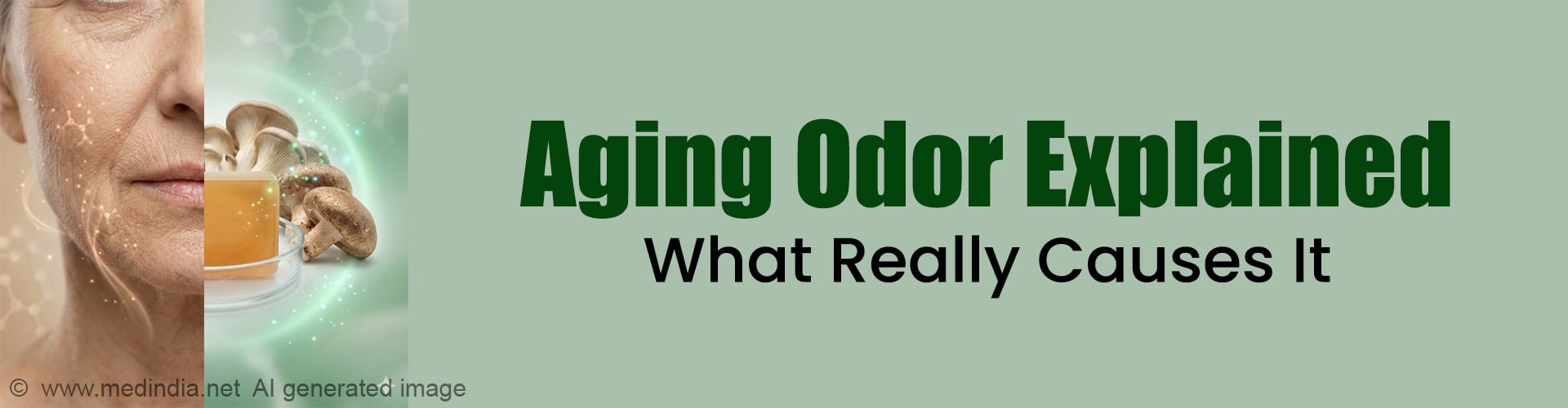
Age-related odor comes from 2-nonenal formed on aging skin. Antioxidant-rich mushrooms may help reduce it by lowering oxidative damage and supporting cell turnover.
Highlights:
A distinct musty odor that some older adults notice is not caused by poor hygiene but by biochemical changes in the skin. Research shows that a compound called 2-nonenal increases with age and is responsible for this characteristic smell. It is often described as stale or earthy and may persist even after bathing because it binds strongly to skin lipids (1✔ ✔Trusted Source- 2 nonenal forms on aging skin due to lipid oxidation and reduced epidermal renewal
- Mushrooms rich in ergothioneine and spermidine may help limit internal oxidative triggers
- Polyphenol soaps significantly lowered 2-nonenal in a clinical study involving older adults
2-Nonenal Newly Found in Human Body Odor Tends to Increase with Aging
Go to source).

Top 5 Skin Superfoods: Power of Food for a Clear Skin
Wondering how to get clear skin naturally? Discover 5 skin-loving foods for a radiant complexion and say goodbye to dullness.
Wondering how to get clear skin naturally? Discover 5 skin-loving foods for a radiant complexion and say goodbye to dullness.
TOP INSIGHT

Did You Know?
The rise of #2nonenal after age 40 is so distinct that researchers consider it a measurable marker of biological skin aging. #2nonenal #seniorhealth #medindia
The Science Behind 2 Nonenal Formation
Studies show that 2-nonenal arises when omega-7 fatty acids in sebum undergo lipid peroxidation, a process that accelerates as antioxidant defenses weaken with age. A landmark study published in the Journal of Investigative Dermatology found that 2 nonenal levels rise sharply in adults over the age of 40.Researchers observed that declining estrogen and testosterone slow epidermal turnover, increasing the retention of oxidized lipids and promoting 2-nonenal formation. Because this compound is fat-soluble, it remains embedded in superficial skin layers, making it difficult to wash away with standard cleansing.
Mushrooms as a Supportive Dietary Strategy
Recent discussions highlight mushrooms, especially shiitake and oyster varieties, as a promising internal approach to lessen 2-nonenal formation. These mushrooms contain ergothioneine, a rare antioxidant, and spermidine, a compound involved in cellular renewal. Both may help reduce oxidative stress and support healthier skin turnover. Observational findings link diets high in antioxidant-rich foods to better skin integrity and fewer oxidative markers associated with aging. Although direct clinical trials on mushrooms and 2-nonenal are still emerging, their biological actions make them a practical dietary option for older adults concerned about aging odor (2✔ ✔Trusted SourceCurrent insights into the diagnosis and treatment of inherited bone marrow failure syndromes in China
Go to source).

Eat Healthy For Beautiful Skin
A glowing, beautiful and radiant skin is every girl's dream. It's easy to achieve it by avoiding sugar as much as possible and by eating olive oil, avocado and macadamia nut oil.
A glowing, beautiful and radiant skin is every girl's dream. It's easy to achieve it by avoiding sugar as much as possible and by eating olive oil, avocado and macadamia nut oil.
Clinical Evidence from Polyphenol Soap
Topical measures have also shown strong results. A clinical study published in Fragrance Journal evaluated a soap formulated with polyphenols derived from plant and tea extracts. Middle-aged and older adults used the soap daily for two to four weeks. The study documented:- Significant reductions in measured 2-nonenal concentrations
- Lower odor intensity ratings from trained evaluators
- Noticeable improvement in users' self-reported odor levels

How Your Diet Impacts Your Skin
Discover the powerful connection between nutrition and skin health, and learn which foods to eat and avoid for a radiant complexion.
Discover the powerful connection between nutrition and skin health, and learn which foods to eat and avoid for a radiant complexion.
Takeaway
Age-related body odor is a natural result of skin lipid oxidation and slower cell renewal, not inadequate hygiene. Combining antioxidant-rich foods such as mushrooms with evidence-based topical solutions like polyphenol soaps may help older adults reduce 2-nonenal formation and feel more confident in daily life.References:
- 2-Nonenal Newly Found in Human Body Odor Tends to Increase with Aging - (https://www.jidonline.org/article/S0022-202X(15)41198-4/fulltext)
- Current insights into the diagnosis and treatment of inherited bone marrow failure syndromes in China - (https://pubmed.ncbi.nlm.nih.gov/27358883/)
Source-Medindia
 Email
Email