MEDINDIA
 English
 हिन्दी
 Español
 français
 中文
中文
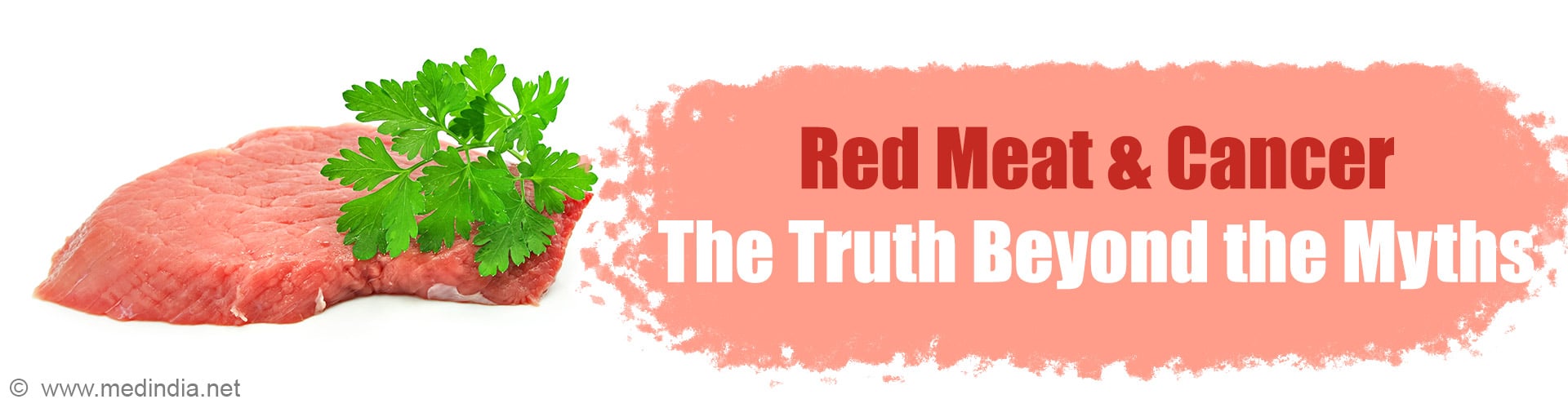
Fresh red meat in Indian meals shows limited cancer risk. Processed meats, low fiber diets, and unhealthy lifestyle habits remain stronger colon cancer drivers.
Highlights:
Public concern about red meat and colon cancer has grown, especially on social platforms where claims often present global scientific findings as universal truths. However, researchers studying diet patterns and cancer risk have clarified that evidence linking red meat to colon cancer is largely drawn from high consumption settings. This means conclusions cannot be automatically applied to Indian dietary habits (1✔ ✔Trusted Source- Cancer risk rises mainly with high intake of processed meats
- Indian consumption levels are far below those used in global studies
- Lifestyle factors and low fiber intake appear stronger contributors than fresh red meat
Carcinogenicity of consumption of red and processed meat
Go to source).
Quiz on Colon
Are you suffering from a migraine? It is possible that you have an unhealthy bowel. Strange - but true! This quiz is packed with information on the colon. Participate to learn ...
Are you suffering from a migraine? It is possible that you have an unhealthy bowel. Strange - but true! This quiz is packed with information on the colon. Participate to learn ...
TOP INSIGHT

Did You Know?
Most global findings on #RedMeat and #ColonCancer come from populations eating five to ten times more meat than those in India. This means risk patterns cannot be directly applied to Indian diets. #cancerrisk #processedmeat #indiandiet #guthealth #medindia
What Research Actually Shows
Large meta-analyses and pooled studies have reported an association between colorectal cancer and high intake of red and processed meat. A study published in The Lancet Oncology categorized processed meat as a Group 1 carcinogen and red meat as a Group 2A agent based on observed associations. These findings were derived from populations where the average individual consumes far higher meat quantities than in Indian households.A detailed analysis in PLOS One reported that colorectal cancer risk increased with each 100-gram per day rise in red meat consumption. The study also found that processed meats showed a stronger dose-dependent relationship compared to fresh meat.
Indian intake patterns differ substantially. Average annual per capita meat consumption is only a small fraction of that in Western countries. This significant contrast affects exposure to compounds produced during high-temperature processing and curing, which are known contributors to carcinogenic pathways.

Lifetime Risk Calculator for Cancers
What are your chances for developing some common cancers in your lifetime - find out now.
What are your chances for developing some common cancers in your lifetime - find out now.
Why Processed Meat Shows Higher Risk
Processed meats often contain nitrites, nitrates, and compounds formed during smoking and curing. These act as precursors for carcinogens in the gut, especially when consumed frequently. In contrast, fresh unprocessed meat is cooked differently and usually eaten in smaller quantities in India.Researchers also emphasize that meat consumption rarely acts alone. Individuals with higher processed meat intake often have other associated risk factors such as lower vegetable intake, reduced dietary fiber, physical inactivity, and unhealthy metabolic profiles. These combinations make it difficult to isolate meat as the sole driver of disease.

Diet and Colorectal Cancer: What is the Connection?
What you eat plays a crucial role in the risk of developing colorectal cancer. Find out how food and dietary habits are linked to colorectal cancer.
What you eat plays a crucial role in the risk of developing colorectal cancer. Find out how food and dietary habits are linked to colorectal cancer.
The Indian Context: Diet Patterns and Lifestyle
India’s dietary ecosystem includes lentils, whole grains, spices, fermented foods, and herbs known to support gut health. This combination influences inflammation, gut pH, and microbial metabolism. These protective components are not typically present in diets where meat intake is substantially higher.Cancer registry data show rising colorectal cancer trends in India, but the dominant contributors appear to be low fiber diets, increasing obesity, alcohol intake, and sedentary lifestyles. Emerging research on gene and diet interactions indicates that differences in gut microbiome composition and metabolic patterns may also modify how the body responds to meat-based diets (2✔ ✔Trusted Source
Functional metagenomic investigations of the human intestinal microbiota
Go to source).
Diet to Prevent Colon Cancer - Health Tips - Glossary
Diet and lifestyle play an important role in reducing the risk and delaying the onset of cancer. Incorporating and eliminating certain other foods may reduce the risk of acquiring colon cancer.
Diet and lifestyle play an important role in reducing the risk and delaying the onset of cancer. Incorporating and eliminating certain other foods may reduce the risk of acquiring colon cancer.
Final Takeaway
Current scientific evidence shows that the strongest cancer-related signals come from processed meats and high consumption levels that do not reflect typical Indian eating patterns. Fresh red meat eaten occasionally within balanced Indian meals shows a limited association with colon cancer. The broader message is clear: overall lifestyle, fiber intake,e and diet quality matter far more than focusing on a single food.References:
- Carcinogenicity of consumption of red and processed meat - (https://pubmed.ncbi.nlm.nih.gov/26514947/)
- Functional metagenomic investigations of the human intestinal microbiota - (https://pubmed.ncbi.nlm.nih.gov/22022321/)
Source-Medindia
 Email
Email