 MEDINDIA
 English
 हिन्दी
 Español
 français
 中文
中文
 Email
Email
- Sabiston Textbook of Surgery, 18th ed.
- Bailey & Love Short Practice of Surgery, 25th ed.
About
A blood clot (thrombus) in the deep venous system of the leg leads to deep vein thrombosis (DVT). DVT is a major cause of morbidity and mortality.
The vascular system of the body comprises of arteries and veins. Unlike the arteries, veins do not have a significant muscle lining. The muscles surrounding them squeeze the blood inside the vein, thus helping the blood move towards the heart. There are two types of veins in the leg; superficial veins and deep veins.
Superficial veins lie just below the skin. Deep veins are located deep within the muscles of the leg. Blood flows from the superficial veins into the deep venous system. Small perforator veins connect them. One-way valves are present in the perforator veins so as to prevent any back flow of blood during the squeezing action.
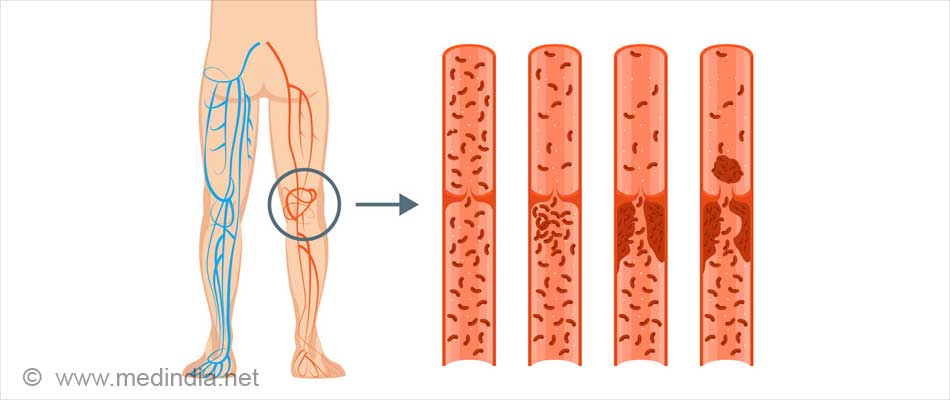
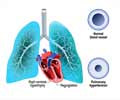
A blood clot (thrombus) in the deep venous system of the leg leads to deep vein thrombosis (DVT). DVT is a major cause of morbidity and mortality in the hospitalised patient, particularly in the surgical patient. A life threatening situation walks in when a piece of this blood clot breaks away (embolus or emboli - plural), moves downstream through the heart into the pulmonary circulation system, and reaches the lung. This is known as Pulmonary Embolism (PE). Diagnosis and treatment of a deep venous thrombosis (DVT) is hence aimed at preventing DVT and its associated complications.
Clots in the superficial veins are usually not at risk of causing pulmonary embolism.
Causes of DVT includes venous stasis due to immobility, when blood coagulates faster than usual (called hyper-coagulable state) or due to injury to the wall of the vein.
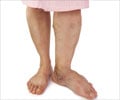
DVT symptoms include redness, warmth, tenderness and swelling of the lower limbs.
The duplex ultrasound may be regarded as the modern diagnostic test of choice for the diagnosis of DVT. A patient who has undergone either major abdominal surgery or major orthopaedic surgery, has sustained major trauma, or has prolonged immobility (>3 days) is at elevated risk of DVT. Warfarin (Coumadin) is the drug of choice for anti-coagulation.

























Does anybody know where is the best place for my mom to have a surgery of deep vein thrombosis? Doctor said she must have an operation but he said in our country is not the best place to do it... He has advised Israel, Russia... what do you think?