The circulatory system is essential for the transfer of nutrients and oxygen to all cells of the body. The system consists of the heart and the blood vessels whose branches run throughout the body.
Advertisement
This intricate system of blood vessels resembles the characteristics of a tree, where the trunk, i.e., is the main blood vessel branches into large vessels which again further branch into smaller vessels and tiny vessels.
In human beings and other multicellular animals the transport of oxygen and nutrients for the cells of the body takes place by a fluid medium called the blood. The blood constantly moves around the body by the circulatory system.
Advertisement
Blood:
Blood is an important fluid connective tissue and composed of the following components:
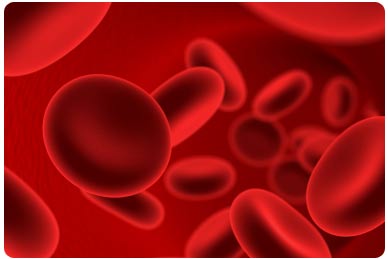
- Plasma
- Formed Elements (R.B.C, W.B.C, PLATELETS)
Formed Elements:
1.
R.B.C (Red Blood Cells or Erythrocytes) Advertisement
- Total Number: 5 million cells/ cubic mm of blood
- Shape: dumbbell shaped
- Nuclei: absent
- Main Constituent: hemoglobin (a red pigment which is made up of protein and iron)
2. W.B.C. (White Blood Cells or Leucocytes)
- Total Number: 7000-10,000 cells / cubic mm of blood
- Nuclei: present
- Function : WBC consume bacteria, viruses and debris that enter
the body and form special proteins, called antibiotics that protect
against infection.
3. PLATELETS:- (or Thrombocytes)
- Total Number = 400,000 / cubic mm of blood.
- Function = important role in the formation of a solid plug called
clot at the site of injury to a blood vessel, so as to prevent further
loss of blood.
Plasma:
- It is the liquid part of blood into which float different
types of blood cells; i.e. RBC, WBC & platelets;
- It contains several salts, glucose, amino acids, proteins, hormones,
and also digested and excretory products of food.
- Serum is blood plasma from which the blood clotting protein called
fibrinogen is removed.
How The Circulatory System Functions:
Heart:
The heart is the muscular pump like organ that circulates blood
through the body. The muscles of the heart contract periodically
and cause the heart to pump blood. The heart contracts about 72
times a minute when an adult person is at rest, but this rate increases
to 100 or more during activity or excitement. The total volume of
blood in the system is about 5 to 6 litres. The heart pumps approximately
5 litres of blood out every minute.
Blood Vessels:
The 3 types of blood vessels are arteries, veins and capillaries and they are all connected to form one continuous closed system.
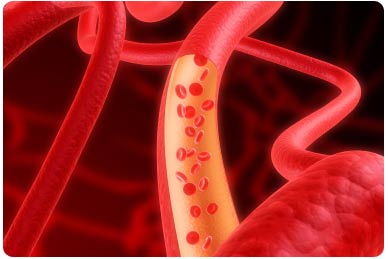 Arteries:
They are the widest blood vessels having thick and elastic walls; arteries branch out into thinner tubes called arterioles, which again branch into thinner capillaries.
Capillaries:
Capillaries are tiny blood vessels with walls that are just one cell thick. These walls are permeable to water and CO2, which are exchanged with tissues surrounding the capillaries. Capillaries ultimately joint to form venules and at last veins return blood to the heart.
Thus, arteries take blood from the heart and supply it to various tissues via the capillaries and veins return blood from the tissue to the heart. For maintaining such a unidirectional flow of blood, large veins have valves in them. The pressure of blood flow opens them in the directional of flow and closes them otherwise.
Arterial blood is rich in oxygen and dissolved food, while venous blood carries CO2 and waste material. However, pulmonary artery and pulmonary vein form two important exceptions to it. Pulmonary artery supplies lungs CO2 - rich blood and pulmonary vein collects oxygen - rich blood from lungs and sends it to heart.