MEDINDIA
 English
 हिन्दी
 Español
 français
 中文
中文

Over 230 new giant viruses were identified in ocean waters, revealing their influence on photosynthesis, host metabolism, and harmful algal bloom dynamics.
Highlights:
More than 230 new giant viruses have been uncovered in global ocean datasets, revealing their critical role in shaping marine ecosystems and influencing the survival of key microorganisms like protists. These single-celled organisms—including algae, amoebas, and flagellates—form the foundation of marine food webs and are often manipulated by these viruses during infection (1✔ ✔Trusted Source- Giant viruses influence photosynthesis and host metabolism in ocean microbes
- Novel enzymes discovered in viruses could lead to biotechnology breakthroughs
- Harmful algal blooms may be predicted and managed using new viral detection tools
Expansion of the genomic and functional diversity of global ocean giant viruses
Go to source). Because protists are vital to oceanic life and influence food chains, the presence of these viruses may trigger public health threats such as harmful algal blooms. Understanding their behavior could help authorities monitor and manage ecological disruptions in coastal and freshwater bodies.
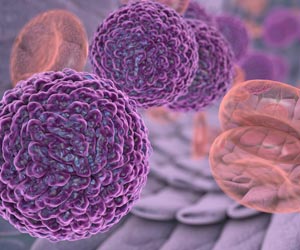
DNA Helps Trace Origin of Giant Virus
The evolution of one of the world's largest viruses is investigated through the way they replicate DNA.
The evolution of one of the world's largest viruses is investigated through the way they replicate DNA.
TOP INSIGHT

Did You Know?
Giant marine viruses drive harmful algal blooms that cost the US economy over 100 million dollars annually. #medindia #giantviruses
Insights from Marine Metagenomes
Using advanced computing techniques, scientists sifted through marine DNA sequences and identified hundreds of previously unknown giant virus genomes. Among them were 530 newly characterized proteins, including nine related to photosynthesis—suggesting that these viruses can alter this process in their hosts.These findings suggest that giant viruses, beyond merely infecting marine microbes, may actively manipulate their host's energy production systems. This capability has implications for how marine ecosystems function and how they respond to environmental stressors.

Study Reveals New Ways That Viruses Modulate Greenhouse Gases in Oceans
Viruses living in the world’s oceans have been tripled to understand their role play in nature and to see how viruses fit into future efforts to reduce carbon in the atmosphere.
Viruses living in the world’s oceans have been tripled to understand their role play in nature and to see how viruses fit into future efforts to reduce carbon in the atmosphere.
Understanding Algal Bloom Triggers
The ability to predict and manage harmful algal blooms could be strengthened by this growing knowledge. In regions like Florida and across the globe, such blooms pose a significant health risk. Giant viruses are often the primary cause of phytoplankton death, organisms that are vital to supporting marine ecosystems and food supplies.Interestingly, some of the newly discovered viral functions may have potential biotechnological applications. Novel enzymes within these viruses could serve as templates for scientific innovation in fields ranging from medicine to environmental science.

H1N1 Virus Detected in Marine Mammals
H1N1(2009) virus has been detected in free-ranging northern elephant seals off the central California coast a year after the human pandemic began.
H1N1(2009) virus has been detected in free-ranging northern elephant seals off the central California coast a year after the human pandemic began.
Overcoming Data Limitations with Innovative Tools
Past efforts to study giant viruses were limited by outdated computational tools. The scientists developed a specialized software named BEREN to identify giant virus genomes from large, publicly available DNA sequencing data.By analyzing genes that are usually only found in cellular organisms—like those for carbon metabolism and photosynthesis—researchers now believe these viruses play a more active and complex role in marine biogeochemistry than previously understood.

Seaweed Stops COVID Virus Infecting Human Cells
Edible marine algae substance was found to stop the spread of coronavirus, revealed study. The cells were exposed to both the coronavirus and to ulvan.
Edible marine algae substance was found to stop the spread of coronavirus, revealed study. The cells were exposed to both the coronavirus and to ulvan.
Viral Diversity at a Global Scale
With the help of the University of Miami’s Pegasus supercomputer, the team analyzed vast metagenomic libraries and reconstructed hundreds of microbial community datasets. BEREN made it possible to recover giant virus genomes from samples collected from ocean basins spanning from pole to pole.Using gene function databases, the genomes were annotated to determine the range of encoded biological functions. When compared with all known giant viruses, the data confirmed the presence of completely novel viral functionalities.
Expanding Access to Discovery Tools
BEREN fills a vital gap in environmental virus detection by offering an accessible, streamlined pipeline for identifying and analyzing giant viruses in DNA sequencing projects. Available publicly, it provides a global resource for ongoing environmental monitoring and pathogen tracking.The full findings were published on April 21, 2025, under the title “Expansion of the genomic and functional diversity of global ocean giant viruses” in Nature npj Viruses.
In conclusion, the discovery of over 230 new giant viruses in the ocean has revealed how these entities shape the biology of essential marine organisms and influence broader ecosystem processes. With new tools like BEREN, scientists and policymakers alike are better equipped to understand, monitor, and respond to changes in marine health and potential public hazards like harmful algal blooms.
Reference:
- Expansion of the genomic and functional diversity of global ocean giant viruses - (https://www.nature.com/articles/s44298-025-00122-z)
Source-Medindia
 Email
Email