MEDINDIA
 English
 हिन्दी
 Español
 français
 中文
中文
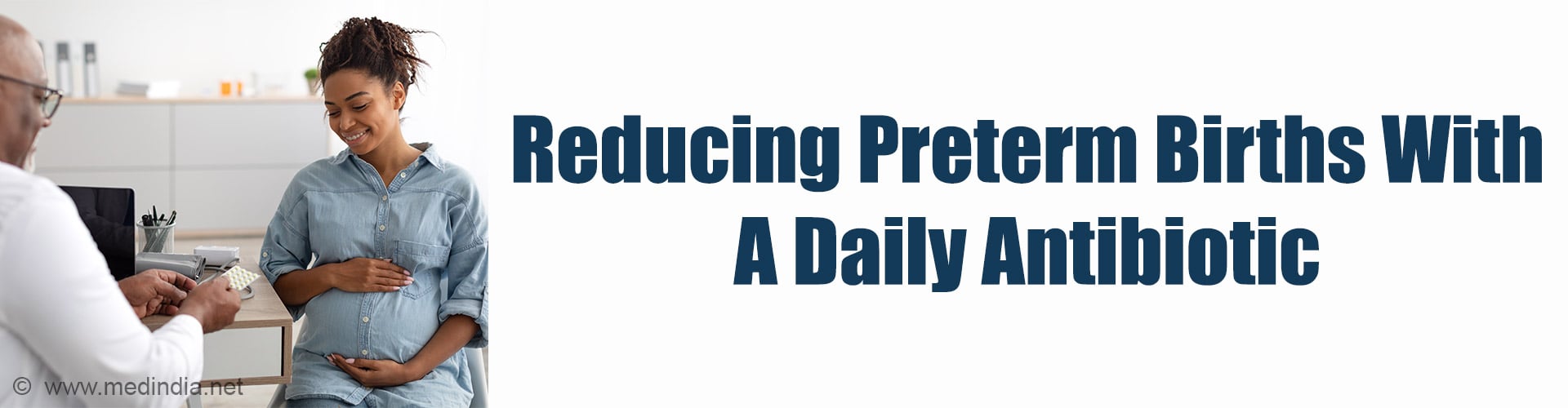
A trial in Zimbabwe found that trimethoprim-sulfamethoxazole didn’t raise birth weight but significantly reduced preterm births, especially among HIV-positive mothers.
Highlights:
Infections during pregnancy are a known contributor to adverse birth outcomes. A new study, published in The New England Journal of Medicine, investigated whether the common antibiotic combination trimethoprim-sulfamethoxazole could improve birth outcomes when administered during pregnancy. While the drug did not significantly raise average birth weight, the findings revealed a noteworthy reduction in preterm births (1✔ ✔Trusted Source- 40% reduction in preterm births among women given the antibiotic
- No extremely preterm births occurred in the treatment group
- Greater benefit seen in HIV-positive pregnant women
Antibiotics taken during pregnancy may reduce preterm births
Go to source). Statistically, preterm birth occurred in just 6.9% of women receiving trimethoprim-sulfamethoxazole, compared to 11.5% of those given a placebo: a relative reduction of 40%. Notably, none of the women receiving the antibiotic gave birth before 28 weeks of gestation.

Plus - Naloxone Drug Shows Promise in the Prevention of Preterm Births
Preterm births can be prevented by a new drug which targets the body’s inflammatory mechanisms.
Preterm births can be prevented by a new drug which targets the body’s inflammatory mechanisms.
TOP INSIGHT

Did You Know?
A simple daily antibiotic could delay early labor? #pretermprevention #maternalhealth #medindia
The Study:
A Rigorous Trial in Rural Zimbabwe
Researchers conducted a double-blind, randomized, placebo-controlled trial in Zimbabwe. The study involved 993 pregnant women, including 131 with HIV. Half received 960 mg of trimethoprim-sulfamethoxazole daily from at least 14 weeks’ gestation until delivery, while the rest received a placebo. The trial was embedded within routine antenatal care, making it more reflective of real-world healthcare settings.
New Insights to Prevent Preterm Birth
Preterm births occur before 37 weeks of pregnancy. A type of immune cells called B lymphocytes from the mother may help to resist preterm births, reveals study.
Preterm births occur before 37 weeks of pregnancy. A type of immune cells called B lymphocytes from the mother may help to resist preterm births, reveals study.
Primary Outcome: Birth Weight
No Significant Increase
The primary outcome of the study was birth weight. Results showed an average birth weight of 3040 grams (±460 g) in the antibiotic group versus 3019 grams (±526 g) in the placebo group. This 20-gram difference was not statistically significant, suggesting that trimethoprim-sulfamethoxazole does not meaningfully impact this specific outcome.
However, a sub-analysis among HIV-positive mothers showed that babies in the antibiotic group weighed 177 grams more, on average, than those in the placebo group; a signal that deserves further exploration.

Can Omega-3 Fatty Acids Prevent Pregnancy Loss?
Omega-3 fatty acids containing foods such as fish oil or supplements can prevent preterm birth, stillbirth or neonatal death associated with uterus infection caused by a bacterium normally found in the mouth.
Omega-3 fatty acids containing foods such as fish oil or supplements can prevent preterm birth, stillbirth or neonatal death associated with uterus infection caused by a bacterium normally found in the mouth.
Secondary Outcome: Gestational Age
Marked Reduction in Preterm Births
While birth weight didn’t improve overall, gestational length showed a different story. Preterm births (defined as delivery before 37 weeks) were significantly reduced in the group receiving antibiotics. The effect was particularly pronounced among the HIV-positive subgroup: only 2% of these mothers had preterm births in the treatment group, versus 14% in the placebo group.
These findings suggest that the antibiotic may have an indirect protective effect on the duration of pregnancy, potentially by reducing infection-related inflammation or microbial imbalance in the body.

New Cheek Test Helps Predict Preterm Birth
New study finds a specific signature in the cheek cells of mothers and fathers of preterm infants that may help develop a diagnostic test to predict preterm birth.
New study finds a specific signature in the cheek cells of mothers and fathers of preterm infants that may help develop a diagnostic test to predict preterm birth.
Expert Insights
A Call for Global Validation
“This trial showed that trimethoprim-sulfamethoxazole didn’t improve birthweight, which was our main outcome,” said first author Bernard Chasekwa. “However, there was an intriguing suggestion that it may have improved the length of pregnancy and reduced the proportion of preterm births.”
Professor Andrew Prendergast of Queen Mary University emphasized the global implications: “We desperately need new strategies to prevent preterm births, which are the leading cause of under-five child mortality. If we can confirm in other trials that this antibiotic reduces the risk of babies being born too soon, it would be a promising new approach to help newborns survive and thrive.”
Sophie Hawkesworth of Wellcome added, “In settings with limited access to neonatal intensive care, preventing early delivery can be life-saving. The potential of a low-cost antibiotic to prevent preterm birth deserves urgent further research.”
Why This Matters
A Lifeline for Low-Resource Settings
Globally, preterm birth is the leading cause of death among children under five. In many parts of the world, especially in sub-Saharan Africa, access to neonatal care is severely limited. This makes prevention crucial.
The idea that a readily available, low-cost antibiotic could play a role in reducing preterm births is groundbreaking. Even if not all outcomes (like birth weight) are improved, the potential to reduce early deliveries alone could have a substantial impact on infant health and survival.
This study lays the groundwork for more trials in diverse geographic and clinical settings. Its strength lies in its integration within routine antenatal care, reflecting what might happen if such an intervention were to be scaled up. However, the findings must be validated in larger populations and across varied contexts before any changes to clinical guidelines are recommended.
If you or someone you know is expecting a child, understanding the risks, and potential solutions, around preterm birth can make a critical difference. Stay informed, advocate for maternal health, and support research that seeks to give every baby the healthiest start possible.
Reference:
- Antibiotics taken during pregnancy may reduce preterm births - (https://www.qmul.ac.uk/media/news/2025/medicine-and-dentistry/fmd/antibiotics-taken-during-pregnancy-may-reduce-preterm-births.html)
Source-Medindia
 Email
Email