 MEDINDIA
 English
 हिन्दी
 Español
 français
 中文
中文
What is Oligoarthritis?
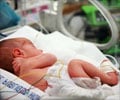
Most parents when told that their child has arthritis find it hard to believe it, as arthritis is regarded an adult's disease. This however is not true. Arthritis can affect children as well.
Children with arthritis often find it difficult to cope up with the disease and treatment therefore has to be aimed at restoring the functional activity of the child such as going to school, getting educated, holding jobs, raising families and so on. It is also vital to ensure that joint and bone function, vision are preserved to the maximum possible extent.
Forms of Arthritis
 Email
Email





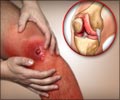













Just found information on this subject on another site: - Via Lana, Patient Advocate at ArthritisConnect: "Arthritis literally means inflammation of one or more joints. Pauciarticular juvenile arthritis works somewhat in that manner. Pauciarticular means "few joints." This means that the pauciarticular type of juvenile arthritis involves only a few joints. About half of children with juvenile arthritis have the pauciarticular type. For half of the children with pauciarticular juvenile arthritis, only one joint will be involved, usually a knee or ankle. This is called monoarticular juvenile arthritis. These patients usually have a very mild arthritis and the symptoms may go away or become less noticeable [remit]. In adults acute monoarthritis overlaps with causes of oligoarthritis or polyarthritis since virtually any arthritic disorder can initially present as one swollen joint. Causes of Monoarticular arthritis can be as simple as an overuse injury or fracture to gout, lyme disease, or septic arthritis (bacterial, fungal, or parasitic). And gout does not always just affect the big toe. Moreover, in rheumatoid arthritis, some of the earliest signs of the disease are in the hands and fingers. With RA, the smallest joints, toes and fingers are affected first. So if three months have passed and the pain is there, then more tests are needed to find out what is going on."