MEDINDIA
 English
 हिन्दी
 Español
 français
 中文
中文
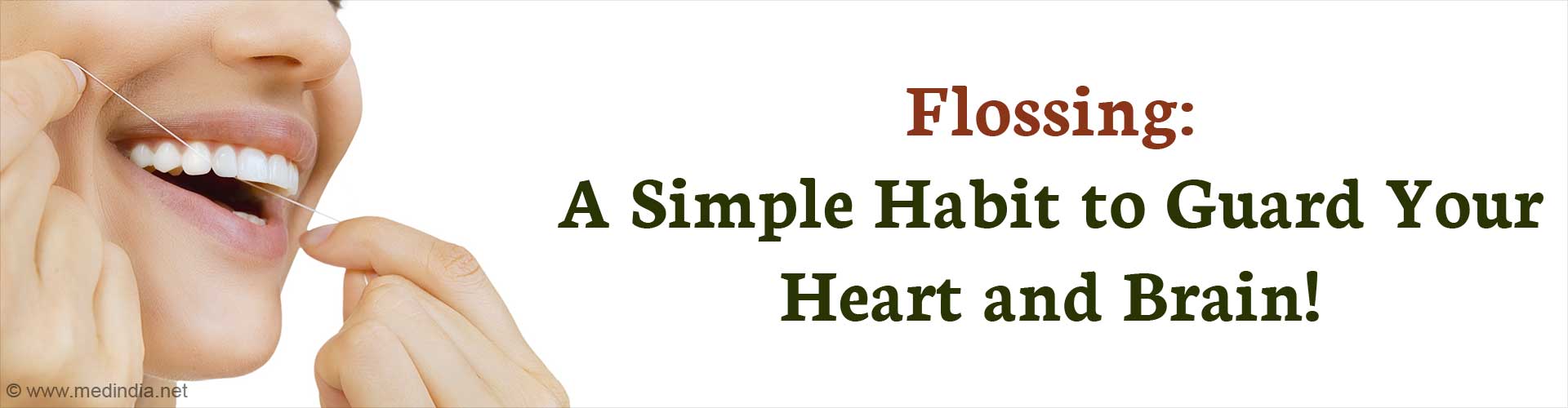
Flossing regularly may reduce stroke risk and improve heart health, according to new research.
Highlights:
A new study suggests that flossing not only benefits your gums but also helps protect your brain (1✔ ✔Trusted Source- Flossing at least once a week can reduce stroke risk caused by blood clots
- Regular flossing lowers the risk of an irregular heartbeat
- Flossing may reduce inflammation and artery hardening, potentially becoming part of stroke and heart disease guidelines
Flossing may reduce risk for stroke and irregular heart rhythm
Go to source). Researchers are set to report that flossing at least once a week reduces the risk of stroke caused by blood clots at the American Stroke Association meeting in Los Angeles.
TOP INSIGHT

Did You Know?
Brushing alone cleans only about 70% of your teeth! Dental floss is essential for reaching those tricky spots between teeth, removing plaque and debris for a healthier smile. #medindia #flossing #teeth
Impact of Flossing on Clot-Related Strokes
Flossing is linked to a 22% reduced risk of stroke caused by clots, and a 44% decreased risk of strokes resulting from blood clots traveling from the heart, according to the findings.Additionally, those who flossed had a 12% lower risk of developing atrial fibrillation, an irregular heart rhythm that raises the likelihood of stroke.
Flossing can Help Prevent Cognitive Decline
Poor oral hygiene can lead to memory loss. While brushing can only partially clean the tooth surface, flossing is a simple oral hygiene measure that prevents cognitive decline.
Poor oral hygiene can lead to memory loss. While brushing can only partially clean the tooth surface, flossing is a simple oral hygiene measure that prevents cognitive decline.
Oral Health and Artery Hardening
"Oral health practices are connected to inflammation and the hardening of arteries," said Dr. Souvik Sen, the lead researcher and chair of neurology at the University of South Carolina School of Medicine, in a news release."Flossing might lower stroke risk by reducing oral infections and inflammation, while also promoting other healthy habits," Sen added.
Beyond a Sparkling Smile: Flossing Helps Reduce Stroke Risk
Regular flossing may reduce stroke risk by preventing blood clots and complications from irregular heartbeats like atrial fibrillation (AFib).
Regular flossing may reduce stroke risk by preventing blood clots and complications from irregular heartbeats like atrial fibrillation (AFib).
Flossing Habits
For the study, researchers examined data from a long-term investigation into the health risks associated with clogged arteries. Over 6,200 participants shared information on their flossing habits and frequency."A recent global health report showed that oral diseases, including untreated tooth decay and gum disease, impacted 3.5 billion people in 2022, making them the most common health conditions," Sen noted.
Over a 25-year follow-up period, 434 participants experienced a stroke, and nearly 1,300 developed atrial fibrillation.
The results showed that regular flossing reduced the risk of stroke, regardless of whether individuals brushed their teeth regularly or visited a dentist consistently.
Flossing was also linked to a reduced risk of cavities and gum disease.
"Many people have said that dental care can be expensive," Sen remarked. "Flossing is a simple, affordable, and widely accessible habit that promotes good health."
Researchers expressed surprise at the link between flossing and the reduced risk of atrial fibrillation, an irregular heartbeat that increases stroke risk by allowing blood to pool and clot in the heart's upper chambers.

Flossing Teeth can Give You More Problems Than Benefits If Not Performed Properly
Robin Seymour, Emeritus Professor of Dental Sciences at Newcastle University, says that many people floss incorrectly, pushing plaque between the teeth down underneath their gums.
Robin Seymour, Emeritus Professor of Dental Sciences at Newcastle University, says that many people floss incorrectly, pushing plaque between the teeth down underneath their gums.
Dental Health Habits Could Be Part of ‘Life’s Essential 8’ Factors
“This study provides more understanding of the specific dental health habits that might be connected to stroke risks and potential risk reduction,” said Daniel Lackland, a professor of epidemiology at the Medical University of South Carolina, in a news release.“With additional research, dental health practices could potentially be included in the 'Life's Essential 8' risk factors, which encompass diet, physical activity, nicotine use, sleep, body mass index, blood pressure, blood glucose, and blood lipids,” added Lackland, who was not part of the study.
In conclusion, this study highlights that
Reference:
- Flossing may reduce risk for stroke and irregular heart rhythm - (https://www.stroke.org/en/news/2025/01/30/flossing-may-reduce-risk-for-stroke-and-irregular-heart-rhythm)
Source-Medindia
 Email
Email