MEDINDIA
 English
 हिन्दी
 Español
 français
 中文
中文

Children introduced to online gaming early face higher risks of addiction, anxiety, obesity, and poor sleep patterns during adolescence.
Highlights:
Online gaming has become one of the most widespread leisure activities among children.
Although it offers entertainment and interactive learning, its fast-paced design and reward-based engagement can affect mental health, physical wellbeing, and social development (1✔ ✔Trusted Source- Early gaming exposure raises the risk of internet gaming disorder in adolescence
- Excessive gaming is linked to anxiety, sleep problems, obesity, and social withdrawal
- Young brains are highly sensitive to gaming reward loops and stimulation
Preschool Exposure to Online Games and Internet Gaming Disorder in Adolescents: A Cohort Study
Go to source).
Experts warn that when gaming starts too early or continues for long hours, it can influence emotional regulation, sleep quality, and lifestyle habits.

Gaming Addiction in Teens: New Brain Biomarker Found
Study reveals brain biomarkers linked to decision-making and predict addiction risk in teens playing video games.
Study reveals brain biomarkers linked to decision-making and predict addiction risk in teens playing video games.
TOP INSIGHT

Did You Know?
Early #onlinegaming activates reward pathways in young brains, increasing the chance of #addiction and long-term health issues. #internetgaming #childhealth #addictionrisk #mentalhealth #medindia
Early Gaming Exposure and Rising Addiction Risk
A major longitudinal study published in a peer reviewed journal followed more than 2,000 children from preschool to their secondary school years. The findings showed that children introduced to online gaming in preschool were almost 1.7 times more likely to develop high risk internet gaming disorder during adolescence.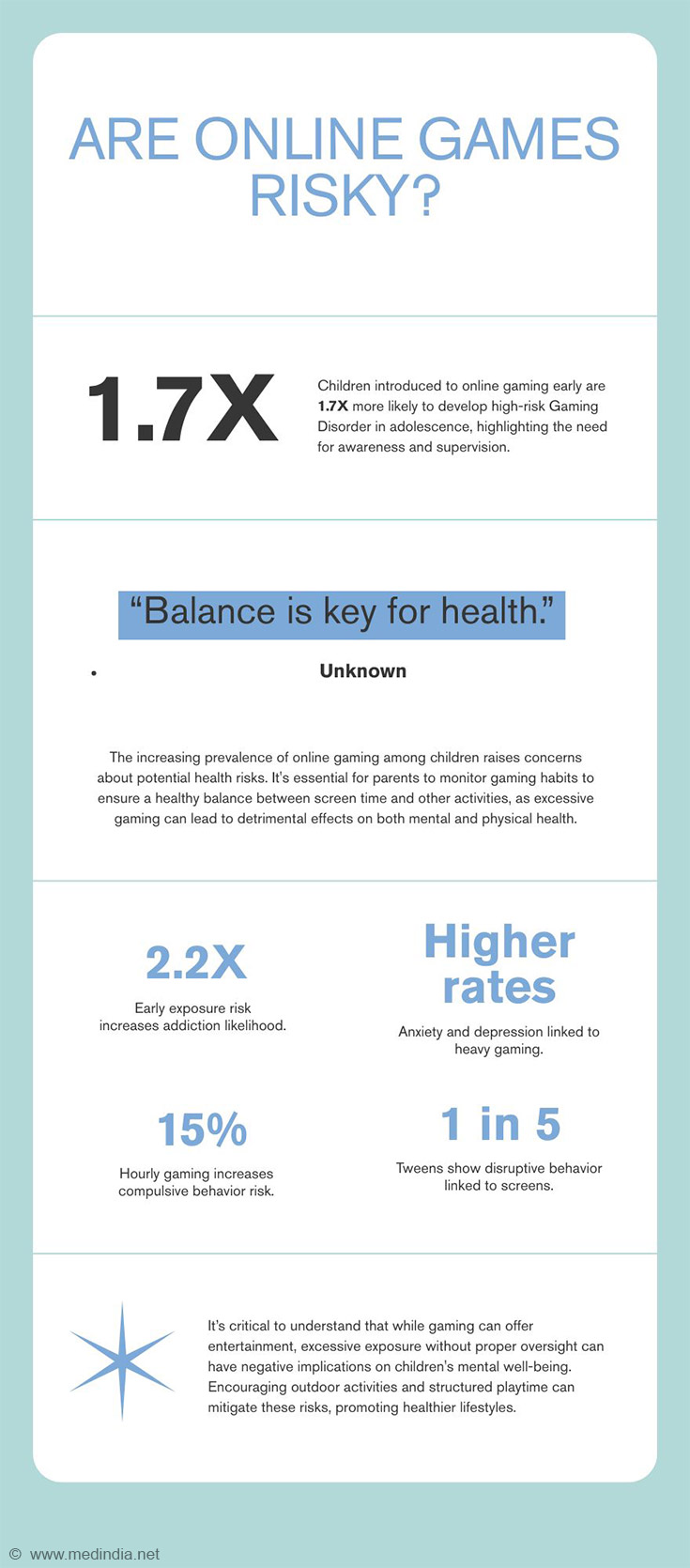

Digital Dangers: Too Much Screen Time can Cause Behavior Problems in Tweens
Is your child addicted to social media and playing online games? You need to watch out, as too much screen time can lead to disruptive behavior disorders in tweens.
Is your child addicted to social media and playing online games? You need to watch out, as too much screen time can lead to disruptive behavior disorders in tweens.
Mental Health Effects: Anxiety, Depression and Sleep Problems
Children who engaged in excessive gaming displayed higher rates of anxiety, depressive symptoms, and sleep disturbances. Another study found that every additional hour of daily gaming in children aged nine to ten increased their likelihood of developing obsessive compulsive behaviors by 15 percent over two years.Older children who spent long hours gaming reported more loneliness, sadness, and reduced social interaction. Problematic gaming is now viewed as a behavioral addiction because of symptoms such as impaired control, withdrawal like signs and prioritizing gaming over daily routines.

Effect of Violent Cartoons on Children's Behavior and Mental State
Understanding the impact of violent cartoons on children's behavior and mental state to provide appropriate parental guidance and prevent antisocial behavior.
Understanding the impact of violent cartoons on children's behavior and mental state to provide appropriate parental guidance and prevent antisocial behavior.
Physical Health Fallout: Obesity and Sedentary Risks
Increased gaming time contributes to obesity, poor sleep hygiene, and sedentary lifestyle. Observational data shows that children with higher digital screen use have a higher body mass index and greater likelihood of overweight status.Reduced physical activity combined with late night gaming affects metabolism, sleep cycles, and energy balance.
Repetitive hand movements can also lead to strain injuries. Cardiovascular risks associated with insufficient sleep and inactivity are growing concerns among clinicians.

Gaming Addiction: What Parents Need to Know
While setting limits is important, it is equally important to make children aware of both the health benefits and potential harms of video games.
While setting limits is important, it is equally important to make children aware of both the health benefits and potential harms of video games.
Why Young Brains Are More Vulnerable
Children respond strongly to gaming features that activate dopamine-based reward loops. These rapid feedback systems, unpredictable rewards, and online social interactions reinforce continuous play.Many children turn to gaming to escape emotional stress, which can develop into an unhealthy coping strategy. Lack of supervision or limited outdoor activities further increases susceptibility to addiction.
Final Takeaway
The evidence shows that early gaming exposure needs careful monitoring. Balanced screen habits, age-appropriate limits, parental guidance, and alternate hobbies can significantly reduce long term harm while supporting overall child wellbeing.Reference:
- Preschool Exposure to Online Games and Internet Gaming Disorder in Adolescents: A Cohort Study - (https://pmc.ncbi.nlm.nih.gov/articles/PMC8650316/)
Source-Medindia
 Email
Email