MEDINDIA
 English
 हिन्दी
 Español
 français
 中文
中文

Plant and animal protein breakfasts increase satiety hormones but do not reduce later calorie intake, suggesting fullness does not always affect eating behavior.
Highlights:
Breakfast is often considered the most important meal for maintaining energy balance, yet its role in regulating appetite remains complex (1✔ ✔Trusted Source- Protein-rich breakfasts increase PYY and GLP-1
- Hunger ratings improve but lunch calorie intake stays unchanged
- Plant and animal proteins show similar satiety effects
The effect of consuming different dietary protein sources at breakfast upon self rated satiety, peptide YY, glucagon like peptide-1, and subsequent food intake in young and older adults
Go to source). A new controlled investigation explored whether increasing morning protein affects hunger hormones and later calorie intake.
The findings show that while high-protein breakfasts stimulate satiety signals, they do not reduce how much people eat at the next meal.
Protein Intake Calculator
Protein Intake Calculator provides the amount of dietary protein for different age groups and bodybuilders. Protein Intake Calculator lists protein rich foods.
Protein Intake Calculator provides the amount of dietary protein for different age groups and bodybuilders. Protein Intake Calculator lists protein rich foods.
TOP INSIGHT

Did You Know?
A protein-rich #breakfast can raise #GLP-1 and #PYY and make you feel fuller, but your total #calories later may stay the same. #proteinrichfoods #satiety #glp1 #pyy #nutritionscience #medindia
How Protein Influences Morning Satiety
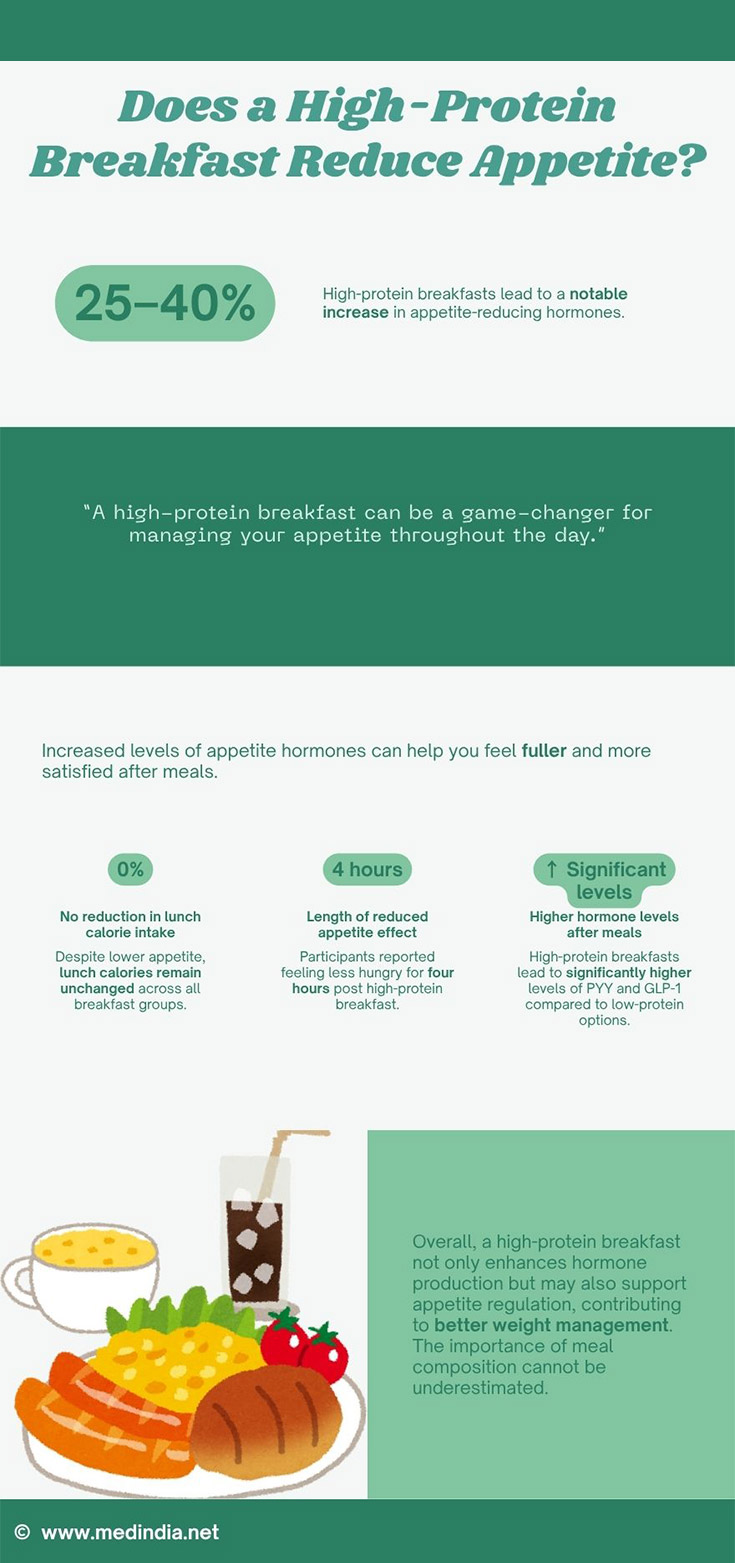
Protein is known to activate fullness-related hormones, particularly peptide YY (PYY) and glucagon-like peptide-1 (GLP-1) . These hormones help slow digestion and enhance the feeling of fullness.In the study, both plant-based and animal-based high-protein breakfasts generated significantly higher PYY and GLP-1 levels compared with a low-protein, high-carbohydrate meal.
Participants also reported lower appetite following the high-protein meals. The reduction was slightly greater with the plant-based drink, which may be related to its higher fiber content or faster gastric emptying due to its liquid form.

High-Protein Breakfast: Your Path to Body Fat Loss
Are you ready to supercharge your mornings, kickstart your metabolism, and embark on a journey to lose body fat?
Are you ready to supercharge your mornings, kickstart your metabolism, and embark on a journey to lose body fat?
How the Breakfast Trial Was Structured
The study used a randomized, within-subject, crossover design. Participants completed three breakfast sessions on separate days: a high-protein plant drink, a high-protein animal-based meal, and a low-protein control breakfast. All meals contained equal energy.After breakfast, appetite ratings were recorded at regular intervals for four hours. Blood samples were also collected to measure changes in PYY and GLP-1. At the end of the session, an ad libitum lunch was provided to evaluate actual calorie consumption (2✔ ✔Trusted Source
High protein intake stimulates postprandial GLP1 and PYY release
Go to source).

Healthy Breakfast Routine Can Reduce Stubborn Belly Fat
A high-protein breakfast routine can reduce the stubborn, flabby belly. Belly fat can lead to serious problems like type 2 diabetes and even heart disease.
A high-protein breakfast routine can reduce the stubborn, flabby belly. Belly fat can lead to serious problems like type 2 diabetes and even heart disease.
What the Researchers Found
Both high-protein breakfasts produced stronger hormonal responses and greater appetite suppression than the low-protein meal.However, when participants were given lunch, there was no difference in the total calories consumed across the three breakfast types.
This means that although hormonal and subjective satiety increased, the effect did not translate into reduced food intake later in the day. The study also found no notable differences between younger and older adults.
What This Means for Daily Eating Habits
The findings support the value of a high-protein breakfast for improving morning satiety, especially for those seeking longer-lasting fullness.However, protein alone is not enough to reduce overall calorie intake. Eating behavior is influenced by multiple factors beyond satiety hormones, including routine, environment, and psychological cues.
Final Takeaway:
A protein-rich breakfast helps you feel fuller and supports healthy appetite signals, but it does not guarantee eating less later. Balanced meal planning throughout the day remains essential.References:
- The effect of consuming different dietary protein sources at breakfast upon self rated satiety, peptide YY, glucagon like peptide-1, and subsequent food intake in young and older adults - (https://pmc.ncbi.nlm.nih.gov/articles/PMC12612008/)
- High protein intake stimulates postprandial GLP1 and PYY release - (https://pubmed.ncbi.nlm.nih.gov/23666746/)
Source-Medindia
 Email
Email