MEDINDIA
 English
 हिन्दी
 Español
 français
 中文
中文
 Email
Email
- Dietary Fats - (https://www.ncbi.nlm.nih.gov/pmc/articles/PMC6628852/)
- A healthy approach to dietary fats: understanding the science and taking action to reduce consumer confusion - (https://www.ncbi.nlm.nih.gov/pmc/articles/PMC5577766/)
- MUFAs - (https://www.ncbi.nlm.nih.gov/pmc/articles/PMC4424766/)
- Facts about polyunsaturated fats - (https://medlineplus.gov/ency/patientinstructions/000747.htm)
- Lipids - (https://www.sciencedirect.com/topics/agricultural-and-biological-sciences/lipids )
- A Study of Edible Oil Consumption in Raipur city. - (https://www.researchgate.net/publication/338527517_A_Study_of_Edible_Oil_Consumption_in_Raipur_city/citation/download)
- Omega-3 Fatty Acids - (https://www.ncbi.nlm.nih.gov/books/NBK564314/)
- Nutrition: Trans fat - (https://www.who.int/news-room/questions-and-answers/item/nutrition-trans-fat# )
Which cooking oil is the best one for you?
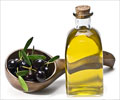
This online health calculator is an easy way to find out the fat content in cooking oil. Vegetable oils are an important part of a healthy diet as they are rich sources of essential fatty acids. Fat is one of the energy producing nutrients in your body. It is essential to include the correct proportion of fat in your diet for good health(1✔).Four types of dietary fats react differently inside your body.
- Saturated Fat
- Monounsaturated Fatty Acid (MUFA)
- Polyunsaturated Fatty Acid (PUFA)
- Trans Fat
Interesting Facts about Fat Content in Vegetable or Cooking oil:
| ❖ | Lipids at room temperature that are solid are called fats, while those that are liquid are called oils(5✔). |
| ❖ | Fat is an energy dense nutrient, as one gram of fat contains 37 kilojoules of energy. |
| ❖ | Coconut and groundnut oil are widely used in the southern and western parts of India, while people in the north and east prefer mustard or rapeseed oil(6✔). |
| ❖ | Palm oil and soyabean oil account for about 50% of total edible oil consumption in India followed by groundnut oil and mustard oil. |
| ❖ | Omega-3 fatty acid is a type of PUFA that helps reduce the risk of heart disease, maintain a normal heartbeat, lower high blood pressure, and develop fetal brain(7✔). |
| ❖ | The American Heart Association and WHO dietary guidelines recommend limiting fat intake to less than 25 to 35% of total calories. Intake of saturated fats should be less than 10% of total calories, monounsaturated fat intake up to 10 to 15%, and unsaturated fat intake up to 10% of total calories. |
| ❖ | WHO recommends a daily intake of trans fat should be less than 1% of total calories(8✔). |