MEDINDIA
 English
 हिन्दी
 Español
 français
 中文
中文
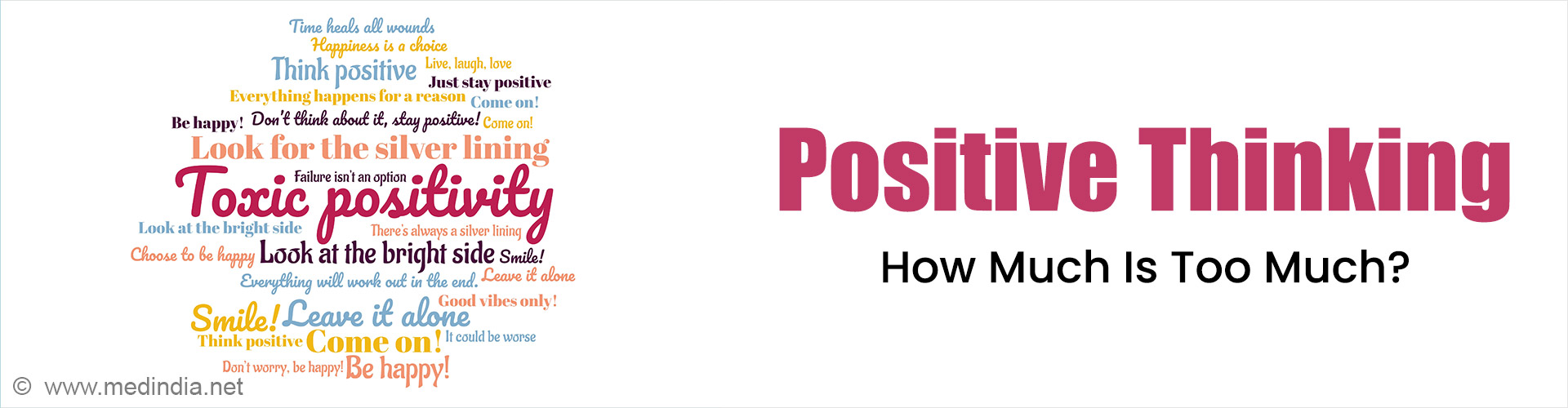
Optimism reduces stress and boosts heart health, but toxic positivity may backfire. Learn how balanced positive thinking really supports well-being and longevity.
Highlights:
For decades, doctors and psychologists have studied how optimism influences health. The evidence is striking: people who maintain a hopeful outlook tend to have lower stress levels, healthier hearts, and even live longer. Studies suggest optimists may enjoy an 11–15% longer lifespan compared to pessimists (1✔ ✔Trusted Source- Optimism linked to better heart health, stress control, and longer life
- Toxic positivity—forced cheerfulness—can worsen mental health
- Experts recommend balanced optimism, not blind positivity
The Power of Positive Thinking
Go to source). Optimism also promotes healthier behaviors—regular exercise, better diet, and stronger social ties—that feed into physical and emotional well-being.

Positive Mood Enhances Creative Thinking
In a study it has been revealed that good or positive mood makes a person to think more creatively.
In a study it has been revealed that good or positive mood makes a person to think more creatively.
TOP INSIGHT

Did You Know?
Yes, optimism can add years to your life. But fake positivity? It may do the opposite. #mentalhealth #optimism #wellbeing #medindia
The Hidden Danger: Toxic Positivity
But here’s the twist. Not all positivity is good. Experts warn against toxic positivity—the belief that you must stay cheerful no matter what.This mindset often pushes people to suppress normal emotions like sadness, anger, or grief. Instead of helping, it can increase stress, deepen anxiety, and prevent healthy coping. In other words, pretending everything is fine when it isn’t may quietly damage mental health.
Myths vs Reality of Positive Thinking
Myth 1: Positive thinking means ignoring problems.
Reality: Healthy optimism faces problems but approaches them with hope.
Myth 2: If you feel sad, you’re being negative.
Reality: Feeling sadness is normal; optimism means believing you can get through it.
Myth 3: More positivity is always better.
Reality: Balance is key—optimism works best when it’s authentic and realistic.

Life Stress Test | Life Stressor Chart
Take Life Stress Test (Life Stressor Chart) to check your stress level. Follow relaxation techniques and know how to relieve stress. Learn how to prevent stress using life stress test.
Take Life Stress Test (Life Stressor Chart) to check your stress level. Follow relaxation techniques and know how to relieve stress. Learn how to prevent stress using life stress test.
How to Practice Balanced Optimism
Psychologists recommend small, practical steps to foster healthy optimism:- Gratitude practice — writing down three good things each day.
- Resilient self-talk — swap “I can’t handle this” with “I’ll do my best.”
- Reality check — allow yourself to feel negative emotions, then focus on solutions.
- Positive circles — surround yourself with supportive people who validate your feelings.

Positive Thinking: New Insights
Realists were found to enjoy a greater sense of long-term wellbeing than optimists, says new study.
Realists were found to enjoy a greater sense of long-term wellbeing than optimists, says new study.
Balance Is the Secret
Optimism isn’t about ignoring life’s struggles—it’s about believing that setbacks are temporary and manageable. Science shows this mindset not only improves mental health but also protects the heart, boosts immunity, and extends life expectancy.At the same time, experts caution that toxic positivity can be just as harmful as chronic pessimism.
The healthiest approach is balance: hope with honesty, positivity with realism.
Reference:
- The Power of Positive Thinking - (https://www.hopkinsmedicine.org/health/wellness-and-prevention/the-power-of-positive-thinking)
Source-Medindia

Positive Thinking Doesn't Come Naturally To Asians?
Doesn’t positive thinking come naturally to the Asians, one might be tempted to ask in the wake of a US study.
Doesn’t positive thinking come naturally to the Asians, one might be tempted to ask in the wake of a US study.
 Email
Email