MEDINDIA
 English
 हिन्दी
 Español
 français
 中文
中文

Your breath holds the key to calming your mind, healing your body, and reclaiming balance in a fast-paced world.
Highlights:
Breathing is something we do naturally to survive, often without even thinking about it. But beyond keeping us alive, the way we breathe can shape our emotions and influence how our brain functions.
- Slow breathing strengthens brain-heart connection and lowers anxiety
- Techniques like Box Breathing and Coherent Breathing are used by Navy SEALs and therapists
- Just 10–20 minutes daily can build emotional balance and reduce trauma response
Life today is often very busy and full of things to juggle. Constant emails, approaching deadlines, and chaotic news cycles cause our minds to feel the same way. Fortunately, discoveries show that how you breathe might be an effective solution for you!
Slow, conscious breathing is no longer just a yogi’s practice or a meditation cliché. It's now supported by rigorous research as a powerful tool for calming the mind, healing the body, and rewiring the brain.

Respiratory Rate and Breath-Count Calculator
Respiratory Rate and Breath-Count Calculator calculates the respiratory rate and number of breaths. More on how breathing exercises and meditation practices are necessary for good health.
Respiratory Rate and Breath-Count Calculator calculates the respiratory rate and number of breaths. More on how breathing exercises and meditation practices are necessary for good health.
TOP INSIGHT

Did You Know?
Breathing at just six times per minute can reset your nervous system and rewire your brain! #breathing #brain #mindfulness #stress #medindia
Your Breath is Your Built-In Stress Switch
Imagine you're standing before a big event—your palms are sweating, your eyes widen, and it feels like you're about to black out. In moments like these, remember the simplest yet most powerful tool you have: your breath. Slowing it down may seem small, but it can stop anxiety in its tracks and give your brain the clarity it desperately needs.Deep breathing has long been recognized by many wellness coaches and therapists as a way to reduce symptoms of trauma, anxiety, and panic attacks. The review describes practical recommendations for both individuals and healthcare professionals, including alternate-nostril breathing and diaphragmatic breathing, and what they can offer both professionals and learners.
In just 10 to 20 minutes a day of breathing practice, you can lower your stress hormones, improve your mental health, and support your emotional well-being.
It’s not magic. It’s muscle memory for your nervous system (1✔ ✔Trusted Source
Breathing Practices for Stress and Anxiety Reduction: Conceptual Framework of Implementation Guidelines Based on a Systematic Review of the Published Literature
Go to source).
Fun Fact: Breathing Right Can Calm Anxiety, Panic, and Post-Traumatic Stress Disorder(PTSD).

Benefits of a Deep Breath
Deep breathing practices can affect your health in enormous ways! Read on to find out how…
Deep breathing practices can affect your health in enormous ways! Read on to find out how…
Slower Breath, Stronger Mind-Body Harmony
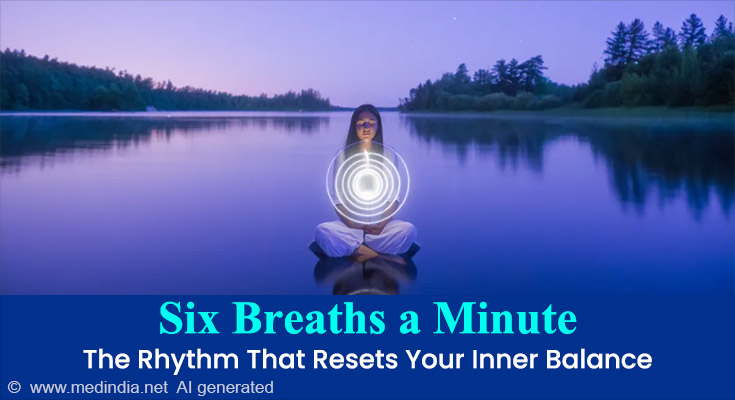
Six Times! That is the rate of breathing needed to activate your body’s natural healing processes. This breathing method lowers blood pressure, heart rate, and oxygen circulation while also easing the lingering effects of stress.What importance does this hold? We often find ourselves feeling tense, as our natural balance in life is disturbed by leading such busy lives.
What is the importance of this? Because we lead busy lives, we tend to spend more time in survival mode than we should. The ongoing stress we feel takes a toll on us. When you breathe slowly, your mind and body begin to understand that you're safe. In that moment of stillness, you can pause amid the chaos and start to heal (2✔ ✔Trusted Source
How Breath-Control Can Change Your Life: A Systematic Review on Psycho-Physiological Correlates of Slow Breathing
Go to source).

Breathe Away Stress: The Power of Anulom Vilom for Mental Peace
Feeling stressed and anxious? Discover how Anulom Vilom, a simple yogic breathing technique, can help you relax and regain mental clarity.
Feeling stressed and anxious? Discover how Anulom Vilom, a simple yogic breathing technique, can help you relax and regain mental clarity.
Calm Isn’t Just a Feeling; It’s a Neural Shift
Deep breathing can relieve your symptoms and improve the way your brain operates. Studies have recently shown that deep breathing strengthens the connection between important parts of the brain.- The prefrontal cortex, which directs reasoning, makes judgments, and handles emotions.
- The amygdala triggers the fear and panic alerts in our brain.
Your Brain Loves Deep Breathing, Science Explains Why
Go to source).
Mindfulness With Paced Breathing Helps Lower Blood Pressure
Mindfulness with paced breathing reduces blood pressure. Paced breathing is deep, diaphragmatic breathing with slow breath rates of 5-7 breaths per minute. High blood pressure is one of the most common cause of stoke and heart attack.
Mindfulness with paced breathing reduces blood pressure. Paced breathing is deep, diaphragmatic breathing with slow breath rates of 5-7 breaths per minute. High blood pressure is one of the most common cause of stoke and heart attack.
Calm in Action
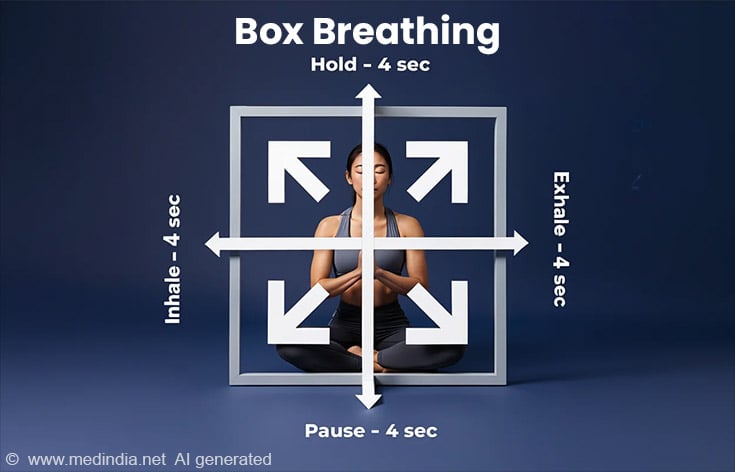
Here are three simple techniques anyone can start with:Box Breathing
Breathe in for 4 seconds → Hold for 4 → Breathe out for 4 → Pause for 4.
Fun Fact: Used by Navy SEALs to stay calm under pressure.
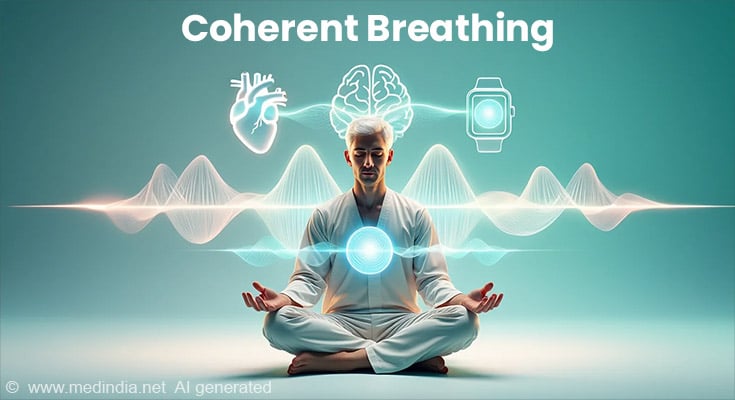
Coherent Breathing
Breathe at a steady pace of 5–6 breaths per minute. You can also use apps to stay in rhythm! Fun Fact: Best for daily de-stressing and heart-brain harmony.
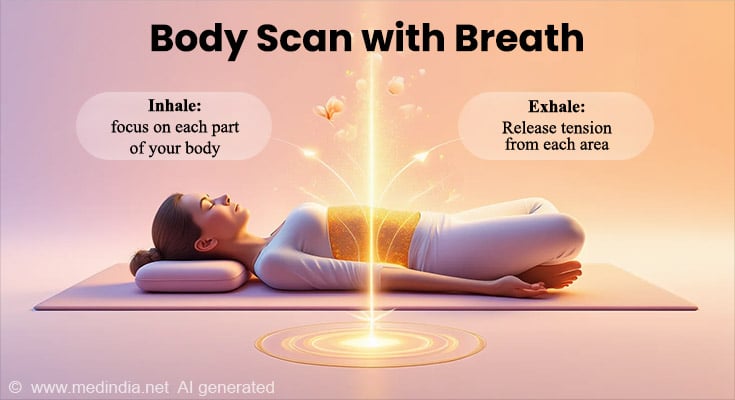
Body Scan with Breath
As you inhale, focus on each part of your body. As you exhale, release tension. Fun Fact: Helps reconnect with your body, especially during anxiety or grief.
Therefore, take a moment the next time you feel like life is getting out of control. Close your eyes. Place a hand on your heart. And breathe!
References:
- Breathing Practices for Stress and Anxiety Reduction: Conceptual Framework of Implementation Guidelines Based on a Systematic Review of the Published Literature - (https://pmc.ncbi.nlm.nih.gov/articles/PMC10741869/)
- How Breath-Control Can Change Your Life: A Systematic Review on Psycho-Physiological Correlates of Slow Breathing - (https://pmc.ncbi.nlm.nih.gov/articles/PMC6137615/)
- Your Brain Loves Deep Breathing, Science Explains Why - (https://neurosciencenews.com/breathwork-calm-neuroscience-28958/)
Source-Medindia
 Email
Email