MEDINDIA
 English
 हिन्दी
 Español
 français
 中文
中文

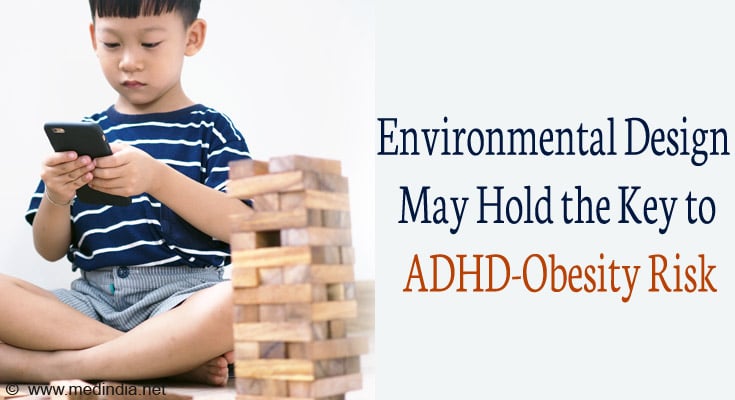
Where a child lives may influence how ADHD increases the risk of obesity, according to a recent study linking environment, behavior, and health outcomes.
Highlights:
How ADHD increases the risk of obesity can depend on the place where a child lives, according to a recent study linking environment, behavior, and health outcomes.
Attention deficit hyperactivity disorder (ADHD) may contribute to obesity by reducing physical activity, an effect that can also be influenced by the characteristics of one's urban environment. The findings of the study were published in the open-access journal PLOS Complex Systems (1✔ ✔Trusted Source- Obesity risk increases in children with ADHD, although it varies by region
- Food availability and community layout may account for the connection
- The study used parental data and included more than 40,000 youngsters from 17 U.S. states
Exploring the Link between ADHD and Obesity: A Focus on Temperament
Go to source).

Adult Attention-Deficit Hyperactivity Disorder (ADHD)
Adult attention-deficit hyperactive disorder (ADHD) is a mental health condition in adults seen as hyperactivity, impulsiveness and reduced attention. ADHD impairs social, academic, neuropsychological and occupational behavior.
Adult attention-deficit hyperactive disorder (ADHD) is a mental health condition in adults seen as hyperactivity, impulsiveness and reduced attention. ADHD impairs social, academic, neuropsychological and occupational behavior.
TOP INSIGHT

Did You Know?
Kids with #ADHD may face a higher risk of #obesity depending on where they live. The environment might shape health more than we think! #childhealth #medindia
The current study examined the relationship between impulsivity, obesity, city size, and urban environment using data from 915 U.S. cities. The group then examined how other cities deviate from this trend, taking into consideration factors like population sizes and characteristics like food security, education, and mental health care accessibility. Researchers discovered that larger cities have lower rates of obesity and ADHD.
According to Dr. Maurizio Porfiri, "These findings underscore the importance of city-level interventions in mitigating the impact of impulsivity disorders on the obesity epidemic."

Quiz on ADHD
Attention Deficit/Hyperactivity Disorder (AD/HD, generally abbreviated as ADHD) is considered a “neurobehavioral developmental disorder”. To know what this definition means and what the causes, symptoms and treatment for ADD are; give our ADHD quiz ...
Attention Deficit/Hyperactivity Disorder (AD/HD, generally abbreviated as ADHD) is considered a “neurobehavioral developmental disorder”. To know what this definition means and what the causes, symptoms and treatment for ADD are; give our ADHD quiz ...
Understanding ADHD: More Than Just Hyperactivity
Attention-Deficit/Hyperactivity Disorder (ADHD) is a developmental disorder that influences individuals, including children and adults, by causing inattention, impulsive behavior and hyperactivity. It may cause you to perform poorly at school, face challenges in your relationships and suffer a lower quality of life.
ADHD Screening Calculator
Do you think that paying attention to someone is becoming impossible? This ADHD calculator may have the answer to your problem!
Do you think that paying attention to someone is becoming impossible? This ADHD calculator may have the answer to your problem!
How Geography Shapes the ADHD-Obesity Connection
When parks or safe streets for walking are unavailable, children with ADHD face a higher chance of becoming obese. Just like the low access to groceries, high numbers of fast-food businesses are also a concern. In various parts of the world, children with ADHD are treated at different times and frequencies. When children do not receive effective pediatric behavioral healthcare in a timely manner, they might develop weaker control over their actions, eat unhealthy food and put on weight.
Health Facts on ADHD
ADHD is a mental disability most common in children. Learn more about the health facts on ADHD and their symptoms, causes, and treatments.
ADHD is a mental disability most common in children. Learn more about the health facts on ADHD and their symptoms, causes, and treatments.
“Understanding the environment these children live in is key to unlocking better outcomes—not just for obesity, but overall well-being.”
- Incorporate environmental risks in each community into public health strategies.
- Expand access to ADHD screening and treatment services in underserved areas.
- Increase the availability of playgrounds and safe recreational spaces for children in urban neighborhoods.
- Educate parents on nutrition, behavior management, and mental health support.
- Implement laws and policies that promote the use of regional data to address and prevent obesity linked to ADHD.
- Exploring the Link between ADHD and Obesity: A Focus on Temperament - (https://pubmed.ncbi.nlm.nih.gov/36552091/)
Source-Medindia
 Email
Email