MEDINDIA
 English
 हिन्दी
 Español
 français
 中文
中文
Fluoride ban could impact tooth decay rates and dental costs among children.

Fluorides and Other Preventive Strategies for Tooth Decay
Go to source).
Fluoride: A Key Player in Reducing Tooth Decay
"Fluoride replaces weaker ions within tooth enamel, making it stronger and less susceptible to tooth decay caused by bacteria," said senior author Lisa Simon MD, DMD, Division of General Internal Medicine at Brigham and Women’s Hospital, a founding member of the Mass General Brigham healthcare system. “There’s strong evidence from other countries and cities, such as Calgary in Canada, showing that when fluoride is eliminated, dental disease increases. Our study offers a window into what would happen in the United States if water fluoridation ceased.
Fluoride Varnish prevents Tooth Decay In Milk Teeth
The use of varnish along with parental counseling will go a long way towards reducing the incidence of tooth decay in childhood, the study says.
The use of varnish along with parental counseling will go a long way towards reducing the incidence of tooth decay in childhood, the study says.
TOP INSIGHT

Did You Know?
A U.S. #fluoride ban could lead to decay in 25.4 million more teeth-the equivalent of one decayed tooth for every 1 in 3 children. #toothdecay #oralhealth #dentalhealth #dentalcosts
The study used detailed oral health and water fluoridation data collected from 8,484 children (ages 0-19, 49% girls) in the nationally representative National Health and Nutrition Examination Survey (NHANES). Using this dataset, the researchers developed a microsimulation model to see how banning fluoride from drinking water would impact oral health, quality of life and dental care costs.
The researchers simulated two scenarios over 5- and 10-year periods, which align with policy planning horizons. First, maintaining current fluoride levels, and second, eliminating the addition of fluoride to public water.

Can Fluoride Shield Teeth from Decay?
In a recent research, scientists have found that the protective layer fluoride that forms on teeth is 100 times thinner than previously believed.
In a recent research, scientists have found that the protective layer fluoride that forms on teeth is 100 times thinner than previously believed.
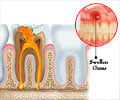
The researchers found that eliminating fluoride increased the total number of decayed teeth by 7.5 percentage points, or 25.4 million more teeth with tooth decay over five years (equivalent to a tooth for one out of every three American children). The number of fluorosis cases—a discoloring of tooth enamel due to excessive fluoride intake—decreased by 0.2 million. They also estimated a cost of $9.8 billion in additional dental care costs over five years, which rose to $19.4 billion after 10 years.

Study Shows How Fluoride Fights Tooth Decay
Recent study has finally solved the mystery of how the fluoride in drinking water, toothpastes, mouth rinses and other oral-care products prevents tooth decay.
Recent study has finally solved the mystery of how the fluoride in drinking water, toothpastes, mouth rinses and other oral-care products prevents tooth decay.
The study did not model cognitive effects from fluoride exposure as current levels of fluoride in public water are not associated with worse neurobehavioral outcomes. The researchers note that their model demonstrates meaningful, ongoing benefit from fluoride at safe levels currently recommended by the Environmental Protection Agency, the National Toxicity Program, and the Centers for Disease Control and Prevention.

Parents Advised To Use Fluoridated Toothpaste in Children
Parents should use toothpastes that contain fluoride with a minimum concentration of 1,000 parts per million to prevent tooth decay in their children, says a new report.
Parents should use toothpastes that contain fluoride with a minimum concentration of 1,000 parts per million to prevent tooth decay in their children, says a new report.
Reference:
- Fluorides and Other Preventive Strategies for Tooth Decay - (https://pmc.ncbi.nlm.nih.gov/articles/PMC5830181/)
Source-Eurekalert
 Email
Email