MEDINDIA
 English
 हिन्दी
 Español
 français
 中文
中文
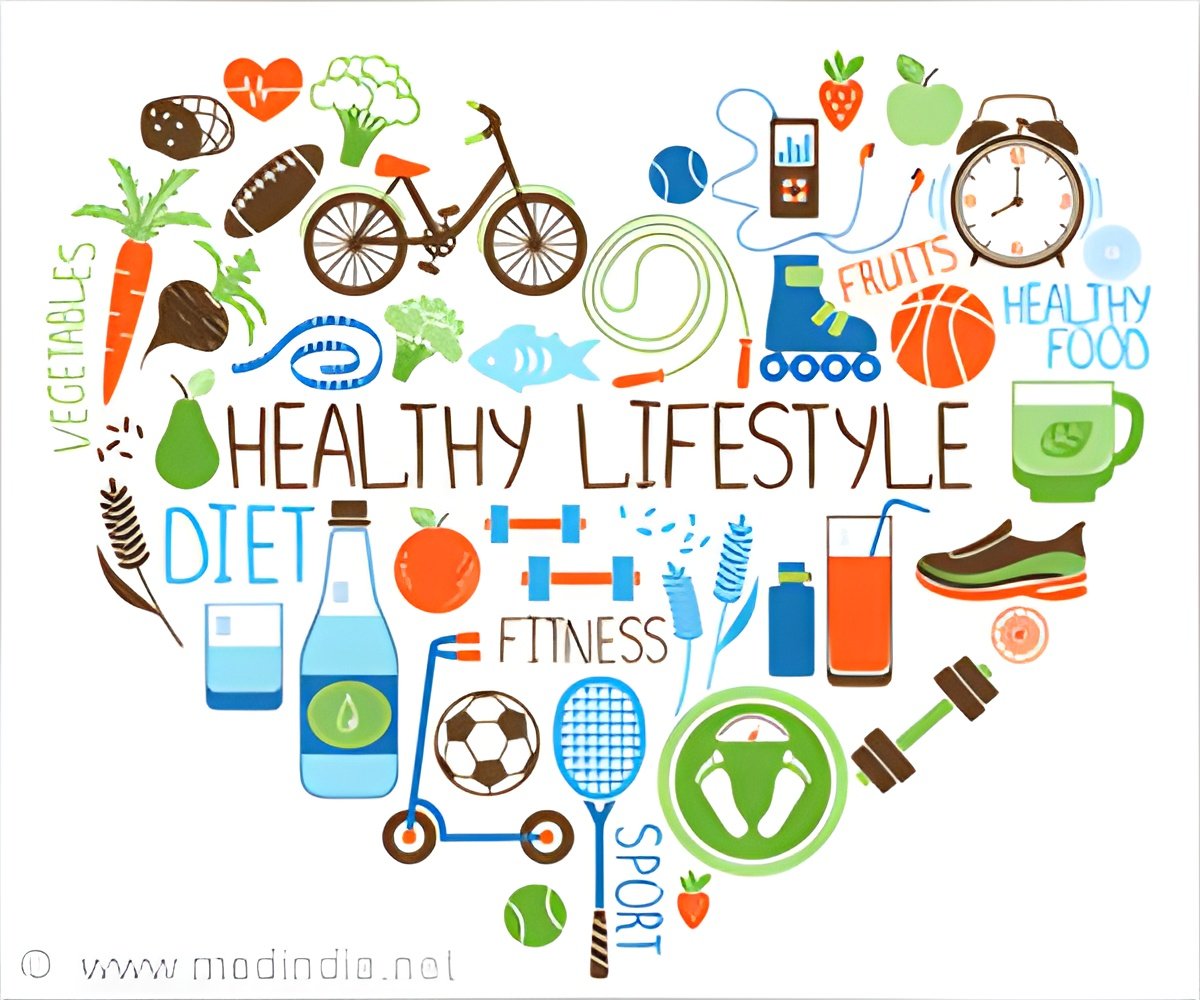
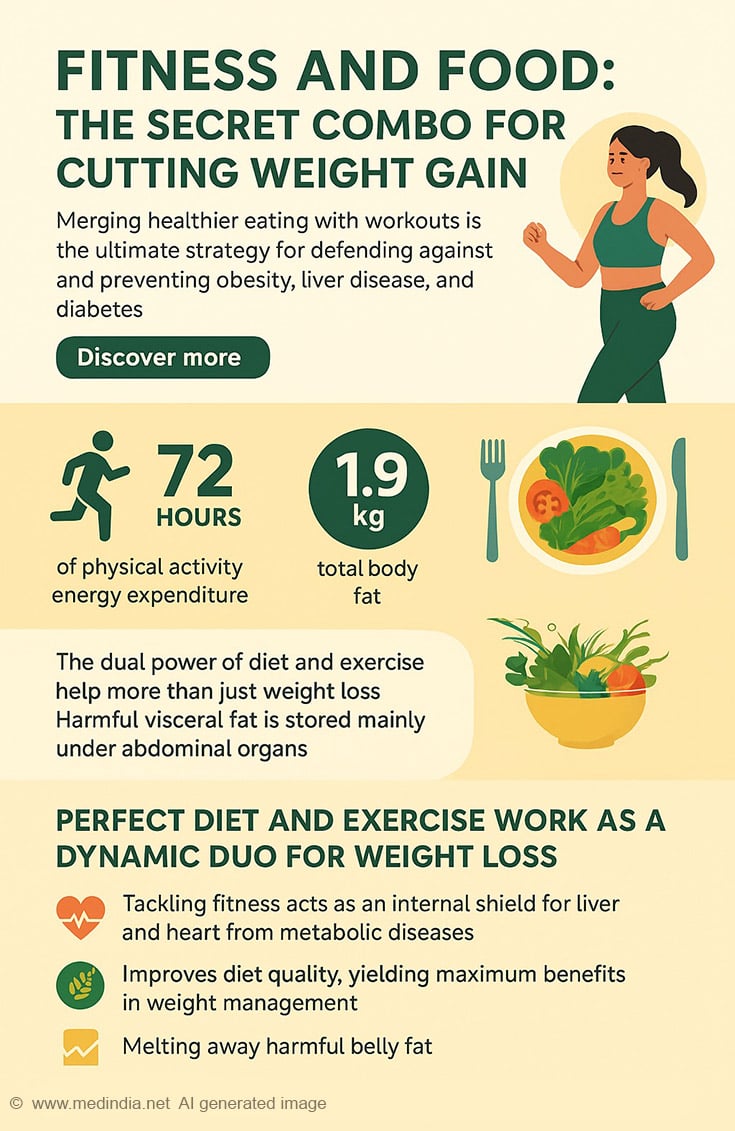
Merging healthier eating with workouts is the ultimate strategy for defending against and preventing obesity, liver disease, and diabetes.
Concurrent Changes in Diet Quality and Physical Activity and Association With Adiposity in Adults
Go to source)
Consistent physical activity with proper nutritious diet (especially Mediterranean diet) could act as interior sheath, dissipate belly fat and protect liver and heart from metabolic diseases such as obesity, type 2 diabetes, heart disease, and fatty liver disease.
The combination also improves diet quality, yielding maximum benefits in weight management.
The mean age of the study participants was 49 years at baseline, and 56 years at follow-up. At baseline, and again after an average of around seven years, the researchers measured Fenland study participants’ physical activity energy expenditure for at least 72 hours using wearable heart rate and movement sensors.

Quiz on Diabetes
Diabetes has replaced every other condition to become the fastest growing lifestyle disease, globally. This disease also impacts children. Some people are more inclined to develop diabetes than others. Do you belong to the high- risk group? Spend 5 ...
Diabetes has replaced every other condition to become the fastest growing lifestyle disease, globally. This disease also impacts children. Some people are more inclined to develop diabetes than others. Do you belong to the high- risk group? Spend 5 ...
TOP INSIGHT

Did You Know?
Perfect #diet and #exercise work as a dynamic duo for weight loss, diligently melting away harmful #belly_fat. Tackling #fitness acts as an internal shield for liver and heart from #metabolic_diseases. #weightloss #nutrition #fattyliverdisease #abdominalfat #hearthealth
Tracking Fat Distribution and Fatty Liver Disease
The researchers also assessed participants’ diet quality by the degree of adherence to the Mediterranean diet pattern using a food frequency questionnaire.The Mediterranean diet focuses on eating fruits, vegetables, whole grains, legumes, nuts, and olive oil, with moderate amounts of fish, poultry, eggs, and dairy, while limiting consumption of red meat and sweets.
On both occasions, the researchers also measured the quantity and distribution of body fat using DEXA, a low-intensity X-ray scan that can distinguish body fat, bone composition, muscle and lean mass across the whole body, and used ultrasound to identify the occurrence of fatty liver disease.
The researchers found that improvements in diet quality and physical activity energy expenditure over time were independently associated with reductions or less gain in weight, overall body fat, and subcutaneous and visceral fat, and a lower incidence of fatty liver disease.
Simultaneous improvements in both diet and physical activity were associated with the greatest reduction in body fat, while improvement in only one of the two behaviours was associated with relatively modest changes.

Quiz on Obesity
“We are indeed much more than what we eat, but what we eat can nevertheless help us to be much more than what we are”. - Adelle Davis There are thousands out there battling ‘the bulge’. With childhood obesity on the rise ...
“We are indeed much more than what we eat, but what we eat can nevertheless help us to be much more than what we are”. - Adelle Davis There are thousands out there battling ‘the bulge’. With childhood obesity on the rise ...
The Target of Effective Health Behavior Changes
For example, Fenland Study participants who improved both their diet and activity gained on average about 1.9 kg less total body fat and 150g less visceral fat over the follow-up period compared with those who did not improve their behaviours. This difference is equivalent to approximately 7% of the baseline total body fat and 16% of the baseline visceral fat in the population.The researchers found that after adjusting for body mass index, the association of changes in diet and physical activity with changes in visceral fat remained significant, while the association with subcutaneous fat did not, indicating that visceral fat was particularly responsive to the changes in health behaviours.
First author Dr. Shayan Aryannezhad from the MRC Epidemiology Unit, said: “When people talk about changes in body weight, they often refer to a single number on the scale. But not all weight loss or gain is the same. First of all, we need to focus on fat mass when considering the risk of metabolic diseases like diabetes and heart disease.”
Second, body fat is stored in different places, and some types are more harmful than others. So, when we gain or lose weight, it matters where these changes happen.
Weight Loss Calculator
Weight Loss Calculator calculates calories needed to lose weight for men and women. Find out the amount of calories burned while doing exercises for weight loss and check the list of low calorie foods.
Weight Loss Calculator calculates calories needed to lose weight for men and women. Find out the amount of calories burned while doing exercises for weight loss and check the list of low calorie foods.
Reducing Harmful Fat Around Internal Organs
“We found that combining a better diet with more physical activity is an effective way to improve not just weight, but how much and where fat is stored in the body. It’s particularly effective at reducing the build-up of harmful fat around organs.”Senior author Professor Nita Forouhi, also from the MRC Epidemiology, said: “Our research shows that improvements in diet with more physical activity in middle-age don’t just result in weight loss, but can potentially help prevent disease and support healthier ageing.
“Despite the challenges of living in environments that promote unhealthy eating and inactivity, there is benefit from making small, sustained changes that lead to both healthier diets and increased energy expenditure.
“To address the epidemic of obesity and its huge social, psychological and health service costs, policy makers should seek to alter the food and physical activity environments to make healthier choices more accessible for all.”
Reference:
- Concurrent Changes in Diet Quality and Physical Activity and Association With Adiposity in Adults - (https://jamanetwork.com/journals/jamanetworkopen/fullarticle/2841742)
Source-Eurekalert
 Email
Email