MEDINDIA
 English
 हिन्दी
 Español
 français
 中文
中文
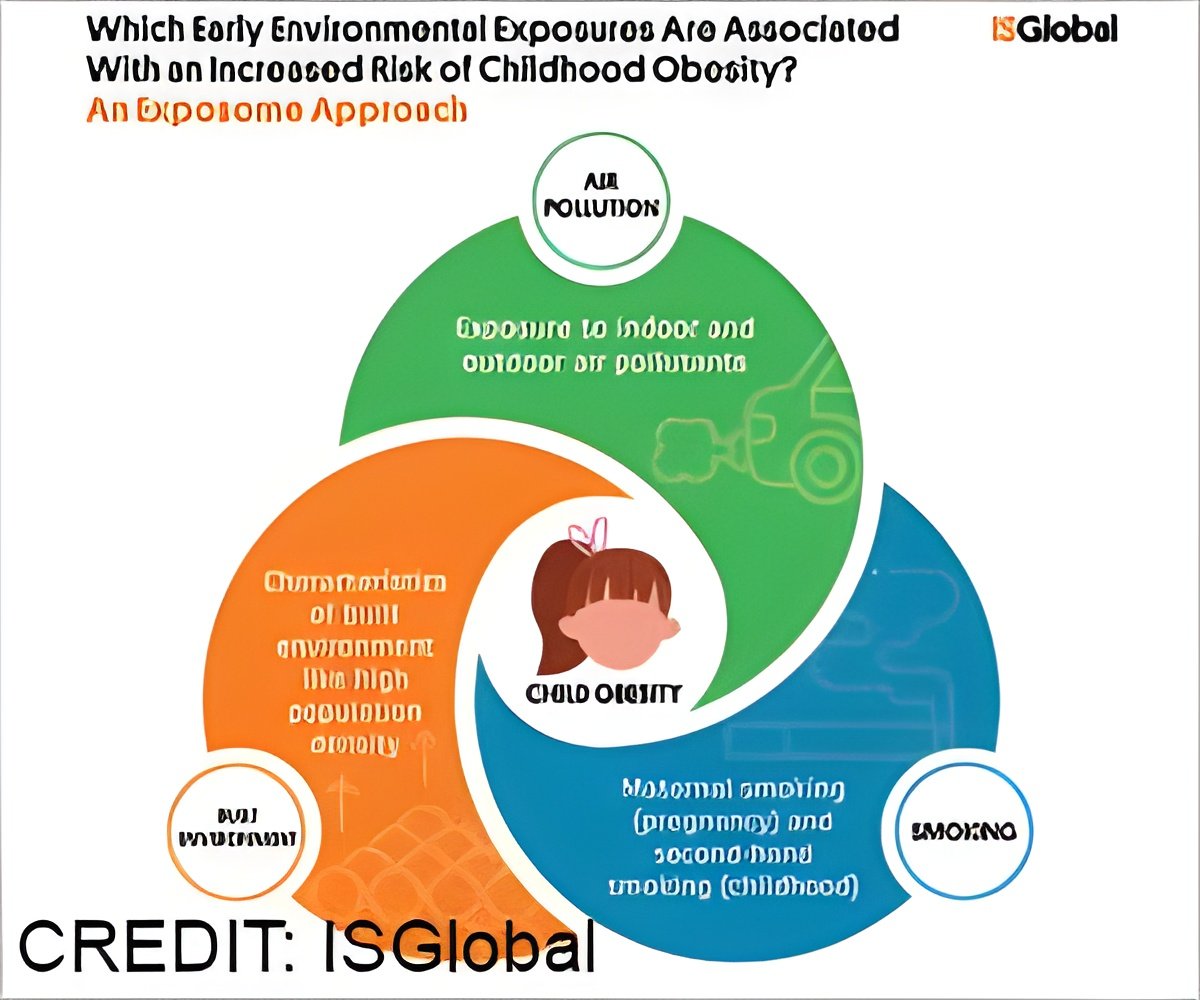
Air pollution, smoking, and built environment are linked to a higher risk of childhood obesity, said new study.
Childhood Obesity - Criteria - Causes - Complications, Treatment
Childhood obesity is one of the most serious health challenges in the developing countries and needs to be understood and tackled effectively.
Childhood obesity is one of the most serious health challenges in the developing countries and needs to be understood and tackled effectively.
TOP INSIGHT

Exposure to smoking (both maternal smoking during pregnancy and second-hand smoking during childhood), air pollution (PM2.5 and PM10 particulate matter and nitrogen dioxide, indoor and outdoor) as well as certain characteristics of the built environment were associated with a higher childhood BMI.
The authors used data on body mass index (BMI), waist circumference, skinfold thickness and body fat mass to determine the children's overweight and obesity status. Blood and urine samples from the children and their mothers during pregnancy were also analysed. In total, 77 pregnancy and 96 childhood exposures were assessed, including air pollutants, built environment, green spaces, smoking and chemical pollutants (persistent organic pollutants, heavy metals, phthalates, phenols and pesticides).
ISGlobal researcher Martine Vrijheid, who coordinates the HELIX project and was the first author of the study, commented: "The prevalence of childhood obesity is increasing at alarming rates across the globe and may have increased even more than usual during the COVID-19 lockdown period." The findings of the study, which used data collected before anti-COVID-19 measures were introduced, were in line with global trends: the combined prevalence of overweight and obesity was 29% for the study population as a whole, with higher percentages for the cohorts from Spain (43%) and Greece (37%). Differences in socio-economic status did not explain these findings.
Air Pollution - Pollutants - Health Effect - Efforts to Reduce
Nearly 2.4 million deaths every year are attributable to air pollution. Air pollutants may be solid particles, liquid droplets or gases. Proper planning methods should be adopted to reduce air pollution.
Nearly 2.4 million deaths every year are attributable to air pollution. Air pollutants may be solid particles, liquid droplets or gases. Proper planning methods should be adopted to reduce air pollution.
Obesity and Unwalkable Cities

Smoking Risk Calculator
Do you smoke cigarettes daily? Use medindia smoking risk calculator and calculate your reduced Life Span due to Smoking.
Do you smoke cigarettes daily? Use medindia smoking risk calculator and calculate your reduced Life Span due to Smoking.
"These findings provide further evidence that modifying environmental exposures early in life can limit the risk of obesity and associated complications," commented Martine Vrijheid. "The implications for public health are important since these results may help to identify obesity-related exposures that could be targeted for prevention and intervention early in life."
COVID-19 Lockdowns can Worsen Childhood Obesity
Lockdowns implemented across the world due to the novel coronavirus pandemic could exacerbate childhood obesity due to improper diet and sleep and lack of physical activity, reveals a new study.
Lockdowns implemented across the world due to the novel coronavirus pandemic could exacerbate childhood obesity due to improper diet and sleep and lack of physical activity, reveals a new study.
Source-Eurekalert
 Email
Email