MEDINDIA
 English
 हिन्दी
 Español
 français
 中文
中文
A super-resolution microscope has discovered the Nipah virus and its complex arrangement within the cells
Kerala Man Suspected of Nipah Virus Detained in Goa Hospital
A Kerala man who travelled to Goa had shown symptoms similar to those who were affected with Nipah virus. The authorities have kept him in isolation ward at a leading hospital in Goa.
A Kerala man who travelled to Goa had shown symptoms similar to those who were affected with Nipah virus. The authorities have kept him in isolation ward at a leading hospital in Goa.
TOP INSIGHT

This observation has implications for vaccination and not just against Nipah but potentially against influenza, HIV, and other enveloped viruses.
Nipah can cause severe diseases and fatal brain swelling in both humans and animals. Yearly outbreaks in Southeast Asia kill 40 to 90 percent of those infected. In 2018, only two out of 19 people infected by Nipah in India survived an outbreak.
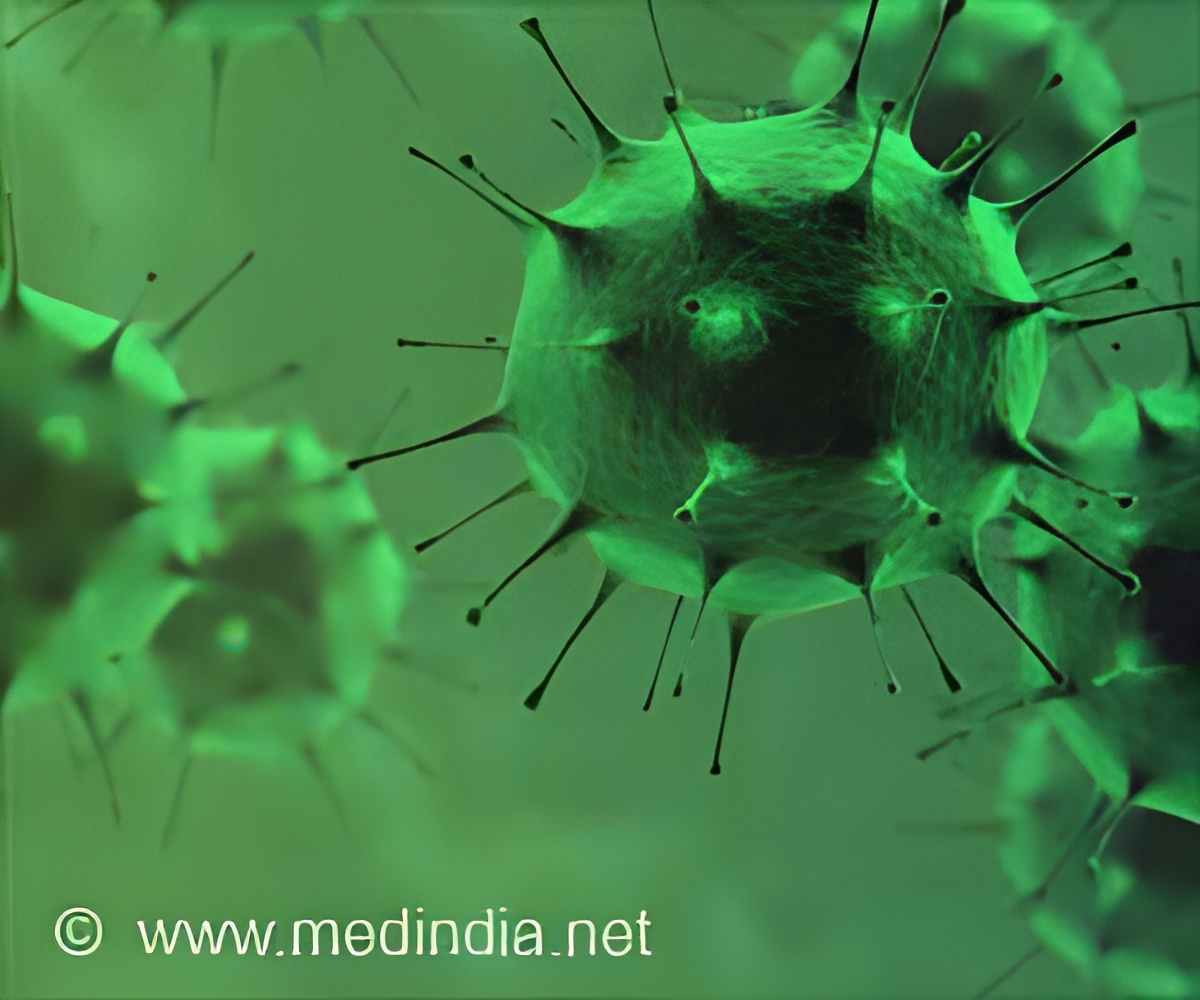
Nipah virus has three structural proteins: a matrix protein that provides structure, and two envelope proteins that enable the virus to attach and fuse with host cells. Scientists have believed that matrix proteins "recruit" envelope proteins, sending out some sort of signal so they can all join together on the cell membrane and become a functional virus. Researchers have tried to identify this signal in hopes of finding ways to disrupt the process.
Nipah Virus Attack: Last Two Positive Cases Have Recovered, Says Kerala Health Minister
After claiming nearly 16 lives, Nipah virus spread has finally come to an end, last two positive cases recovered, assures the Kerala Health Minister K.K. Shailaja.
After claiming nearly 16 lives, Nipah virus spread has finally come to an end, last two positive cases recovered, assures the Kerala Health Minister K.K. Shailaja.
This observation has implications for vaccination, not just against Nipah but potentially against influenza, HIV and other enveloped viruses. Vaccines work by exposing a person to a small amount of modified virus or viral proteins, which rallies the body's natural defense.
Nipah Virus: Death Toll Rises to 16 in Kerala
Kerala gets a warning of a possible second outbreak of Nipah Virus by the state Health Minister K.K. Shailaja, as the death toll has raised to 16 in the past two days in the Kerala district.
Kerala gets a warning of a possible second outbreak of Nipah Virus by the state Health Minister K.K. Shailaja, as the death toll has raised to 16 in the past two days in the Kerala district.
"If a vaccine contains a large percentage of virus-like particles that have only the matrix protein but not the envelope proteins, it won't trigger a strong immune response to the proteins that are most essential for helping a virus enter cells," said Qian Liu, a postdoctoral fellow in UBC's chemistry department who was lead author of the study. "Vaccines could be made more effective if we find a way to exclude those non-functional particles from the mix."
No Reports of Nipah Virus in Delhi
No Nipah virus infections have been reported in the Indian capital so far
No Nipah virus infections have been reported in the Indian capital so far
 Email
Email