MEDINDIA
 English
 हिन्दी
 Español
 français
 中文
中文
Brain tumors can occur in children and adults with the common genetic syndrome known as neurofibromatosis type 1 (NF1), which is a disorder characterized by birthmarks on the skin and benign nerve tumors.
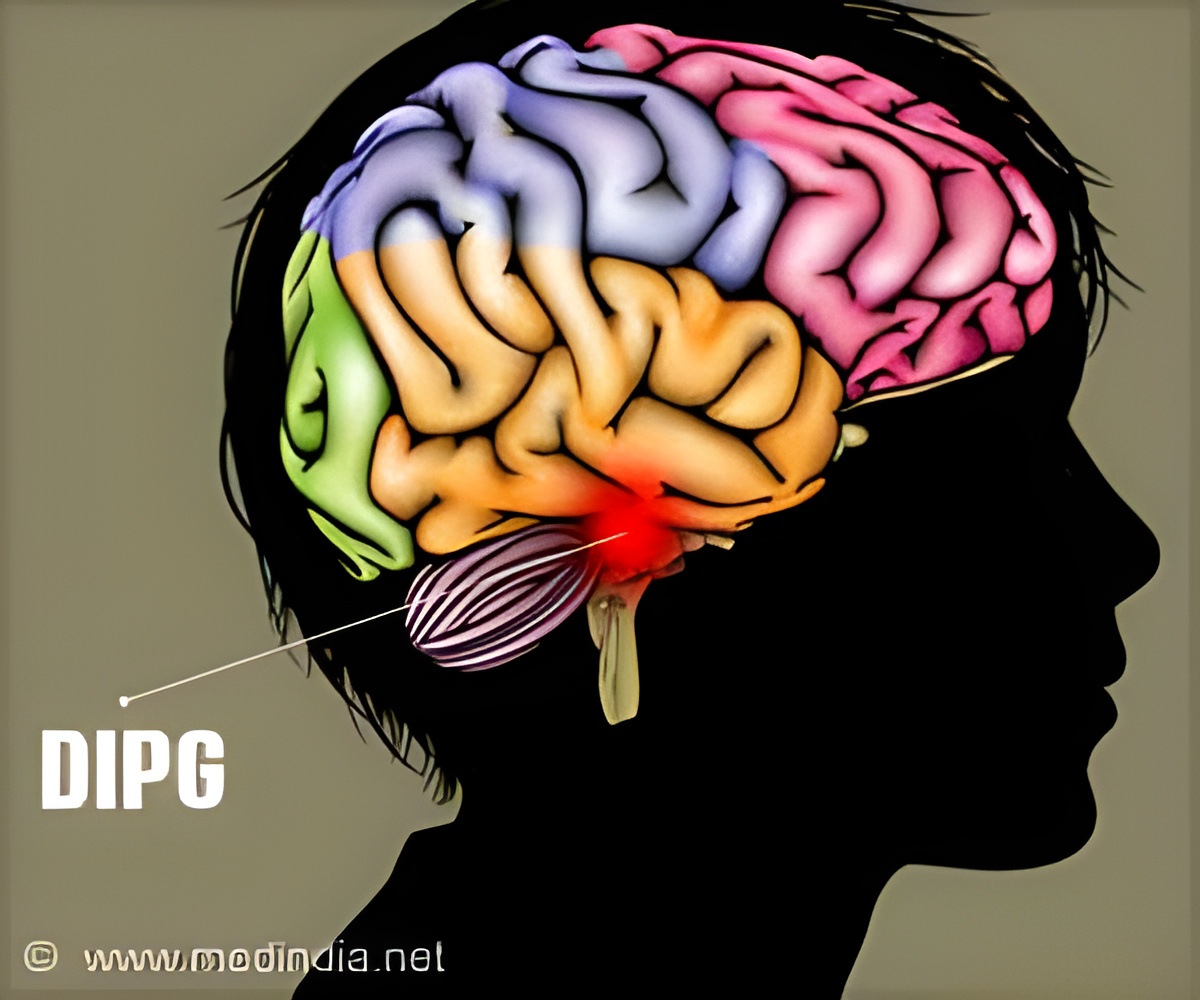
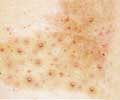
Von Recklinghausen's Disease | Neurofibromatosis Type 1
Von Recklinghausen's Disease / Neurofibromatosis can cause bone deformities and skin problems. Multiple soft-nerve tumors or neurofibromas are seen. Light brown tan spots develop on the skin.
Von Recklinghausen's Disease / Neurofibromatosis can cause bone deformities and skin problems. Multiple soft-nerve tumors or neurofibromas are seen. Light brown tan spots develop on the skin.
TOP INSIGHT

Brain tumors can be confused with harmless bright spots. Therefore, a set of criteria have been developed to distinguish tumors from other bright spots.
"I'm not delivering the message anymore that brain tumors are rare in NF1. This study has changed how I decide which children need more surveillance and when to let the neuro-oncologists know that we may have a problem," said senior author David H. Gutmann from the Washington University School of Medicine.
Brain Magnetic Resonance Imaging (MRI) scans of children with NF1 characteristically show bright spots that are absent in the scans of unaffected children. Unlike tumors, they are generally thought to disappear in teenage years, the researchers said.
Since brain tumors can be confused with harmless bright spots, it has never been clear whether finding these abnormalities via MRI should be a cause for concern, they added.
For the study, the team developed a set of criteria to distinguish tumors from other bright spots. The research team then analysed scans from 68 NF1 patients and 46 children without NF1 for comparison.
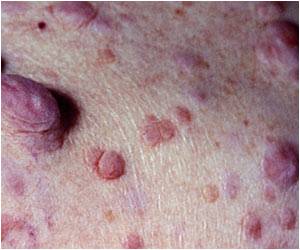
Cancer Risk in Neurofibromatosis Patients Due to Mutations
Mutations in NF1 gene among those with neurofibromatosis type 1. Can increase the risk of tumors in the spinal cord, optic nerves.
Mutations in NF1 gene among those with neurofibromatosis type 1. Can increase the risk of tumors in the spinal cord, optic nerves.
Applying the new criteria to MRI scans will help physicians identify probable tumors, but that does not mean that all children with NF1 should be scanned regularly, the researchers cautioned.
Neurofibromatosis Type 1 (Nf1) Gene Mutations Increase Risk of Vision Loss
Girls with neurofibromatosis type 1, rare genetic disorder caused by Nf1 gene mutations are at an increased risk of vision loss than boys with Nf1 mutations.
Girls with neurofibromatosis type 1, rare genetic disorder caused by Nf1 gene mutations are at an increased risk of vision loss than boys with Nf1 mutations.
Source-IANS
 Email
Email