MEDINDIA
 English
 हिन्दी
 Español
 français
 中文
中文
 Email
Email
- 5 things to know about "popcorn brain" - (https://mcpress.mayoclinic.org/mental-health/5-things-to-know-about-popcorn-brain)
About
In our always-online world, many people feel restless, distracted, or unable to focus for long. This is what some experts call "popcorn brain syndrome".
This is a mental state triggered by nonstop digital stimulation where the mind jumps like popcorn kernels from one piece of information to the next. The term may sound informal, but it captures a real shift in how we think, learn and engage with the world.
Did You Know?
Your brain might now expect a new piece of information every 47 seconds, thanks to constant screen switching.
#popcornbrain #digitaldetox #medindia




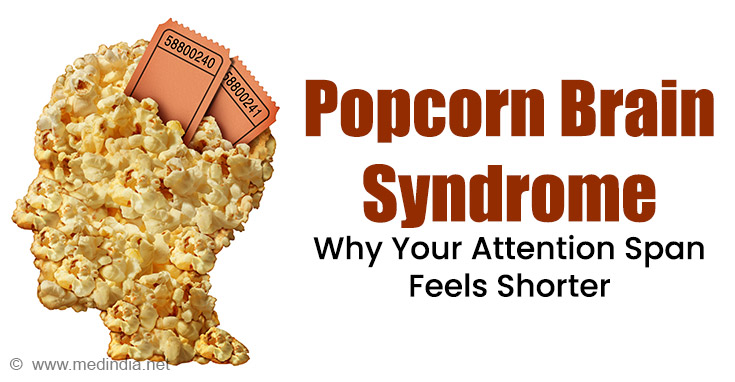
What is Popcorn Brain?
The term popcorn brain was coined by David M. Levy in 2011, to describe the impact of constant electronic multitasking and rapid information flows(1✔ ✔Trusted Source
5 things to know about "popcorn brain"
Go to source). When your brain becomes accustomed to rapid digital bursts - swift notifications, endless scrolls, short videos - it begins to crave that speed and novelty. Real-life tasks that require sustained attention, thoughtful reflection or slow pace begin to feel dull or unbearable.
Over time, this pattern of digital overstimulation can lead to shortened attention spans, reduced patience, increased distractibility, and even mental fatigue.
For teens and young adults, whose brains are still developing, the effects may be especially strong. For adults, it may mean difficulty concentrating at work, poor sleep, and frustration when the pace of offline life doesn't match the rapid pace of digital life.
Screen Time and Digital Multitasking Fuel Popcorn Brain
Modern devices and apps are designed to hook our attention. Every time a notification pings, when we switch between apps or stream a new video, our brain's reward system gets a small hit of dopamine. This "reward loop" reinforces the habit of rapid switching and shallow thinking.
When the brain becomes trained for constant novelty, slow tasks, like reading a book, holding a long conversation, coding, or simply sitting quietly, feel uncomfortable.
Studies show multitasking is particularly bad for attention and memory, because each switch demands cognitive effort and creates fatigue(1✔ ✔Trusted Source
5 things to know about "popcorn brain"
Go to source). Over time, that means our ability to focus deeply, think critically, or even unwind may decline.
Symptomsand Signs of Popcorn Brain
Being sensitive to digital change is normal, but popcorn brain shows up in predictable ways. According to mental-health experts, you might notice:
- Checking devices frequently, even when nothing urgent requires attention.
- Jumping between tasks, thoughts, or apps with a restless mind.
- Struggling to focus on a single task and getting bored easily.
- Finding less enjoyment in slow-paced activities like reading, conversations, or hobbies.
- Feeling heightened anxiety, mental fatigue, or irritability when offline or away from devices.
- Sleeping poorly or constantly feeling "on."
In teens especially, parents and psychologists note that popcorn brain can appear as short attention spans, emotional dysregulation, poor academic focus, and increased screen dependency.
Why Popcorn Brain is More Than Just Distraction
It may be tempting to dismiss popcorn brain as mere screen distraction, but the stakes are higher. When our brains become wired for constant digital stimulation, several deeper issues can come into play:
- Impaired learning: Sustained attention and deep thinking are essential for complex learning and memory. Constant distractions erode these abilities.
- Emotional regulation: When the brain expects fast feedback, it may struggle with patience, boredom, and critical interpersonal skills.
- Sleep and recovery: Obviously, screens before bed, digital stimulation and fragmented attention hurt sleep quality and mental rest.
- Relationship and social effects: If you cannot engage deeply offline, your real-life relationships may suffer.
In other words, popcorn brain is not just about attention. It affects how you think, feel and relate to the world around you.
How Popcorn Brain Can be Treated
Good news: popcorn brain isn't permanent. Because the brain is plastic, you can retrain it for deeper focus, slower pace and richer engagement. Here are practical steps to help your brain recover:
- Set tech-boundaries: Use your device's "focus mode", disable non-essential notifications, or schedule phone-free blocks(1✔ ✔Trusted Source
5 things to know about "popcorn brain"
Go to source). - Single-tasking over multitasking: Focus on one activity at a time. For example, read a book for 15 minutes without phone interruptions, then give yourself a break.
- Slow activity and boredom tolerance: Engage in hobbies, walks, nature time, or quiet reflection that don't demand fast digital feedback. Embrace "slow time".
- Digital detox routines: Create screen-free periods, especially before bed, so your brain can unwind and regenerate.
- Mindfulness and presence: Practices like meditation, deep breathing, or journaling help rewire attention and reduce the need for instant stimulus.
- Model healthy habits: Especially for children and teens, parental modelling matters. If adults show healthy device use, younger people learn it too.
By combining these habits consistently, your brain can recalibrate from constant "pop" mode into deeper, more sustained focus and richer mental involvement.
Navigating Modern Life in Today's Digital Reality
We live in a digital world, and devices aren't going away. The goal isn't to eliminate screens entirely, it's about creating a balanced relationship with technology, rather than letting it control your brain's pace.
Recognise when your mind is "popping" and choose when to disconnect. Instead of being driven by notifications, drive your attention.
Parents, educators and wellness enthusiasts are especially concerned about popcorn brain in children and adolescents. Since their brains are still developing, the long-term effects of digital overload may accumulate more quickly.
Setting healthy habits early leads to better attention, emotional resilience and healthier relationships with technology.
Slowing Down to Tune In
Popcorn brain may sound like a playful phrase, but it reflects a serious shift in how our brains are adapting to technology. If the only way our minds can engage is through fast-paced digital feedback, then slower, real-life experience becomes harder to appreciate.
By reclaiming a slower rhythm through single-tasking, mindful breaks, device boundaries and embracing stillness, we give our brains the chance to recover. Slide off the endless scroll, unplug for a moment, and your mind may just find the space it has forgotten it had.