 MEDINDIA
 English
 हिन्दी
 Español
 français
 中文
中文
 Email
Email
- Importance of resting heart rate - (https://pubmed.ncbi.nlm.nih.gov/35623552/)
- Resting pulse rate as an indicator of health and disease - (https://pubmed.ncbi.nlm.nih.gov/22717860/)
- Effect of measurement duration on accuracy of pulse-counting - (https://www.ncbi.nlm.nih.gov/pmc/articles/PMC3877911/)
- Clinical Methods: The History, Physical, and Laboratory Examinations - (https://pubmed.ncbi.nlm.nih.gov/21250045/)
- Target Heart Rate and Estimated Maximum Heart Rate - (https://www.cdc.gov/physicalactivity/basics/measuring/heartrate.htm)
- Target Heart Rate and Estimated Maximum Heart Rate - (https://www.cdc.gov/physicalactivity/basics/measuring/heartrate.htm# )
- Benefits of different intensity of aerobic exercise in modulating body composition among obese young adults: a pilot randomized controlled trial - (https://www.ncbi.nlm.nih.gov/pmc/articles/PMC5571495/ )
- Association between heart rate variability and manual pulse rate - (https://www.ncbi.nlm.nih.gov/pmc/articles/PMC3743650/)
- Exercise intensity - (https://www.betterhealth.vic.gov.au/health/healthyliving/exercise-intensity)
- Cardiovascular Effects and Benefits of Exercise - (https://www.ncbi.nlm.nih.gov/pmc/articles/PMC6172294/ )
- Role of Physical Activity on Mental Health and Well-Being: A Review - (https://www.ncbi.nlm.nih.gov/pmc/articles/PMC9902068/ )
- Vital Sign Assessment - (https://pubmed.ncbi.nlm.nih.gov/31985994/)
- The heart rate increase at the onset of high-work intensity exercise is accelerated by central blood volume loading - (https://pubmed.ncbi.nlm.nih.gov/16307281/)
The pulse rate calculator is designed to determine the ideal resting heart rate across different age groups, including new-borns, infants and pregnant women during their 1st, 2nd or 3rd Trimester. A resting heart rate is a key health metric, indicative of overall health status and predicting potential future health issues(1✔).
Resting rate has the same value for monitoring of other cardiovascular risk markers such as blood pressure, lipids, smoking status and weight. Our pulse rate calculator aims to raise awareness and encourages self-monitoring to maintain your health. For reasons not fully understood, the link between pulse rate and health is less pronounced in women(2✔). In the results section you would have an additional option to calculate .your target heart rate during exercise.
'How to Count Your Pulse'
- Turn the hand facing the palm side up.
- Place your index finger along with the second and third finger just below the thumb.
- Exert slight pressure with the index and second finger against the bone.
- Count the pulse for 15 seconds using a watch or clock and multiply the number by 4(3✔) or count for a full minute.
How to count the Pulse Rate or Heart Beat per minute (BPM)?
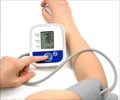
Pulse rate and heartbeat are the same measurements and essentially interchangeable terms however pulse is generally a simpler and more straightforward way to measure the heart rate. Pulse rate is counted by putting slight pressure on any artery where pulsations can be felt. The most convenient location is the wrist (radial pulse). Other locations include the side of the neck (carotid pulse), groin (femoral pulse), or side of the foot (posterior tibial artery pulse)(4✔).Table comparing Resting Heart Rate and Target Heart Rate
| Heart Rate Type | Description | Typical Range (beats per minute) |
| Resting Heart Rate | The number of heartbeats per minute while at rest; an indicator of overall cardiovascular health. | 60-100 |
| Target Heart Rate | The advised heart rate to aim for during exercise to gain maximum aerobic benefit without overstraining. | 50-85% of maximum heart rate |
Why Should you maintain Target Heart Rate During Exercise?
Maintaining a target heart rate during exercise or physical exertion is valuable for several reasons:- Improves Heart and Lung Function: Exercising within your target heart rate zone ensures that your cardiovascular system is being adequately challenged, leading to improvements in heart and lung function(5✔).
- Being Safe: Staying within this range helps avoid overexertion, reducing the risk of excessive strain on the heart.
- Optimal Weight Management: Exercising at the right intensity maximizes calorie burn and fat utilization, contributing to more effective weight management or loss(5✔).
- Customized Workouts: Everyone's fitness level is different. By knowing your target heart rate, you can tailor your exercise intensity to your personal fitness level, making workouts more efficient and effective(6✔).
- Exercise Improves Efficiency: As your fitness level improves, your resting heart rate will typically come down. This can be an indicator of increased cardiovascular efficiency and better cardiac reserve(7✔).
- Boosts Mood and Well-being: Exercising within a target heart rate zone can also improve mental health, reducing symptoms of depression and anxiety, and boosting overall mood(8✔).
Important Facts About Pulse Rate or Heartbeat
- Normal values for pulse rate depend on age and the fitness level.
- A normal adult has a pulse rate of 72/minute however an athlete’s resting pulse rate maybe below 50 per minute(10✔).
- An adult with an average resting pulse rate above 70 beats per minute can have a slightly higher incidence of heart attacks.
- One can lower the pulse rate by lifestyle changes - by controlling what is eaten and by doing regular exercises.
- Heart beat increases after meals, during sex, during exercise and can vary during the day(11✔).










My blood pressure is find, I am not a diabetic, my heart is find. Low thyroids and high in cholesterol But checking my pulse rate staying at 46. When exercise outside it is 74. Take water exercise 3 days a week, low pulse rate 48. Have dizzy, tired feelings.