MEDINDIA
 English
 हिन्दी
 Español
 français
 中文
中文
Parents can boost language development by talking, responding, and reading to babies early; seek expert help if concerns arise.

Early expressive and receptive language development in preterm vs full-term children: A meta-analysis
Go to source). Previous research has shown that preterm children often perform worse on language assessments during their school years. But do these differences start much earlier?

Caring for a Premature Baby
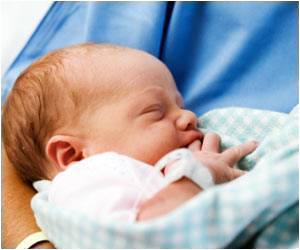
A baby born at 37 weeks or earlier is termed premature or “preemie.” The premature baby requires special care and attention in an NICU as well as at home.
A baby born at 37 weeks or earlier is termed premature or “preemie.” The premature baby requires special care and attention in an NICU as well as at home.
TOP INSIGHT

Could a child's earliest days impact their future #language skills? New research suggests a surprising link between birth timing, #birth_weight, and language comprehension. #ChildDevelopment #LanguageLearning #PreTermInfants
Early Language Gaps Revealed
A research team at the University of Zurich set out to investigate whether language delays appear within the first 18 months of life. Conducting a meta-analysis of 21 studies across nine countries, involving more than 1,800 children, they found clear evidence: preterm infants aged 3 to 18 months scored lower in both language comprehension and expression than their full-term peers.These findings highlight the importance of early detection and intervention to support language development in preterm babies.
“These results should be interpreted with caution,” says lead author Miriam Löffler. “The preterm infants in the studies we analyzed were, on average, born at 30 weeks of gestation.” In reality, about 75 percent of all preterm births occur later, between 34 and 37 weeks.

Quiz on How much do You Know About Infants
The first year after the baby’s birth is enjoyable as the baby is learning new things everyday. Take this quiz on the baby’s first year after birth and test your knowledge about ...
The first year after the baby’s birth is enjoyable as the baby is learning new things everyday. Take this quiz on the baby’s first year after birth and test your knowledge about ...
The meta-analysis highlights the importance of identifying potential language delays within the first months of life. While many early signs may resolve over time, they can still indicate future developmental risks.

Prioritizing Early Intervention: Systematic Language Monitoring for Preterm Infants
That’s why early language development should be systematically monitored during routine health check-ups – especially in preterm infants – and supported with targeted interventions when needed.“Parents also play a vital role in fostering their child’s language development,” Löffler emphasizes. “Talking frequently with their baby from the very beginning, responding to their sounds, or looking at books together all help lay essential foundations. If there are concerns, it’s wise to consult a pediatrician or a speech-language specialist early on.”
Autism: Presence or Absence of Early Language Delay Alters Anatomy of the Brain
A common characteristic of autism, language delay in early childhood, leaves a 'signature' in the brain, says a new study.
A common characteristic of autism, language delay in early childhood, leaves a 'signature' in the brain, says a new study.
- Early expressive and receptive language development in preterm vs full-term children: A meta-analysis - (https://publications.aap.org/pediatrics/article-abstract/doi/10.1542/peds.2024-070477/202663/Early-Expressive-and-Receptive-Language)
Source-Eurekalert
 Email
Email