MEDINDIA
 English
 हिन्दी
 Español
 français
 中文
中文

Kinetic oscillation stimulation through the nasal cavity can reduce migraine days by calming pain-related nerve activity.
Highlights:
Kinetic oscillation stimulation, a form of nasal cavity vibration therapy, has been found to lower the number of monthly migraine days by over three days, offering potential relief for individuals dealing with chronic migraine episodes. This technique works by delivering controlled vibrations through the nasal passages, influencing nerve pathways associated with migraine symptoms (1✔ ✔Trusted Source- Vibration therapy inside the nasal cavity can reduce migraine days by more than three
- Nerve stimulation calms hyperactivity in the hypothalamus to ease pain rapidly
- Non-invasive therapy may prevent migraines for months after short sessions
Kinetic Oscillation Stimulation for the Preventive Treatment of Chronic Migraine
Go to source). Migraines affect over a billion people worldwide, often with little relief from traditional treatments. In an unconventional approach, some individuals are using vibrators, typically designed for pleasure, to alleviate migraine pain. People have shared online that applying these devices to their foreheads provides instant relief, with some even swearing by its effectiveness.
In a recent controlled trial, participants receiving weekly nasal vibration therapy over six weeks experienced an average reduction of 3.5 migraine days per month. In contrast, those given a placebo or "sham" treatment saw a more modest decrease of around 1.2 days. These findings suggest that nasal vibration therapy may have a tangible therapeutic effect rather than acting through psychological or placebo-based mechanisms (2✔ ✔Trusted Source
Vibration, a treatment for migraine, linked to calpain driven changes in actin cytoskeleton
Go to source).

About Migraine
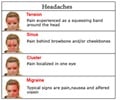
Migraine is a chronic disorder characterized by headache, nausea, vomiting or sensitivity to light and sound.
Migraine is a chronic disorder characterized by headache, nausea, vomiting or sensitivity to light and sound.
TOP INSIGHT

Did You Know?
Nasal vibration therapy can reduce monthly migraine days by over three and may even stop pain within 15 minutes by calming the brain's pain center. #medindia #migraine #painrelief #nasaltherapy
Nerve Pathway Modulation Through Nasal Stimulation
The treatment acts on the trigeminal-autonomic reflex, particularly involving the trigeminal nerve, a key player in migraine onset. By modifying the nerve’s activity, the vibrations may disrupt the cascade that results in migraine pain. Researchers also suspect the therapy may influence the structure of epithelial cells lining the nasal cavity, making them rounder and thereby reducing internal irritation that could contribute to migraine triggers.Earlier research from 2016 supports these findings, showing that short sessions of 10 to 20 minutes provided relief during acute attacks. Remarkably, some participants did not experience another episode for as long as three to six months afterward, indicating the potential for both immediate and longer-term benefits from the therapy (3✔ ✔Trusted Source
Resting-state fMRI study of acute migraine treatment with kinetic oscillation stimulation in nasal cavity
Go to source).

Test Your Knowledge on Migraines
Migraine headaches often begin in childhood, adolescence or early adulthood. Most People find themselves quite helpless to its effects that are often ...
Migraine headaches often begin in childhood, adolescence or early adulthood. Most People find themselves quite helpless to its effects that are often ...
Link Between Hypothalamus Activity and Migraine Pain
Additional insights from Swedish researchers Jan-Erik Juto and Rolf Hallin reveal that nasal stimulation targets the sphenopalatine ganglion—a cluster of nerve cells beneath the nasal membrane. This structure is directly connected to the hypothalamus, a brain region known to detect migraine onset but not regulate pain directly. By calming hypothalamic hyperactivity during a migraine’s early stages, the treatment may substantially reduce pain intensity. In earlier trials, participants experienced a 50% reduction in pain, and half reported being pain-free within just 15 minutes of starting the session.The session itself is straightforward: a vibrating balloon catheter is inserted into the nostril, and stimulation lasts around 10 to 15 minutes. This non-invasive, nerve-targeted approach offers a novel avenue for managing migraines without pharmaceuticals.

Fish Fats can Reduce Migraine Headaches
Migraine is a severely debilitating neurological disorder that impairs the normal functioning of patients. Incorporation of high levels of fish fats in food could soothe the intense migraine headache.
Migraine is a severely debilitating neurological disorder that impairs the normal functioning of patients. Incorporation of high levels of fish fats in food could soothe the intense migraine headache.
Sound and Electrical Stimulation Alternatives
While kinetic oscillation stimulation remains investigational, the United States Food and Drug Administration has approved similar non-drug therapies. One such method is non-invasive vagus nerve stimulation, which uses sound frequency through a handheld device to activate the vagus nerve. This nerve, deeply involved in regulating critical body functions, can be stimulated to alleviate migraine pain quickly—often within 30 minutes. Devices like gammaCore have already entered the market for this purpose.In India, pharmaceutical company Dr. Reddy’s Laboratories has introduced another FDA-approved wearable device, Nerivio, which relies on remote electrical neuromodulation to both treat and prevent migraine episodes. This shows that while kinetic oscillation stimulation isn’t yet widely accessible, related technologies are gaining regulatory traction globally.

Better Mental Health impacts Migraine
Three in five Canadians with migraines are in excellent mental health, despite experiencing what can often be a disabling disorder.
Three in five Canadians with migraines are in excellent mental health, despite experiencing what can often be a disabling disorder.
Cellular Mechanism Behind Vibration’s Pain-Relieving Effect
From a biological perspective, nasal vibration appears to reduce inflammation-induced pain by physically altering cell structure. According to cell biologist Adriana LaGier, during a migraine, brain inflammation causes nerves to transmit pain signals. Vibration, however, causes the affected cells to contract, lessening pressure on surrounding brain tissues like the meninges, which are sensitive to pain. This cellular change may be part of why vibration therapies are effective—even when performed outside of clinical settings.Despite its potential, kinetic oscillation stimulation still lacks formal approval as a standard treatment. Individuals experiencing persistent migraines should consult a healthcare provider to explore validated therapeutic options.
In conclusion, nasal vibration therapy shows promising potential in reducing migraine frequency by targeting nerve pathways and influencing cellular activity. With its ability to provide relief both during acute episodes and potentially long-term, this non-invasive treatment could become a valuable alternative for those struggling with chronic migraines.
References:
- Kinetic Oscillation Stimulation for the Preventive Treatment of Chronic Migraine - (https://www.neurology.org/doi/10.1212/WNL.0000000000210220)
- Vibration, a treatment for migraine, linked to calpain driven changes in actin cytoskeleton - (https://journals.plos.org/plosone/article?id=10.1371/journal.pone.0262058)
- Resting-state fMRI study of acute migraine treatment with kinetic oscillation stimulation in nasal cavity - (https://www.sciencedirect.com/science/article/pii/S2213158216301504?via%3Dihub)
Source-Medindia
 Email
Email