MEDINDIA
 English
 हिन्दी
 Español
 français
 中文
中文
Scientists have used transcranial magnetic stimulation to prevent fear memories from preventing.

Researchers Use Robot for Transcranial Magnetic Stimulation
A coil positioning robot for Transcranial Magnetic Stimulation (TMS) has been introduced at the Brain Simulation Center
A coil positioning robot for Transcranial Magnetic Stimulation (TMS) has been introduced at the Brain Simulation Center
TOP INSIGHT

Scientists use TMS (Transcranial Magnetic Stimulation) to "erase" the fear induced by a negative memory.
The primary focus of the research group is the process of reconsolidation. This process maintains, strengthens, and alters those events that are already stored in our long-term memory. "Every time an event is recalled in our memory, there is a limited period of time in which it can be altered", explains Simone Battaglia, researcher and co-author of this study. "The protocol we developed exploits this short time window and can, therefore, interfere with the reconsolidation process of learned aversive memories".
With an electromagnetic coil placed on the head of the participant, TMS creates magnetic fields that can alter the neural activity of specific brain areas. TMS is a non-invasive procedure that does not require surgery or any action on the participant and for this reason is widespread in research as well as in clinic and rehabilitation programmes.
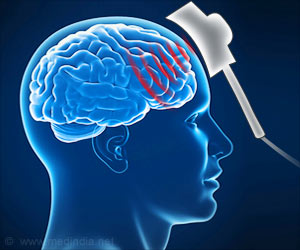
Transcranial Magnetic Stimulation may Help Treat Stroke, Dementia, and Migraines
Transcranial magnetic stimulation (TMS) can treat a broader range of common neurological conditions, including stroke, acute migraines, and dementia, reveals a new study.
Transcranial magnetic stimulation (TMS) can treat a broader range of common neurological conditions, including stroke, acute migraines, and dementia, reveals a new study.
THE TRIAL

Brain Exercises to Improve Memory
An active brain can certainly help in improving memory by strengthening the connections between neural impulses in brain.
An active brain can certainly help in improving memory by strengthening the connections between neural impulses in brain.
"First, we created the aversive memory by combining an unpleasant stimulation with some images", explains Borgomaneri. "The day after, we presented a group of participants with the same stimulus, which, in their memory, was recorded as aversive. Using TMS immediately afterwards, we interfered with their prefrontal cortex activity".

Quiz on Phobia
We have seen “strange” behavior in some people with whom we interact and we have been, often, baffled by their strangeness. Many of these individuals suffer from, what is commonly termed as, “phobias”. Let us take a look at some common phobias and try to understand the irrational fear gripping its sufferers.
We have seen “strange” behavior in some people with whom we interact and we have been, often, baffled by their strangeness. Many of these individuals suffer from, what is commonly termed as, “phobias”. Let us take a look at some common phobias and try to understand the irrational fear gripping its sufferers.
At that point, the only thing left to do for researchers was to evaluate the effectiveness of TMS. They waited for another day and once again tested how the participants reacted when the aversive memory was recalled. And they obtained encouraging results. Participants who had their prefrontal cortex activity inhibited by TMS showed a reduced psycho-physiological response to the unpleasant stimulus. They remembered the event (explicit memory) but its negative effect was substantially reduced.
"This trial showed that it is feasible to alter the persistence of potentially traumatic memories. This may have crucial repercussions in the fields of rehabilitation and clinical medicine", says Professor Giuseppe di Pellegrino, who coordinated the study. "We're dealing with a new technique that can be employed in different contexts and can assume a variety of functions, starting from treating PTSD, which will be the focus of our next study".
Source-Eurekalert
 Email
Email