MEDINDIA
 English
 हिन्दी
 Español
 français
 中文
中文
New study outline the best way to recognize people most likely to develop common and devastating heart rhythm disorders, which is a leading cause of sudden cardiac death.
Atrial Fibrillation - Causes, Symptoms, Diagnosis, Treatment, Complication, Risks
Atrial fibrillation may not be life-threatening in itself but it is important to understand the causes, symptoms and treatments because of the risk of life-threatening complications.
Atrial fibrillation may not be life-threatening in itself but it is important to understand the causes, symptoms and treatments because of the risk of life-threatening complications.
TOP INSIGHT

Atrial fibrillation is the most common heart rhythm disorder and a significant cause of disabling stroke, and ventricular tachyarrhythmia (fast heart rate), a leading cause of sudden cardiac death.
To take an example, the probability of developing atrial fibrillation rises with increasing age, high blood pressure, obesity, diabetes, and prior heart attack. Behavior modification, such as reducing alcohol intake and losing weight, could prevent atrial fibrillation or delay onset.
In patients with atrial fibrillation, the possibility of stroke increases with advanced age, heart failure, high blood pressure, diabetes, prior stroke or heart attack, and in women. Research shows that anticoagulant drugs dramatically reduce stroke risk in patients with a combination of these factors.
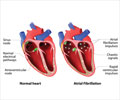
Drugs for Atrial Fibrillation - Symptoms, Treatment, Side Effects & Precautions
Atrial fibrillation is a condition with irregular heart rhythm. Be aware of the prescribed drugs, their side effects and precautions, to avoid risk to life.
Atrial fibrillation is a condition with irregular heart rhythm. Be aware of the prescribed drugs, their side effects and precautions, to avoid risk to life.
When it comes to ventricular tachyarrhythmia, the most common predisposing factor is a previous heart attack. When combined with a poor pump function of the heart (called ejection fraction), patients are at increased risk of cardiac arrest and death. Sudden death can be prevented by implanting a defibrillator (called an ICD or implantable cardioverter-defibrillator).
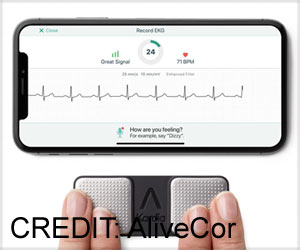
Smartphone Monitoring System Detects Atrial Fibrillation With Excellent Sensitivity
Atrial fibrillation can be effectively and accurately detected using a mobile heart monitor, paired with a smart device and an application, and supported by an automated algorithm.
Atrial fibrillation can be effectively and accurately detected using a mobile heart monitor, paired with a smart device and an application, and supported by an automated algorithm.
"There still is a problem with a lot of false positives, where the device claims a person has atrial fibrillation, but they do not," said Professor Nielsen. "Furthermore, if a smartwatch picks up 30 minutes of incidental atrial fibrillation in a person with no symptoms, we have no data on whether anticoagulation prevents stroke in this situation."
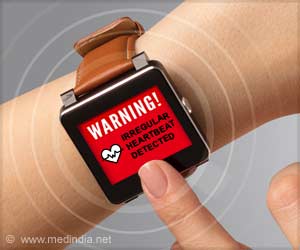
Atrial Fibrillation Diagnosed Using Mobile Health Devices
Using digital medicine technologies researchers were able to identify undiagnosed atrial fibrillation in at-risk populations
Using digital medicine technologies researchers were able to identify undiagnosed atrial fibrillation in at-risk populations
The international consensus statement on risk assessment in cardiac arrhythmias was developed by the European Heart Rhythm Association (EHRA), a branch of the ESC; the Heart Rhythm Society (HRS); the Asia Pacific Heart Rhythm Society (APHRS); and the Latin American Heart Rhythm Society (LAHRS). It is also published in Heart Rhythm, the official journal of the HRS, Journal of Arrhythmia, the official journal of the APHRS, and Journal of Interventional Cardiac Electrophysiology, the official journal of the LAHRS.
Source-Eurekalert
 Email
Email