MEDINDIA
 English
 हिन्दी
 Español
 français
 中文
中文

The new COVID-19 variant NB.1.8.1, known as "Nimbus," is rising quietly, posing a renewed public health challenge in 2025.
Highlights:
Just a few years ago, the world came to a standstill under the shadow of the deadly COVID-19 pandemic. While we’ve since recovered and life appears to have returned to normal, the sense of urgency has faded. People have discarded their masks, embraced in-person routines, and moved away from remote work. The trauma of the pandemic, instead of keeping us alert, has left many numb, fostering a mindset of “What more could happen?” It seems the world has adapted to living with COVID, but have we truly learned from it, or are we just pretending it’s over? (1✔ ✔Trusted Source- NB.1.8.1 (Nimbus) is a subvariant of Omicron, now under WHO/ECDC surveillance
- Symptoms include fever, nasal congestion, and the painful "razor blade throat"
- No surge in severity, but fading immunity makes vigilance crucial
Forgotten but not gone: has pandemic dropped off your risk radar?
Go to source)

Omicron Variant of COVID-19
Omicron variant is a mutated strain of coronavirus (SARS-CoV-2) with faster transmissibility and enhanced virulence compared to the original COVID-19 virus.
Omicron variant is a mutated strain of coronavirus (SARS-CoV-2) with faster transmissibility and enhanced virulence compared to the original COVID-19 virus.
TOP INSIGHT

Did You Know?
COVID’s #Nimbus variant may be less contagious-but it’s still evading immunity. #razorbladethroat #omicronvariant #COVID19 #nimbusvariant #medindia
The Virus Still Lurks Now as, “Nimbus COVID.”
The World Health Organization warned of a fresh resurgence of COVID-19 cases in early 2025, driven by a new variant named NB.1.8.1, colloquially termed “Nimbus COVID.” There is a notable rise in the number of diseased of this variant, notably in countries like the Eastern Mediterranean, Southeast Asia, and the Western Pacific."It is a variant of the Omicron strain of COVID," says Dr. Paulette Pinargote Cornejo, infectious disease expert at Ochsner LSU Health (2✔ ✔Trusted Source
COVID-19 - Global Situation
Go to source).

Hybrid Immunity Offers Best Protection Against COVID-19
Vaccination and a prior COVID-19 infection offer the best defense against severe illness and reinfection.
Vaccination and a prior COVID-19 infection offer the best defense against severe illness and reinfection.
A COVID Variant to Watch, Not Worry About
NB.1.8.1, the new descendant of the Omicron variant, is the one driving this recent rise in COVID cases. Researchers say that this sudden surge is a result of fading immunity among people and the variant's advantage of evading the immune system.Luckily for now, there is no evidence of a rise in severity, as early lab experiments indicate that the NB.1.8.1 might not be as contagious as other Omicron versions, such as LP.8.1 and XEC.
Although no clinical evidence of vaccine efficacy against it has been laid out, preliminary laboratory data suggest that serum donated by people who had received an additional dose of the updated JN.1 mRNA vaccine was capable of neutralizing NB.1.8.1 in a test tube. Both the World Health Organization (WHO) and the European Centre for Disease Prevention and Control (ECDC) have classified it as a variant under surveillance, and while its prevalence in Europe may rise shortly, it is not expected to be a more dangerous variant than those already in existence (3✔ ✔Trusted Source
Epidemiological update: SARS-CoV-2 and NB.1.8.1 variant assessment
Go to source).

Why Are People Adopting Preventive Healthcare Post-COVID-19?
To promote preventive healthcare, campaigns to educate people about healthy living and the importance of preventive health check-ups are needed.
To promote preventive healthcare, campaigns to educate people about healthy living and the importance of preventive health check-ups are needed.
Razor Blade Throat
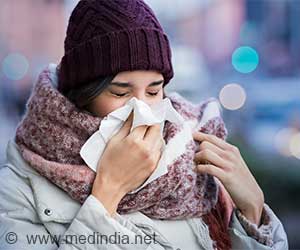
"With Nimbus, we are seeing usual symptoms, such as runny nose, fever, nausea, and vomiting, along with what some are calling 'razor blade throat,' an incredibly painful sore throat," according to Cornejo.While not unique to COVID-19, this expression has been used to describe sore throat symptoms in some patients who have the most recent COVID-19 variant. In most cases, the illness is mild and resembles the seasonal flu or cold, particularly in those who have been vaccinated.
Common symptoms include
- A fever that is usually not severe but long-lasting.
- Dry cough with or without phlegm.
- Sore Throat (Razor Blade Throat)
- Nasal congestion or discharge.
- General tiredness or lack of energy.
- Headache with mild to moderate intensity.
- Generalized discomfort or pain.
LF.7 and NB.1.8.1 Covid-19 Variants in India: Symptoms, Spread & Safety Measures
Go to source).

Immunity Debt: The Hidden Cost of Pandemic Precautions
Global influenza cases have dramatically increased since the COVID-19 pandemic, likely due to a drop in population immunity.
Global influenza cases have dramatically increased since the COVID-19 pandemic, likely due to a drop in population immunity.
WHO’s Strategy: Watchful, Not Fearful!
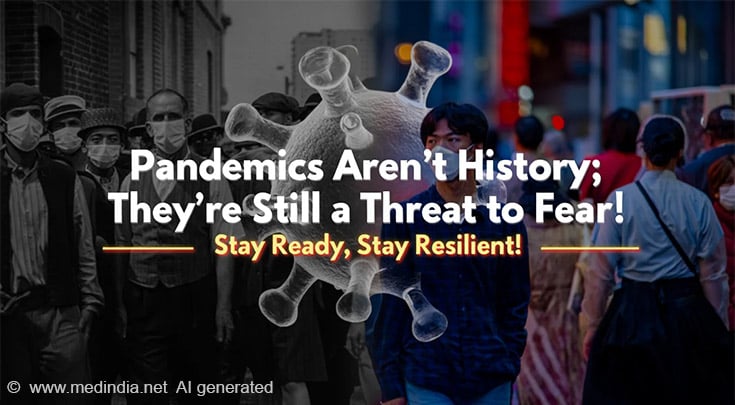
As test positivity rates and reported cases have increased, COVID-19 has yet to follow a predictable seasonal pattern, and surveillance remains limited. The WHO encourages countries to integrate COVID-19 monitoring with broader respiratory disease control, focus vaccination efforts on vulnerable populations, and ensure free access to early diagnostics and clinical management. Such an active, risk-based strategy is critical to preventing more severe cases and ensuring preparedness in the event of a future pandemic, as the virus continues to evolve.Just because the pandemic isn’t on the front page doesn’t mean it’s over. In today’s interconnected world, viral threats can re-emerge at any moment, and when they do, the organizations that are prepared will be the ones that endure. Now is not the time to relax. It’s time to reflect, revise, and reinforce.
References:
- Forgotten but not gone: has pandemic dropped off your risk radar? - (https://www.thebci.org/news/forgotten-but-not-gone-has-pandemic-dropped-off-your-risk-radar.html)
- COVID-19 - Global Situation - (https://www.who.int/emergencies/disease-outbreak-news/item/2025-DON572)
- Epidemiological update: SARS-CoV-2 and NB.1.8.1 variant assessment - (https://www.ecdc.europa.eu/en/news-events/epidemiological-update-sars-cov-2-and-nb181-variant-assessment)
- LF.7 and NB.1.8.1 Covid-19 Variants in India: Symptoms, Spread & Safety Measures - (https://www.maxhealthcare.in/blogs/lf7-and-nb181-covid-19-variants-symptoms)
Source-Medindia
 Email
Email