MEDINDIA
 English
 हिन्दी
 Español
 français
 中文
中文
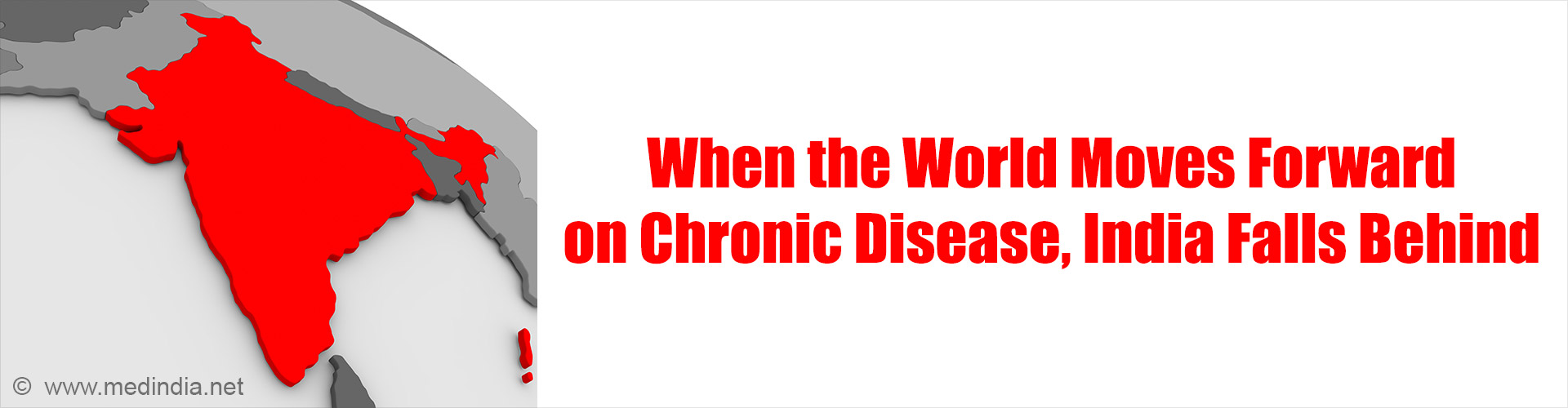
Lancet study shows India’s chronic disease deaths rose 2010–2019, especially in women, while most countries saw declines in cancer, diabetes, and heart disease.
Highlights:
The new study, published in The Lancet, analyzed global mortality trends from 2010 to 2019 across 204 countries and territories. Researchers looked at the probability of dying before age 80 from major noncommunicable diseases (NCDs) such as cancer, cardiovascular disease, diabetes, and chronic respiratory disease (1✔ ✔Trusted Source- Lancet study of 204 countries shows global NCD deaths declined between 2010–2019
- India bucked the trend — deaths from cancer, diabetes, and heart disease increased
- Women in India saw sharper mortality rises than men, signaling gender health gaps
Metabolic non-communicable disease health report of India: the ICMR-INDIAB national cross-sectional study (ICMR-INDIAB-17)
Go to source). Globally, premature deaths from NCDs declined steadily, with most countries on track to meet the United Nations target of cutting premature NCD mortality by one-third by 2030. But India stood out as one of the few exceptions where NCD mortality increased, painting a concerning picture for the country’s health future.
India's Health Crisis: 56% Disease Burden Linked to Poor Dietary Choices
Unhealthy dietary habits contribute to a staggering 56% of India's disease burden, highlighting a pressing public health concern.
Unhealthy dietary habits contribute to a staggering 56% of India's disease burden, highlighting a pressing public health concern.
TOP INSIGHT

Did You Know?
India is losing the war on chronic disease - but women are bearing the worst of it. #ncdindia #womenhealth #chronicdiseasecrisis #medindia
Rising Deaths in India: Women Hit Harder
In India, the probability of dying early from NCDs went up instead of down. Key contributors included:- Cardiovascular disease and diabetes, both showing strong upward trends.
- Cancer mortality, also climbing during the study period.
- Women in India saw higher increases in NCD mortality compared to men.
- This divergence suggests that social, economic, and healthcare access barriers are making women particularly vulnerable.

Blood Pressure Chart
Blood pressure is the pressure of the blood flowing through your blood vessels against the vessel walls. Just by entering you age, you can get the accurate range of blood pressure value.
Blood pressure is the pressure of the blood flowing through your blood vessels against the vessel walls. Just by entering you age, you can get the accurate range of blood pressure value.
Global Progress vs India’s Setback
While countries from East Asia to Europe and Latin America showed marked declines in chronic disease deaths, India’s trajectory moved in the opposite direction. This contrast highlights a dangerous health gap that could worsen if left unaddressed.Experts warn that India’s failure to keep pace undermines the UN’s Sustainable Development Goal 3.4 — reducing premature mortality from NCDs by 2030.

Diabetes Risk Assessment Calculator
Almost one-third of the people are unaware of the risk factors of diabetes. Find out if you run the risk of diabetes by using Diabetes Risk Assessment calculator.
Almost one-third of the people are unaware of the risk factors of diabetes. Find out if you run the risk of diabetes by using Diabetes Risk Assessment calculator.
Why India Is Falling Behind
Several factors may explain India’s reversal:- Rapid lifestyle shifts (urbanization, poor diet, sedentary habits) fueling obesity and diabetes.
- Gaps in early detection and chronic disease management.
- Unequal healthcare access, particularly for women and rural populations.
- Greater burden of risk factors such as tobacco, hypertension, and air pollution.

Calculate Your Lifetime Risk of Heart Attack
Heart Risk Calculator assesses the lifetime risk for a heart attack and helps in making the right lifestyle choices to protect your heart.
Heart Risk Calculator assesses the lifetime risk for a heart attack and helps in making the right lifestyle choices to protect your heart.
What Needs to Change
To align with global progress, India must:- Scale up screening for blood pressure, diabetes, and cancers.
- Strengthen primary care for chronic disease management.
- Address gender disparities in access and outcomes.
- Invest in public health education and prevention campaigns.
- Integrate NCD care into national insurance and rural health schemes.
India at a Crossroads
The Lancet study makes it clear: while the world is turning the tide on chronic disease, India is moving in the wrong direction. Without urgent policy shifts and stronger prevention, cancer, diabetes, and heart disease will continue to cut lives short — especially women’s. India has a choice: either act decisively now or risk being left behind in the global fight against noncommunicable diseases.Reference:
- Metabolic non-communicable disease health report of India: the ICMR-INDIAB national cross-sectional study (ICMR-INDIAB-17) - (https://www.thelancet.com/journals/landia/article/PIIS2213-8587(23)00119-5/fulltext)
Source-Medindia
 Email
Email