MEDINDIA
 English
 हिन्दी
 Español
 français
 中文
中文
Ebola virus is a deadly pathogen causing severe hemorrhagic fever, organ failure, and high mortality in humans.
Long-term clinical sequelae among Sudan ebolavirus disease survivors 2 years post-infection: a matched cohort study
Go to source). The research also revealed that the virus can remain in bodily fluids such as semen and breast milk for several months following recovery, raising concerns about potential transmission and ongoing health risks.

Ebola Virus Disease
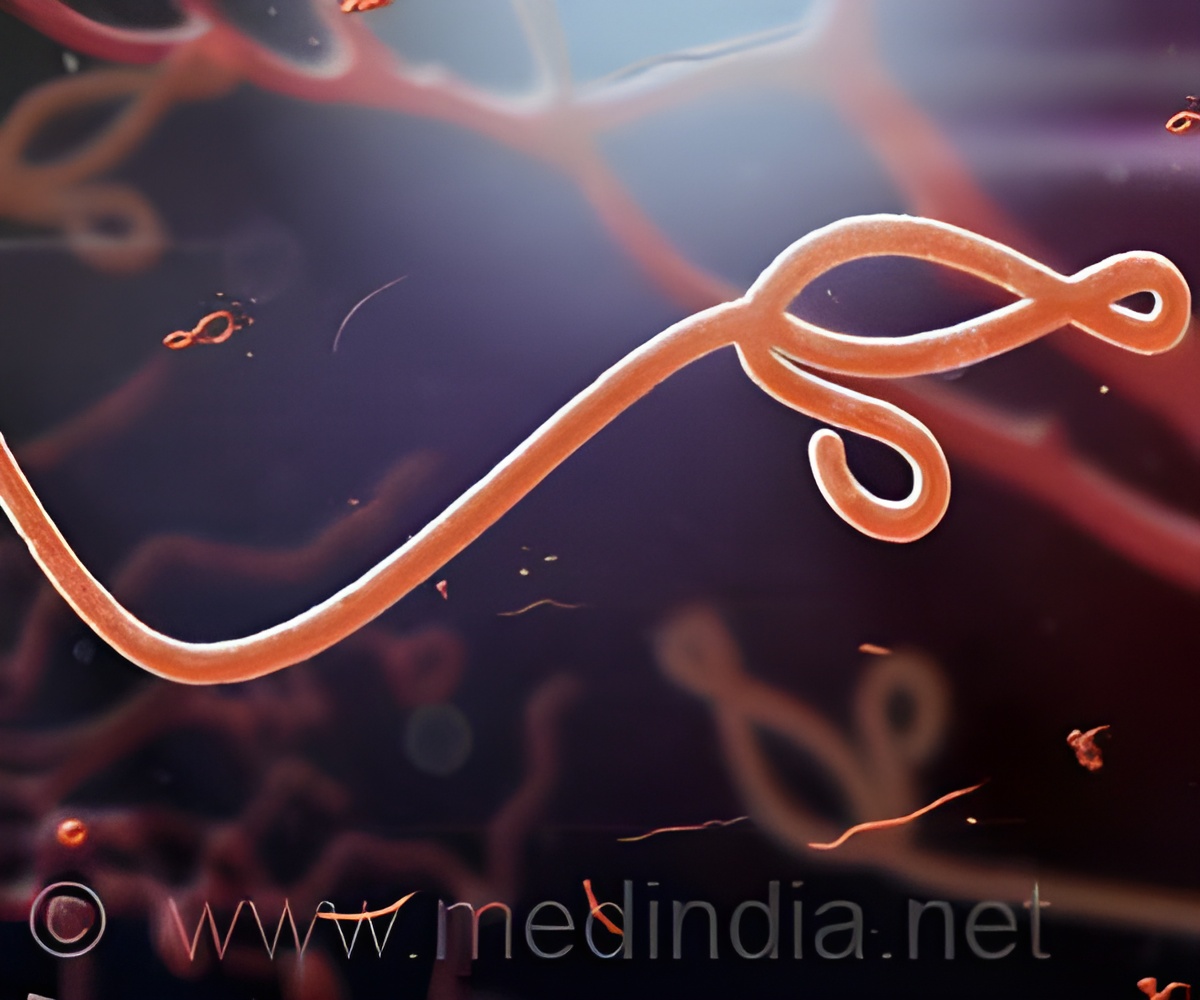
Ebola is caused by a virus via direct contact with body fluids or infected blood. Scientists have identified five types of Ebola or Ebola hemorrhagic fever virus.
Ebola is caused by a virus via direct contact with body fluids or infected blood. Scientists have identified five types of Ebola or Ebola hemorrhagic fever virus.
TOP INSIGHT

New research on #SudanEbola: Researchers detected the virus's RNA in #semen for up to 210 days and in #breastmilk for up to 199 days after infection. This highlights the potential for prolonged transmission. #Ebola #GlobalHealth #InfectiousDisease
Prolonged Monitoring Urged: Highlighting the Lasting Impact of Sudan Ebola Virus
This study, the first of its kind to investigate the lasting impact of the Sudan Ebola virus, highlights the urgent need for continued medical monitoring and support for survivors long after the acute phase of the disease has passed.The study, led by researchers at Washington State University, found 57.5% of the survivors of an outbreak in Uganda from 2022-23 reported ongoing and debilitating health issues that interfered with their daily lives. The detection of traces of the virus in semen and breast milk also raised concerns about the potential for sexual and mother-to-child transmission. The findings were recently published in the journal BMC Medicine.
“This is the first time anyone has been able to closely follow Sudan Ebola survivors over the long term, and the results show the virus continues to affect people’s lives well after an outbreak ends,” said lead researcher Kariuki Njenga, a professor in the WSU College of Veterinary Medicine’s Paul G. Allen School for Global Health and senior scientist at WSU Global Health – Kenya. “Just as concerning is the fact we detected the virus in semen and breast milk, which shows there is a risk survivors could pass on Ebola months after recovery.”

Quiz on Ebola
Why is the deadly Ebola virus outbreak making the health experts hit the panic button? Find out from this ...
Why is the deadly Ebola virus outbreak making the health experts hit the panic button? Find out from this ...
The Lingering Threat: Ebola Virus Persistence and Transmission Risk in Survivors
Ebola is a severe, often fatal hemorrhagic fever in humans caused by four known strains: Zaire, Sudan, Bundibugyo, and Taï Forest. While the disease progresses similarly across strains — with more than half of cases developing life-threatening complications such as hypotension and multi-organ failure — fatality rates vary.The Zaire and Sudan strains are the most deadly, with case fatality rates ranging from 75–90% for Zaire and 55–65% for Sudan. Previous research has focused primarily on the Zaire strain and has shown survivors can experience long-term complications that persist for years.
The WSU-led study followed 87 survivors from the outbreak in Uganda alongside a control group of 176 community members who had not been infected. Participants were assessed at three, nine, 12, 15 and 24 months after discharge from Ebola treatment facilities. Researchers conducted interviews, collected symptom data and performed clinical examinations, in addition to taking semen and breast milk samples from eligible participants.
Survivors reported symptoms affecting the musculoskeletal system (45%), central nervous system (36%) and eyes (20%) at much higher rates than those in the control group.
Common issues included memory loss, joint and back pain, numbness in hands and feet, headaches, vision problems and depression. Half of the survivors reported multiple persistent symptoms that resulted in an inability to perform basic activities. These symptoms remained consistent across the two-year follow-up period, mirroring studies of Zaire Ebola survivors that found sustained symptoms even four years after infection.
“These results point to a kind of ‘long Ebola,’ very similar to what the world has seen with long COVID,” Njenga said. “Symptoms did not significantly improve across two years of follow-up, which is why long-term care and support for survivors are critical.”

Top 12 Interesting Facts About Ebola
Ebola is not contagious during the incubation period. Here are some interesting facts about Ebola
Ebola is not contagious during the incubation period. Here are some interesting facts about Ebola
Persistent Risk: Sudan Ebola Virus Reactivation and Transmission via Immune-Privileged Sites
In two men, the virus reappeared in semen samples eight months after consecutive negative results, suggesting possible latency and reactivation. Because semen and breast milk are produced in “immune-privileged” sites where pathogens can sometimes persist, survivors may unknowingly pose a risk to partners or children.The 2022–23 outbreak sickened 142 people and caused 55 deaths before it was declared over in January 2023. Njenga and his team continue to monitor survivors and plan to publish additional findings at the four-year mark. They are also enrolling participants from a more recent outbreak, which will strengthen statistical analyses and provide deeper insight into viral persistence and long-term health outcomes.
In addition to tracking symptoms, researchers hope to resume semen and breast milk testing to better understand how long the virus can persist in the body.
Reference:
- Long-term clinical sequelae among Sudan ebolavirus disease survivors 2 years post-infection: a matched cohort study - (https://bmcmedicine.biomedcentral.com/articles/10.1186/s12916-025-04271-z)
Source-Eurekalert

Victory Over Virus: Uganda Ends Ebola Battle
Uganda celebrates a major health victory, officially declaring the end of the Ebola Sudan Virus Disease outbreak after 42 days with no new cases.
Uganda celebrates a major health victory, officially declaring the end of the Ebola Sudan Virus Disease outbreak after 42 days with no new cases.
 Email
Email