MEDINDIA
 English
 हिन्दी
 Español
 français
 中文
中文
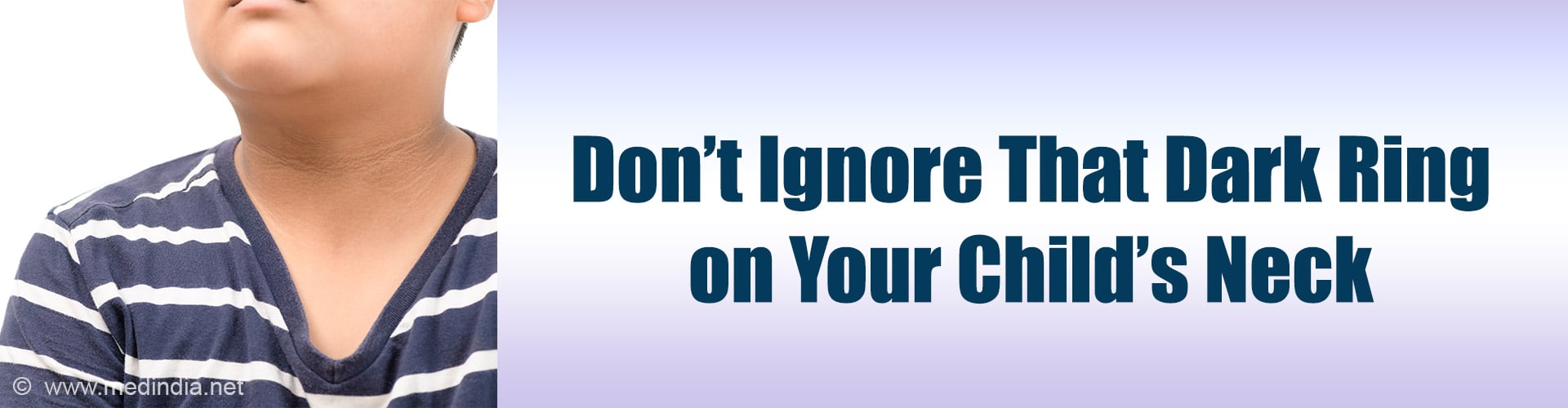
Acanthosis nigricans in obese children is linked with elevated insulin resistance and may forewarn type 2 diabetes, highlighting the need for early screening and lifestyle intervention.
Highlights:
Parents may sometimes believe a dark ring around a child’s neck is dirt or a tan. However, these skin changes that appear as dark, velvety, slightly thickened patches in body folds are a classic sign of acanthosis nigricans (AN) (1✔ ✔Trusted Source- Dark, velvety neck or underarm patches in children can signal insulin resistance
- Severity of Acanthosis nigricans rises as insulin resistance increases
- Weight loss and healthier habits improve insulin sensitivity and future diabetes risk
Acanthosis Nigricans as a Clinical Predictor of Insulin Resistance in Obese Children
Go to source). In children who are overweight, AN is often linked to early insulin resistance (IR), a condition where the body does not respond properly to insulin. Over time, this can progress to prediabetes and type 2 diabetes.
Blood Sugar Chart
The blood sugar chart gives you the fasting glucose values and glucose tolerance test values for normal people and people with early diabetes and established diabetes. Also use the calculator to find out if you have diabetes.
The blood sugar chart gives you the fasting glucose values and glucose tolerance test values for normal people and people with early diabetes and established diabetes. Also use the calculator to find out if you have diabetes.
TOP INSIGHT

Did You Know?
Children with dark, velvety skin in folds may have high #insulin levels long before #blood_sugar rises. Recognizing these patches early offers a chance to prevent type 2 #diabetes in later years. #acanthosisnigricans #insulinresistance #childhoodobesity #darkneckpatch #type2diabetesrisk #pediatrichealth #childhealthawareness #prediabetes #metabolicsyndrome #skinsigns #medindia
Visible Skin Signs of Hidden Metabolic Trouble
Acanthosis nigricans appears most commonly on the back of the neck, underarms, and groin. While the skin change itself is not harmful, it signals a deeper metabolic concern. High insulin levels stimulate excess skin growth and pigment, making these patches darker and velvety. The rise in childhood obesity has made this warning sign more common in younger age groups.
Diabetes Risk Assessment Calculator
Almost one-third of the people are unaware of the risk factors of diabetes. Find out if you run the risk of diabetes by using Diabetes Risk Assessment calculator.
Almost one-third of the people are unaware of the risk factors of diabetes. Find out if you run the risk of diabetes by using Diabetes Risk Assessment calculator.
Study Evidence Linking AN with Insulin Resistance
A study published in Pediatric Gastroenterology Hepatology Nutrition examined 74 obese children. Researchers compared those with acanthosis nigricans to those without and recorded fasting glucose, fasting insulin, body mass index, and calculated HOMA IR (Homeostatic Model Assessment of Insulin Resistance) .HOMA-IR is a number calculated from a blood test to check how well the body uses insulin. A higher HOMA-IR value means the body is becoming resistant to insulin, which can increase the risk of diabetes.
Key Findings Included
- Fasting insulin levels were significantly higher in children with AN (mean 24.1 mU/L) than those without (mean 9.8 mU/L)
- HOMA IR levels were more than double in the AN group (mean 5.74 versus 2.14)
- The thicker and darker the patch, the higher the level of insulin resistance

Metabolic Syndrome Calculator
Metabolic syndrome risk assessment calculator is a tool that helps determine your risks for heart disease, diabetes and stroke.
Metabolic syndrome risk assessment calculator is a tool that helps determine your risks for heart disease, diabetes and stroke.
Evidence Shows the Risk Can Be Reduced
A weight management study published in Pediatrics followed 57 obese children for one year. Only those who reduced their body mass index standard deviation score by at least 0.5 showed a significant improvement in insulin sensitivity and metabolic health outcomes (2✔ ✔Trusted SourceInsulin Sensitivity Among Obese Children and Adolescents, According to Degree of Weight Loss
Go to source).
This demonstrates that lifestyle measures that achieve meaningful weight reduction can improve insulin resistance and may reduce the severity of AN over time.

Childhood Obesity - Criteria - Causes - Complications, Treatment
Childhood obesity is one of the most serious health challenges in the developing countries and needs to be understood and tackled effectively.
Childhood obesity is one of the most serious health challenges in the developing countries and needs to be understood and tackled effectively.
What Should Parents Do
When AN is noticed in a child-- A blood test for fasting glucose and insulin is recommended
- Lipid profile and liver function tests check for metabolic syndrome
- Monitoring BMI and waist circumference helps track risk
- Healthy eating with fruits, vegetables, whole grains, and lean proteins is essential
- At least 60 minutes of daily physical activity is strongly advised
- Proper sleep and reduced screen time also support insulin balance
Final Takeaway
A dark ring on a child’s neck or underarms should not be ignored. It can be the skin’s early messaging system, revealing insulin resistance long before diabetes symptoms begin. Early recognition and simple healthy lifestyle steps can protect long-term health and markedly reduce the risk of type 2 diabetes in the future.References:
- Acanthosis Nigricans as a Clinical Predictor of Insulin Resistance in Obese Children - (https://pghn.org/DOIx.php?id=10.5223/pghn.2016.19.4.251)
- Insulin Sensitivity Among Obese Children and Adolescents, According to Degree of Weight Loss Available to Purchase - (https://publications.aap.org/pediatrics/article-abstract/114/6/1569/67884/Insulin-Sensitivity-Among-Obese-Children-and?redirectedFrom=fulltext)
Source-Medindia
 Email
Email