MEDINDIA
 English
 हिन्दी
 Español
 français
 中文
中文
In this study, the pros and cons of two shoulder stabilization surgical procedures are being compared with a return to sport (RTS) in mind.


Back and Shoulder Injuries More Common in Competitive Divers
Velocities and impact forces with which the diver does the act are thought to be large contributors to competitive diving injuries.
Velocities and impact forces with which the diver does the act are thought to be large contributors to competitive diving injuries.
TOP INSIGHT

Patients who underwent arthroscopic Bankart surgery showed the highest rate of RTS (97.5 percent) as well as the highest rate of return to preinjury levels (level of activity before injury) compared to arthroscopic Latarjet.
Researchers from Boston University School of Medicine (BUSM) performed a systematic review of the literature to evaluate both the time and rate of RTS after different shoulder stabilization procedures (arthroscopic and open) for anterior shoulder instability and found the following:
While all surgical stabilization procedures allow a high rate of RTS participation, patients who underwent arthroscopic Bankart or anterior labral repair surgery showed the highest rate of RTS (97.5 percent) as well as the highest rate of return to preinjury levels (91.5 percent) whereas patients who underwent arthroscopic Latarjet had the lowest rate of return to preinjury levels (69.0 percent). They also found the open Latarjet procedure produced the fastest time to RTS (5.1 months) while the open Bankart surgery had the slowest RTS (8.2 months).
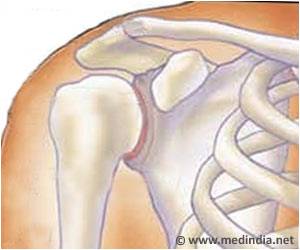
Reverse Shoulder Arthroplasty Surgery Shows Promising Results in Patients
Reverse Shoulder Arthroplasty surgery shows promising results in patients younger than 60 with severe rotator cuff damage
Reverse Shoulder Arthroplasty surgery shows promising results in patients younger than 60 with severe rotator cuff damage
Source-Eurekalert

Shoulder Arthroscopy Restores Shoulder Function: Study
A surgical technique called arthroscopic superior capsule reconstruction (SCR) offers restored shoulder function for patients to return to sports and heavy physical work.
A surgical technique called arthroscopic superior capsule reconstruction (SCR) offers restored shoulder function for patients to return to sports and heavy physical work.
Better Treatment Options For Shoulder Pain Due to Calcium Deposits
The condition, calcific tendinopathy causes pain in shoulder joints and is treated by using a fluid to dissolve calcium deposits.
The condition, calcific tendinopathy causes pain in shoulder joints and is treated by using a fluid to dissolve calcium deposits.
 Email
Email