MEDINDIA
 English
 हिन्दी
 Español
 français
 中文
中文
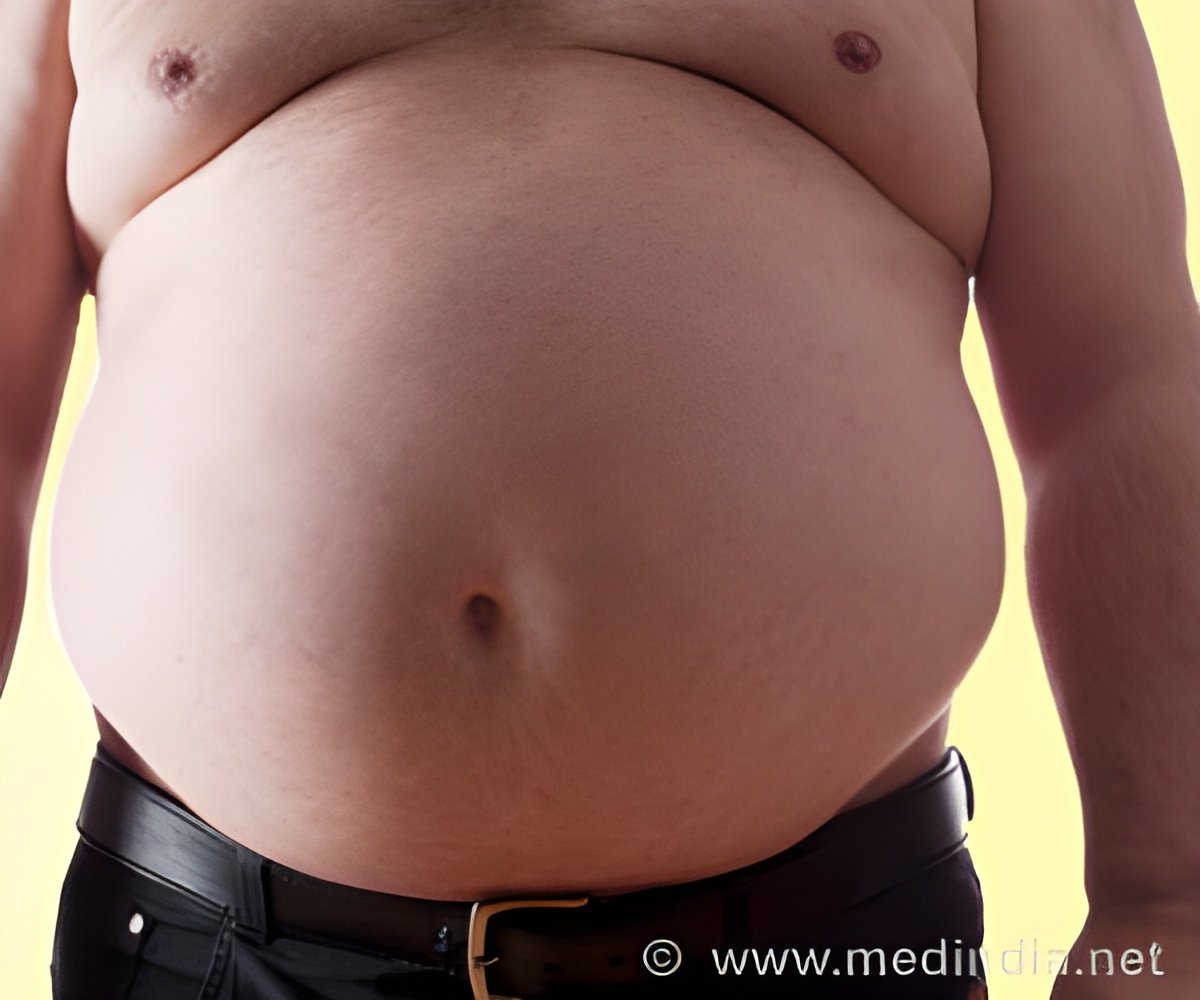
A beer belly might seem harmless. New imaging shows it could remodel your heart- thick walls, smaller chambers, higher risk of failure.
Highlights:
A large new study presented recently has found that carrying fat around the abdomen, which many call a beer belly, may cause more damaging changes to heart structure than general overweight or obesity. The findings challenge the idea that total body weight alone determines heart risk. Instead, the study puts a spotlight on where fat is stored in the body (1✔ ✔Trusted Source- Abdominal fat is linked to thickened heart muscle and reduced chamber size, which can impair heart function
- Waist-to-hip ratio is a better predictor of heart risk than BMI for many people
- Men with belly fat may face a significantly higher risk of heart damage even if their overall weight appears normal
'Beer Belly' Linked to Heart Damage in Men
Go to source).

Beer Belly Not Caused by Beer?
Scientists have revealed that drinking beer is not the main cause of a beer belly .
Scientists have revealed that drinking beer is not the main cause of a beer belly .
TOP INSIGHT

Did you know?
Too much belly fat around your organs can inflame your body, making your heart pump harder, like forcing a thick rope through a narrow pipe. #abdominalobesity #waisttohipratio #hearthealth #medindia
Abdominal Obesity Affects Heart Function
Researchers examined heart images of 2,244 adults aged between 46 and 78, none of whom had known cardiovascular disease. They used advanced cardiac MRI scans to study the heart structure in detail.Rather than relying only on Body Mass Index (BMI), the team also measured waist-to-hip ratio (WHR), a metric that captures abdominal obesity (fat stored around the waist and organs). High WHR indicates excess visceral fat.
The results showed that people, especially men, with a high waist-to-hip ratio were more likely to have a heart that showed signs of early damage. Their heart muscle became thicker while the actual volume of the heart chambers shrank.
In simpler words, the heart becomes bulkier but less roomy. That means it pumps less blood with each beat and works harder. Over time, this kind of remodeling can lead to heart failure.

Beer Belly Elevates Bowel Cancer Risk: Study
That beer belly or a muffin top your friends find cute is more dangerous than it appears-it can dramatically increase the risk of bowel cancer, according to a study.
That beer belly or a muffin top your friends find cute is more dangerous than it appears-it can dramatically increase the risk of bowel cancer, according to a study.
Why Abdominal Fat Is Harmful?
The study confirms what prior cardiovascular research has long suggested:visceral fat, i.e. fat stored deep around internal organs, can actively harm heart health, even when overall body weight seems normal (2✔ ✔Trusted SourceAbdominal Visceral Adipose Tissue is Associated with Myocardial Infarction in Patients with COPD
Go to source).
Visceral fat produces inflammatory chemicals, disturbs metabolism, and raises blood pressure and cholesterol. These effects increase the risks of heart disease, diabetes, and other metabolic disorders regardless of BMI category (3✔ ✔Trusted Source
Visceral adipose tissue and residual cardiovascular risk: a pathological link and new therapeutic options
Go to source).
Other studies have shown that even among individuals with a “normal” BMI, having a larger waist circumference increases the risk of heart attacks and strokes (4✔ ✔Trusted Source
Too much belly fat, even for people with a healthy BMI, raises heart risks
Go to source).
Because of these mechanisms- inflammation, metabolic changes, higher blood pressure, stress on heart structure- abdominal obesity is considered one of the most dangerous forms of fat accumulation (5✔ ✔Trusted Source
Obesity and cardiovascular disease: mechanistic insights and management strategies. A joint position paper by the World Heart Federation and World Obesity Federation
Go to source).

Beer Belly Increases Heart Disease Risk
Having a fat belly even if you have a normal BMI increases risk of major heart events, stated study. Body shape indicates a sedentary lifestyle, low muscle mass, and eating too many refined carbohydrates
Having a fat belly even if you have a normal BMI increases risk of major heart events, stated study. Body shape indicates a sedentary lifestyle, low muscle mass, and eating too many refined carbohydrates
Men Are More Vulnerable to Heart Changes Due to Abdominal Obesity
The recent MRI-based study found that the harmful structural changes were significantly stronger in men. For men, an increased waist-to-hip ratio was linked to thickened heart muscle and reduced chamber volume, especially in the right ventricle, the part that pumps blood to the lungs.This sex difference might arise because men tend to accumulate more visceral fat around the abdomen than women. Also, some protective effects of female hormones may reduce fat-related heart impacts in women.
In the study, a far larger proportion of men met the obesity criteria based on the waist-to-hip ratio than what BMI alone indicated. That indicates many men with “normal” weight overall may still carry dangerous levels of abdominal fat.
Don’t Rely Only on the Weighing Scale
If your weight seems fine but your waist circumference is growing, you might still be at elevated risk of harmful heart changes. That makes it important to measure waist size or waist-to-hip ratio rather than depending solely on overall weight or BMI.Doctors and health professionals are encouraged to watch for abdominal obesity, especially during routine checkups. Early identification can allow timely lifestyle changes or interventions before serious heart damage begins.
Simple Steps to Protect Your Heart from Abdominal Fat
- Focus on balanced diet and portion control rather than just dieting. Eating fewer processed foods and more whole foods helps reduce fat buildup around the belly.
- Engage in regular physical activity, especially cardio or strength exercise. These help burn visceral fat more effectively than just reducing weight.
- Check your waist circumference or waist-to-hip ratio from time to time, especially if you are middle-aged or older.
- Maintain healthy habits: avoid smoking, keep blood pressure and cholesterol under control, sleep well, and manage stress. All these affect how fat accumulates and influence heart health.
Belly Fat is Dangerous
This new MRI study fits into a larger scientific consensus on the dangers of belly fat. Experts studying obesity and cardiovascular disease have long noted that abdominal obesity increases the risk of heart disease, stroke, hypertension, insulin resistance, and type 2 diabetes (6✔ ✔Trusted SourceObesity and Cardiovascular Disease: A Scientific Statement From the American Heart Association
Go to source).
A recent meta-analysis showed that higher levels of visceral fat, quantified via markers like visceral adiposity index (VAI), increase risks of cardiovascular disease and death (7✔ ✔Trusted Source
Association between visceral adiposity index and cardiovascular disease: A systematic review and meta-analysis
Go to source).
In short, where fat sits in our body can matter more than how much fat we carry overall.
References:
- ‘Beer Belly’ Linked to Heart Damage in Men - (https://www.rsna.org/media/press/2025/2620)
- Abdominal Visceral Adipose Tissue is Associated with Myocardial Infarction in Patients with COPD - (https://pubmed.ncbi.nlm.nih.gov/25914898/)
- Visceral adipose tissue and residual cardiovascular risk: a pathological link and new therapeutic options - (https://pubmed.ncbi.nlm.nih.gov/37576108/)
- Too much belly fat, even for people with a healthy BMI, raises heart risks - (https://www.heart.org/en/news/2021/04/22/too-much-belly-fat-even-for-people-with-a-healthy-bmi-raises-heart-risks)
- Obesity and cardiovascular disease: mechanistic insights and management strategies. A joint position paper by the World Heart Federation and World Obesity Federation - (https://academic.oup.com/eurjpc/article/29/17/2218/6675714)
- Obesity and Cardiovascular Disease: A Scientific Statement From the American Heart Association - (https://pubmed.ncbi.nlm.nih.gov/33882682/)
- Association between visceral adiposity index and cardiovascular disease: A systematic review and meta-analysis - (https://www.sciencedirect.com/science/article/pii/S0939475325003709)
Source-Medindia
 Email
Email