MEDINDIA
 English
 हिन्दी
 Español
 français
 中文
中文

 Email
Email
- Cheese and Healthy Diet: Associations With Incident Cardio-Metabolic Diseases and All-Cause Mortality in the General Population - (https://pubmed.ncbi.nlm.nih.gov/31921878/)
- Cheese consumption and multiple health outcomes: an umbrella review and updated meta-analysis of prospective studies - (https://pubmed.ncbi.nlm.nih.gov/37328108/)
- Pseudomonas fluorescens and Escherichia coli in Fresh Mozzarella Cheese: Effect of Cellobiose Oxidase on Microbiological Stability during Refrigerated Shelf Life - (https://pubmed.ncbi.nlm.nih.gov/36613361/)
- Lactobacillus casei and Lactobacillus fermentum Strains Isolated from Mozzarella Cheese: Probiotic Potential, Safety, Acidifying Kinetic Parameters and Viability under Gastrointestinal Tract Conditions - (https://pubmed.ncbi.nlm.nih.gov/29542032/)
- Cheese as Functional Food: The Example of Parmigiano Reggiano and Grana Padano - (https://pubmed.ncbi.nlm.nih.gov/29089844/)
- The satiating effects of eggs or cottage cheese are similar in healthy subjects despite differences in postprandial kinetics - (https://pubmed.ncbi.nlm.nih.gov/25772196/)
About
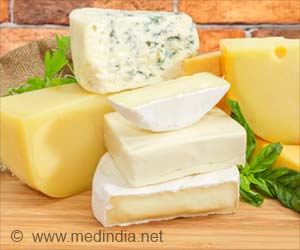
Cheese has a large fan base due to its exquisite taste and ability to enhance the flavor of any dish. However, because cheese contains a significant number of calories, it has also earned a reputation for being unhealthy!
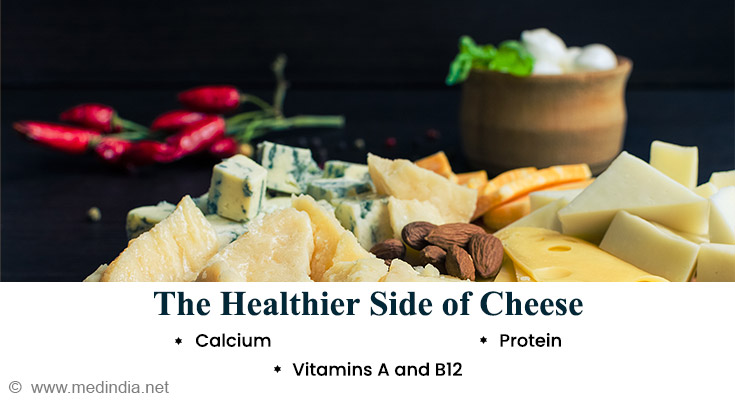
That being said, cheese is not necessarily harmful to one's health. In truth, cheese can be an important element of a healthy diet, providing nutrients such as calcium, protein, and vitamins, particularly A and B12(1✔ ✔Trusted Source
Cheese and Healthy Diet: Associations With Incident Cardio-Metabolic Diseases and All-Cause Mortality in the General Population
Go to source). However, it is high in saturated fat and sodium(2✔ ✔Trusted Source
Cheese consumption and multiple health outcomes: an umbrella review and updated meta-analysis of prospective studies
Go to source). Therefore, moderation is recommended.
However, there are some types of cheese that are healthier than others and allow you to enjoy without feeling guilty.
Did You Know?
Parmesan cheese is legally protected in Europe and can only be called "Parmigiano-Reggiano" if it's made in certain regions of Italy!
#cheese #foodforhealth #medindia





Is Cheese Healthy?
While it is true that some cheeses are high in saturated fats and sodium (and little else), others are high in vitamins, protein, and good bacteria, earning them a gold star as healthy choices for cheese lovers! They are:
Mozzarella Cheese
Mozzarella is a soft white cheese with high moisture content(3✔ ✔Trusted Source
Pseudomonas fluorescens and Escherichia coli in Fresh Mozzarella Cheese: Effect of Cellobiose Oxidase on Microbiological Stability during Refrigerated Shelf Life
Go to source). It originated in Italy and is typically made using Italian buffalo or cow's milk. Mozzarella cheese is a very healthy option, particularly when compared to other forms of cheese. It contains less fat and calories while also providing a healthy dose of protein, calcium, and other minerals. Mozzarella also contains bacteria that act as probiotics, including strains of Lactobacillus casei and Lactobacillus fermentum(4✔ ✔Trusted Source
Lactobacillus casei and Lactobacillus fermentum Strains Isolated from Mozzarella Cheese: Probiotic Potential, Safety, Acidifying Kinetic Parameters and Viability under Gastrointestinal Tract Conditions
Go to source).
Health Benefits of Mozzarella Cheese
Nutrient-rich: Cheese is an excellent source of calcium, fat, and protein. It also contains vitamin A, B12, zinc, phosphorus, and riboflavin.
Bone health: The calcium in cheese promotes healthy bones and teeth.
Dental health: Dairy products, particularly cheese, may help prevent cavities.
Muscle health: The protein in cheese helps with muscle development and repair.
Heart health: Some research indicates that eating full-fat cheese may lower cholesterol levels.
Rich in Probiotics: Animal and human studies suggest that these probiotics may enhance gut health and regularity, boost immunity, and reduce inflammation.
Including Mozzarella Cheese in the Diet
Mozzarella tastes well with caprese salad, which is composed with fresh tomatoes, basil, and balsamic vinegar. It is also suitable for use in a variety of different dishes.
Feta Cheese
Feta cheese is a soft, salty white cheese originating in Greece. It's often produced with sheep or goat milk. Sheep's milk gives feta a sour and pungent flavor, while goat's milk feta is milder. When consumed in moderation, feta cheese can be a healthy addition to your diet. It contains protein, calcium, and certain vitamins and can help with bone and digestive health. However, it is heavy in sodium and saturated fat, so portion sizes should be limited, especially for people with high blood pressure or cardiac diseases.
Nutritional Benefits of Feta Cheese
Protein: Feta cheese contains protein, which is required for many body activities such as muscle repair and tissue growth.
Calcium: It contains a lot of calcium, which is essential for strong bones and teeth.
Vitamins: Feta cheese contains B vitamins, such as riboflavin (B2) and B12, which are essential for energy production and neurological function.
Probiotics: Some feta cheeses include probiotics, which can help maintain a healthy gut microbiota and enhance digestive health.
Including Feta Cheese in the Diet
To incorporate feta cheese into your diet, crumble it over salads, mix it with eggs, or make a dip to eat with fresh veggies. Because feta is wrapped in brine to maintain its freshness, it can be rich in sodium. However, it often has fewer calories than most other cheeses.
Parmesan Cheese
Parmesan cheese is hard and aged, with a gritty texture and a salty, nutty flavor. It is created with raw, unpasteurized cow's milk that has been aged for at least 12 months to eliminate harmful bacteria and give a complex flavor(5✔ ✔Trusted Source
Cheese as Functional Food: The Example of Parmigiano Reggiano and Grana Padano
Go to source).
Parmesan cheese can be considered healthy because of its nutritional value. It contains high levels of protein, calcium, and phosphorus, all of which promote bone health and muscle performance. Parmesan is particularly high in vitamins A and B12, and it has less lactose, making it a potentially easier-to-digest option for people who are lactose sensitive.
Nutritional Benefits of Parmesan Cheese
Protein: Parmesan is a complete protein, which means it includes all of the amino acids required for tissue repair and muscle growth.
Calcium: Parmesan is high in calcium, which is necessary for healthy bones and teeth and may help prevent osteoporosis.
Phosphorus: Parmesan contains phosphorus, which is another crucial mineral for bone health and overall body function.
Vitamins: Parmesan contains vitamins A and B12, which are beneficial to vision, skin health, and neurological function.
Low lactose: Parmesan has less lactose than other dairy products, making it a more digestible option for people who are lactose intolerant.
Healthy fats: Parmesan includes omega-3 fatty acids, which may be beneficial to heart health.
Umami flavor: Parmesan's strong, savory flavor can improve the taste of a variety of foods, potentially leading to a more enjoyable and rewarding dining experience.
Including Parmesan Cheese in the Diet
Grated Parmesan can be added to pasta and pizza. You can also sprinkle it on eggs or serve slices on a cheese board with fruit and nuts.
Cottage Cheese
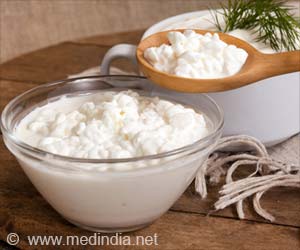
Cottage cheese is a soft white cheese formed from loose curds of cow milk. It is believed to have originated in the United States. Cottage cheese is typically regarded as healthy. It contains high levels of protein, calcium, and other vital minerals such as vitamin B12 and phosphorus. Its high protein content can help with feelings of fullness, thus benefiting in weight management.
Health Benefits of Cottage Cheese
Rich in protein: Cottage cheese is a wonderful source of high-quality protein, which is essential for muscle growth and repair, as well as general health.
Calcium-rich: Calcium is required for strong bones and teeth, and cottage cheese contains a significant amount of this critical element.
Vitamin B12: It is an essential nutrient for nerve function and red blood cell formation.
Low in calories and fat (particularly low-fat varieties): Compared to other cheeses, cottage cheese has fewer calories and fat, making it an excellent choice for individuals controlling their weight.
Can help with weight loss: The high protein content and low calorie count can aid with weight management, as protein can promote satiety and potentially lower overall calorie consumption.
Promotes intestinal health: Cottage cheese made with live and active cultures may promote intestinal health by providing a natural source of probiotics.
Several studies show that consuming high-protein foods like cottage cheese can boost feelings of fullness while also lowering overall calorie intake, which may lead to weight loss. A tiny 2015 research of 30 adults discovered that cottage cheese was equally as full as an omelet with a similar nutritional profile(6✔ ✔Trusted Source
The satiating effects of eggs or cottage cheese are similar in healthy subjects despite differences in postprandial kinetics
Go to source).
Including Cottage Cheese in the Diet
Including cottage cheese in your diet can help you feel fuller after meals and reduce your calorie intake, but it also tastes delicious spread on toast, blended into smoothies, added to scrambled eggs, or used as a dip base.
Ricotta Cheese
Ricotta cheese is an Italian cheese created from leftover watery milk from cows, goats, sheep, or water buffalo. Ricotta has a creamy texture and is frequently thought of as a lighter version of cottage cheese. Ricotta cheese can be a healthy dietary choice, especially when combined with a balanced diet. It has high levels of protein, calcium, and vitamins A, B12, and riboflavin. However, it is vital to be aware of the saturated fat and sodium content, especially in whole milk variants. Choose part-skim or low-fat ricotta to help lessen them.
Nutritional Benefits of Ricotta Cheese
Rich in protein and calcium: Ricotta cheese contains protein, which is necessary for tissue development and repair, as well as feeling full. It also contains calcium, which is required for bone health and muscle function, as well as vitamins A, B12, and riboflavin.
Saturated fat and salt: While ricotta has nutritional benefits, whole milk ricotta is heavy in saturated fat and cholesterol. It also contains sodium, which may be an issue for certain people.
Low-fat options: Part-skim or low-fat ricotta cheese can be a healthier option because it contains less saturated fat.
Moderation is crucial. Ricotta, like all foods, should be used in moderation and as part of a well-balanced diet.
Including Ricotta Cheese in the Diet
Ricotta cheese tastes great in salads, scrambled eggs, spaghetti, and lasagna. It can also be used as a basis for creamy dips or combined with fruit for a sweet and salty snack.
Swiss Cheese
Swiss cheese originates in Switzerland. This semihard cheese is normally prepared with cow's milk and has a mild, nutty flavor. Swiss cheese can be included in a healthy diet. It's high in protein, calcium, and vitamin B12, yet low in fat and sodium when compared to other cheeses.
Nutritional Benefits of Swiss Cheese
Protein: Swiss cheese has around 8 grams of protein per ounce. Protein is essential for tissue growth and repair, as well as providing long-term energy.
Calcium: Calcium is an important mineral for bone health.
Vitamin B12: Swiss cheese includes more vitamin B12 than most other cheeses, which is necessary for nerve function and red blood cell synthesis.
Low in fat and salt: Swiss cheese contains less fat and sodium than other types of cheeses.
While Swiss cheese has various health benefits, it should only be consumed in moderation as part of a balanced diet.
Including Swiss Cheese in the Diet
Swiss cheese and other alpine cheeses, such as Emmental and Gruyere, contain fewer carbohydrates than many other types of cheese. This may be beneficial for persons who have diabetes or are on a ketogenic diet. You can eat Swiss cheese with fruit or mix it into sandwiches, egg bakes, burgers, or French onion soup.