There are people who long to have a fuller and bulkier body rather than a lean and thin structure. Even if they eat for an army, their bodies still do not gain weight. Sometimes the solution for such body types lies in ‘exercise’.
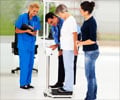
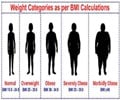
Firstly, one should understand how to establish that someone is underweight? It can be simply done by calculating the Body Mass Index (BMI). If the BMI is less than 18.5, the person is considered to be underweight.
To calculate BMI, divide the weight in kilos by the square of height. Or try using those online BMI calculators available on various sites. The normal BMI ranges from 18.5 to 24.9.
Exercising or ‘working out’ can definitely help in gaining weight by increasing muscle mass, as muscle is heavier than body fat.
Heavy Weight Lifts
For weight gain program one should follow and focus on free weight exercises which target on large muscle groups. And the good news is these do not require any fancy gym machinery.
Free weights put stress on muscles and stimulate the maximum number of muscle fibers, leading them to expand in size. The best weight training exercises for building muscle mass are resistance training exercises such as dead lifts, squats, barbell rows, bench presses, bar dips and pull ups.

The aim is to target the larger muscles of the body and to aid its growth in order to add muscle mass. For adding weight to the upper body, push-ups are excellent, whereas squats and lunges work best for the thigh muscles. Standing heel raises are effective for building the calves, crunches for the abs and pull ups for the arms and back.
Anaerobic Exercise vs. Aerobic Exercise
The term ‘anaerobic’ means ‘without oxygen’. Anaerobic exercises use muscles at high intensity in short durations.
Weight training is an anaerobic exercise and that is the reason it is so effective for muscle weight gain. For weight loss regimens, more of aerobic exercises such as running, biking, walking and other calorie burning exercises are recommended.
Diet
The equation is very simple: To gain weight, eat more calories than your body can burn off. Muscles need high calorie fuel and exercise to grow and get larger. This can be achieved by proper weight-gain diet and exercises specific to muscle gain. If the proper diet is not planned, the exercising will only burn calories rather than building muscles.
With the help of a dietician, find out how many calories are needed to reach the desired weight and then track the daily calorie intake. Eat around six meals a day, once every three hours. Increase protein intake and reduce simple carbohydrates as proteins are instrumental in making muscles.

Properly planned diet is extremely important in conjugation of weight training to build up mass.
Proteinaceous Diet
Proteins from animal origin are considered best to gain weight as it contains all the essential amino acids. The common and easily accessible sources of ‘good protein’ are red meat, fish, poultry and eggs. Milk is also a rich, easily available and cheap source of getting protein.

If you are looking to add some brawn to your body, indulge in juicy steaks, tuna, chicken breast and eggs to your hearts content.
Protein supplements or ‘whey powders’ are readily available in most of the gyms these days in forms of protein shakes and bars.
Possible Side Effects of Over Exercising
The physical risks can be numerous. Dehydration is the commonest and most frequent. Over-exercise can also result in insomnia, fatigue and sometimes even depression.
Other than these, some other physical side effects may include muscular and skeletal injuries such as shin splints, arthritis, bone fractures, or damage to ligaments and cartilage.
Remember:
- These exercises should be done under supervision.
- Space out your workouts for better and effective results.
- If the BMR is high, short bursts of intense exercise are needed as opposed to long periods of low stress activity.
- Be consistent. Sometimes it takes pretty long for the weight to actually show. Some people get impatient and quit early.