MEDINDIA
 English
 हिन्दी
 Español
 français
 中文
中文
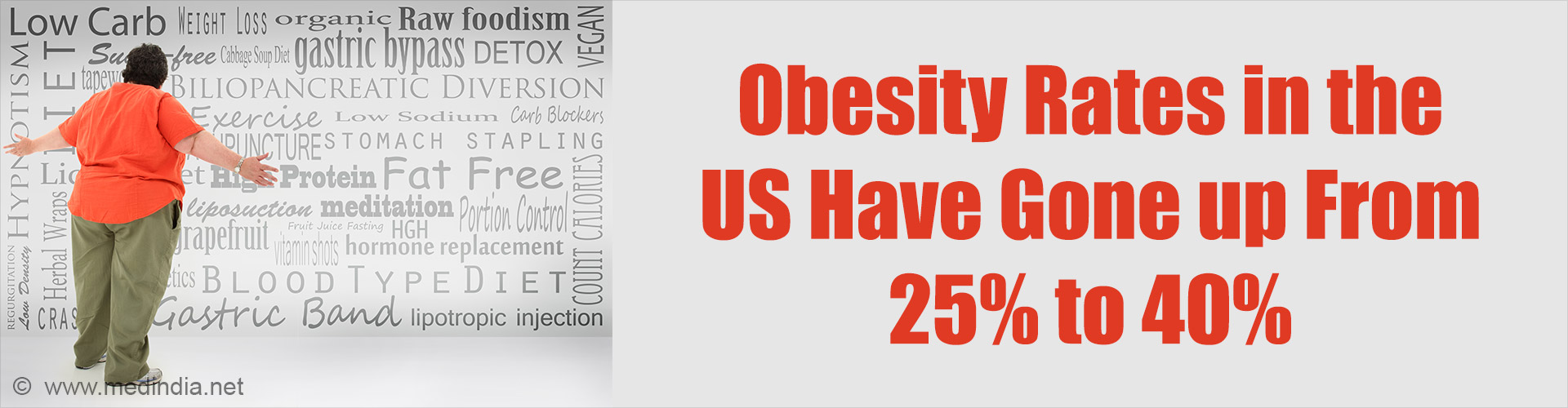
Discover the U.S. states where adult obesity hits 40% and learn why geography, economics and policy matter to our weight.
Highlights:
When you look at the latest rankings of the most and least obese U.S. states, the picture is stark. A recent report by WalletHub highlights how the epidemic of excess weight is not evenly spread across the country, but concentrated in certain regions (1✔ ✔Trusted Source- High obesity rates are concentrated in the South and Midwest; a state’s geography, economy and culture matter
- The obesity crisis brings heavy health and economic burdens, and reducing it will save lives and money
- Although progress is tentative, states with lower rates show that positive change is possible
Adult Obesity Prevalence Maps
Go to source). In 2023, the Centers for Disease Control and Prevention (CDC) published mapping data showing that no state has less than a 20 % adult obesity rate, and the highest levels are clustered in the Midwest and South.

India's Silent Health Crisis: What Lies Ahead?
Unveil the alarming truth behind India's escalating obesity crisis and its dire consequences on health and economy.
Unveil the alarming truth behind India's escalating obesity crisis and its dire consequences on health and economy.
TOP INSIGHT

Did you know?
In the U.S., no state has an adult obesity rate under 20 % anymore. #HealthFact #ObesityStats #medindia
The Geography of Obesity in the U.S.
We’re seeing a clear regional pattern: states in the South and Midwest tend to have the highest adult obesity rates, while those in the Northeast and West feature among the lowest. For instance, three states (including West Virginia, Mississippi and Arkansas) now exceed a 40% adult obesity rate.At the other end, states such as Colorado have adult rates around 25 %. What this reveals is that “where you live” in the U.S. plays a major role in weight-related health outcomes.

Healthy Eating During Childhood Prevents Obesity and Heart Disease Later
Eating healthy as a child helps reduce the risk of developing obesity and heart disease later in life. Parents and caregivers can be a powerful force in helping children develop healthy eating habits.
Eating healthy as a child helps reduce the risk of developing obesity and heart disease later in life. Parents and caregivers can be a powerful force in helping children develop healthy eating habits.
Why Some States Are Heavier Than Others
Several intertwined factors fuel these regional differences. One key issue is economic and social disadvantage. The WalletHub study cited limited access to healthy food, high levels of sedentary lifestyle, and economic hardship as some of the biggest contributors to state-to-state variation in obesity.Another factor is environmental and cultural: when physical activity opportunities are limited, or when healthy food is both less available and less affordable, weight rises. A 2014 study mapped county-level obesity clusters in the South and identified exactly these structural challenges (2✔ ✔Trusted Source
Regional disparities in obesity prevalence in the United States: A spatial regime analysis
Go to source).
Finally, broader trends matter: globally, obesity is rising fast, and the U.S. is no exception. A 2024 analysis published in The Lancet reported that in the U.S. and elsewhere, overweight and obesity rates among adults are at historic highs (3✔ ✔Trusted Source
National-level and state-level prevalence of overweight and obesity among children, adolescents, and adults in the USA, 1990-2021, and forecasts up to 2050
Go to source).

Type 2 Diabetes - Risk Factors - Symptoms & Signs - Management - Prevention
Globalization and changing lifestyles has made diabetes very common in developing countries so much so that India is known as the Diabetes Capital of the World.
Globalization and changing lifestyles has made diabetes very common in developing countries so much so that India is known as the Diabetes Capital of the World.
Health and Economic Cost of the Obesity Epidemic
High obesity prevalence is not just about weight. It links directly to increased rates of type 2 diabetes, heart disease, certain cancers, reduced life expectancy and greater medical spending. For example, regions with elevated adult obesity rates also show more chronic conditions in their populations.From an economic standpoint, one older estimate puts the direct and indirect costs of obesity in the U.S. at billions of dollars each year. So it’s clear the burden of excess weight is both personal and societal.

Obesity - Causes, Symptoms, Diagnosis, Complications, Treatment
Obesity is a condition where there is excess accumulation of body fat which poses a risk to the health of the individual. It can affect children and adults.
Obesity is a condition where there is excess accumulation of body fat which poses a risk to the health of the individual. It can affect children and adults.
Success Stories & Signs of Hope
Although the overall picture is worrying, there are early signs of positive change. In a 2025 report, for the first time in over a decade, the number of U.S. states with adult obesity rates of 35% or more dropped.This suggests that policies targeting nutrition, physical activity, and health education may be making an impact—though experts caution it’s too soon to celebrate.
States with lower obesity rates also point to possible best practices: strong community infrastructure for active living, access to affordable, nutritious food, and public health systems tuned to prevention.
What Can States and Individuals Do About Obesity?
On the state and community level: investing in safe places to exercise, improving local food environments (for example by encouraging supermarkets instead of food deserts), enhancing health literacy, and tackling economic barriers all help.For individuals, cultivating consistent physical activity, making smart food choices (whole foods vs processed), and engaging with community health resources remain important.
Because the state-level environment matters, where you live can either help or hinder these personal efforts- but personal habits still count a great deal.
Why The Obesity Crisis Matters for Everyone
The U.S. obesity crisis isn’t somebody else’s problem. The variation among states shows how local factors can shift outcomes. But the national costs- in health, quality of life, workforce productivity and expenditure- affect all of us.Understanding this map helps us recognise that change will require both policy and personal effort. If a state with 25% obesity can do it, there’s hope for those at 40% or more. And if we all play our part, the trend lines may begin to slope downward.
References:
- Adult Obesity Prevalence Maps - (https://www.cdc.gov/obesity/data-and-statistics/adult-obesity-prevalence-maps.html)
- Regional disparities in obesity prevalence in the United States: A spatial regime analysis - (https://pubmed.ncbi.nlm.nih.gov/25521074/)
- National-level and state-level prevalence of overweight and obesity among children, adolescents, and adults in the USA, 1990-2021, and forecasts up to 2050 (https://www.thelancet.com/journals/lancet/article/PIIS0140-6736(24)01548-4/fulltext)
Source-Medindia
 Email
Email