MEDINDIA
 English
 हिन्दी
 Español
 français
 中文
中文
A UK woman becomes the first multiple sclerosis patient to receive CAR T-cell therapy, marking a new era in MS treatment and immune reset research.

UK patient first to trial CAR T cell therapy to treat multiple sclerosis
Go to source). Emily is a biology teacher who hopes that by undergoing this experimental trial, she will be able to prevent further progression of her MS symptoms. “I know it’s still experimental,” she said, “but it offers a scientific rationale which makes sense to me.”
CAR T-Cell Therapy - Novel Form of Immunotherapy
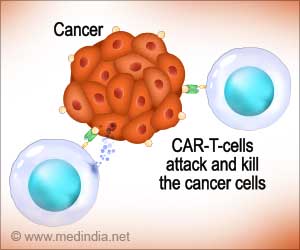
CAR T-cell therapy is a type of gene therapy where the patient’s T-lymphocytes are genetically altered to target cancer cells within the patient’s body.
CAR T-cell therapy is a type of gene therapy where the patient’s T-lymphocytes are genetically altered to target cancer cells within the patient’s body.
TOP INSIGHT

Did You Know?
One infusion could change everything for MS - a step closer to stopping disease progression. #cartherapy #medindia
What is Multiple Sclerosis (MS)?
Multiple sclerosis is a long-term autoimmune disorder that afflicts the central nervous system (brain and spinal cord). The immune system starts to fight the myelin sheath, which is a protective layer of nerves, and causes difficulties with movement, vision, memory, and thinking.There are over 150,000 people with MS in the UK, and nearly 7,100 new cases are diagnosed each year. Although it has a number of treatments that help to control symptoms or slow down the progression, none can fully suppress the recurrence or prevent the development of the disease.

World Multiple Sclerosis Day: Voices of Strength, Stories of Hope
Multiple Sclerosis affects millions worldwide with diverse symptoms; early diagnosis, multidisciplinary care, and awareness can improve lives and hope for patients.
Multiple Sclerosis affects millions worldwide with diverse symptoms; early diagnosis, multidisciplinary care, and awareness can improve lives and hope for patients.
How CAR T-Cell Therapy Works
The treatment that Emily received is known as obe-cel (obecabtagene autoleucel), which has already demonstrated potent effects in the treatment of blood cancers. Scientists are now looking at its possible use in autoimmune diseases, such as MS and lupus, as it can restore the immune system.CAR T-cell therapy involves reprogramming a patient’s own T cells (a type of immune cell) to target B cells, which are believed to trigger the autoimmune attack in MS. By removing these faulty immune cells, the treatment aims to stop the body from self-attacking itself, thus achieving long-term remission with a single infusion.
Dr Claire Roddie from the UCL Cancer Institute explained, “Our goal is to achieve long periods of disease remission with a one-time CAR T treatment.”
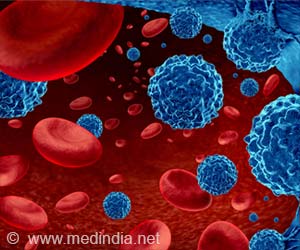
CAR T-Cell Therapy: Affordable Cancer Treatment for Multiple Myeloma
Discover the new CAR T-cell therapy that offers hope for multiple myeloma treatment making it affordable and accessible in India.
Discover the new CAR T-cell therapy that offers hope for multiple myeloma treatment making it affordable and accessible in India.
Inside the AUTO1-MS1 Clinical Trial
This is a Phase I clinical trial, known as AUTO1-MS1, led by Dr Wallace Brownlee, a UCLH neurologist. The research objective is to find out the safety and effectiveness of CAR T-cell therapy in individuals with relapsing or progressive MS who fail to respond to conventional drugs.By the beginning of 2027, researchers intend to enrol up to 18 patients worldwide, and this will provide fresh hope to patients who are exhausted of their treatment modalities.
Dr Frederick Vonberg from UCL added, “We encourage patients aged 18–60 with worsening MS to talk to their neurologist about possible referral to this trial.”
India’s First Homegrown CAR T-Cell Therapy to Treat Leukemia
From curiosity to groundbreaking cure: How a team in India developed a game-changing cancer therapy. You won't believe the results!
From curiosity to groundbreaking cure: How a team in India developed a game-changing cancer therapy. You won't believe the results!
A Step Toward a Brighter Future
The obe-cel therapy was developed by Dr Martin Pule at UCL and licensed by Autolus, which was already approved by the FDA and MHRA in some blood cancers. Its success in cancer treatment has led to testing of autoimmune diseases.The case of Emily is not merely a personal battle, but it is a new turn in MS research. “I refuse to let MS define my life,” she said. “I choose to be proactive and stay hopeful, not just for myself, but for everyone living with this condition.”
Redefining Possibilities for MS Patients
CAR T-cell therapy has already been used in multiple sclerosis in the first instance, and this could lead to curative and single-time treatment of autoimmune diseases. This trial, even at its initial phase, demonstrates the strength of scientific innovation and human resilience – offering hope that one day, MS progression may be stopped for good.Reference:
- UK patient first to trial CAR T cell therapy to treat multiple sclerosis - (https://www.ucl.ac.uk/news/2025/oct/uk-patient-first-trial-car-t-cell-therapy-treat-multiple-sclerosis)
Source-University College London
 Email
Email