MEDINDIA
 English
 हिन्दी
 Español
 français
 中文
中文
There is an urgent need for the development of human-like tumor models.

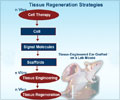
Tissue Engineering and Regenerative Medicine
This new field is an amalgamation of biology, medicine and engineering, and is believed to have mind -boggling implications if fully potentialized.
This new field is an amalgamation of biology, medicine and engineering, and is believed to have mind -boggling implications if fully potentialized.
TOP INSIGHT

Using tissue engineering researchers have created models for studying the bone-destroying activity of tumors such as the aggressive pediatric cancer Ewing's sarcoma.
"This article is an excellent example of the progress being made," says Methods Co-Editor-in-Chief John A. Jansen, Professor and Head, Department of Biomaterials, Radboud University Medical Center, The Netherlands.
Source-Eurekalert
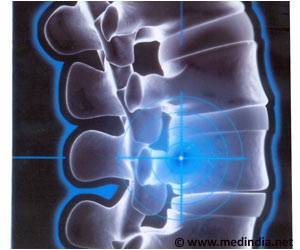
Tissue Engineering, Regenerative Medicine Can Repair Lumbar Spinal Disc Herniation
Researchers described new therapeutic approaches to repair herniated discs in the lumbar spine using novel tissue engineering and regenerative medicine strategies.
Researchers described new therapeutic approaches to repair herniated discs in the lumbar spine using novel tissue engineering and regenerative medicine strategies.

Current Trends In Global Regulation of Tissue Engineering and Regenerative Medicine
Regulation of the emerging areas of tissue engineering and regenerative medicine (TERM) is one of the key barriers to commercial and clinical success of TERM.
Regulation of the emerging areas of tissue engineering and regenerative medicine (TERM) is one of the key barriers to commercial and clinical success of TERM.
New Innovations in Tissue Engineering and Regenerative Medicine
Exponential growth in the field of tissue engineering and regenerative medicine has led to the development of new promising applications in human clinical trials.
Exponential growth in the field of tissue engineering and regenerative medicine has led to the development of new promising applications in human clinical trials.
 Email
Email