MEDINDIA
 English
 हिन्दी
 Español
 français
 中文
中文
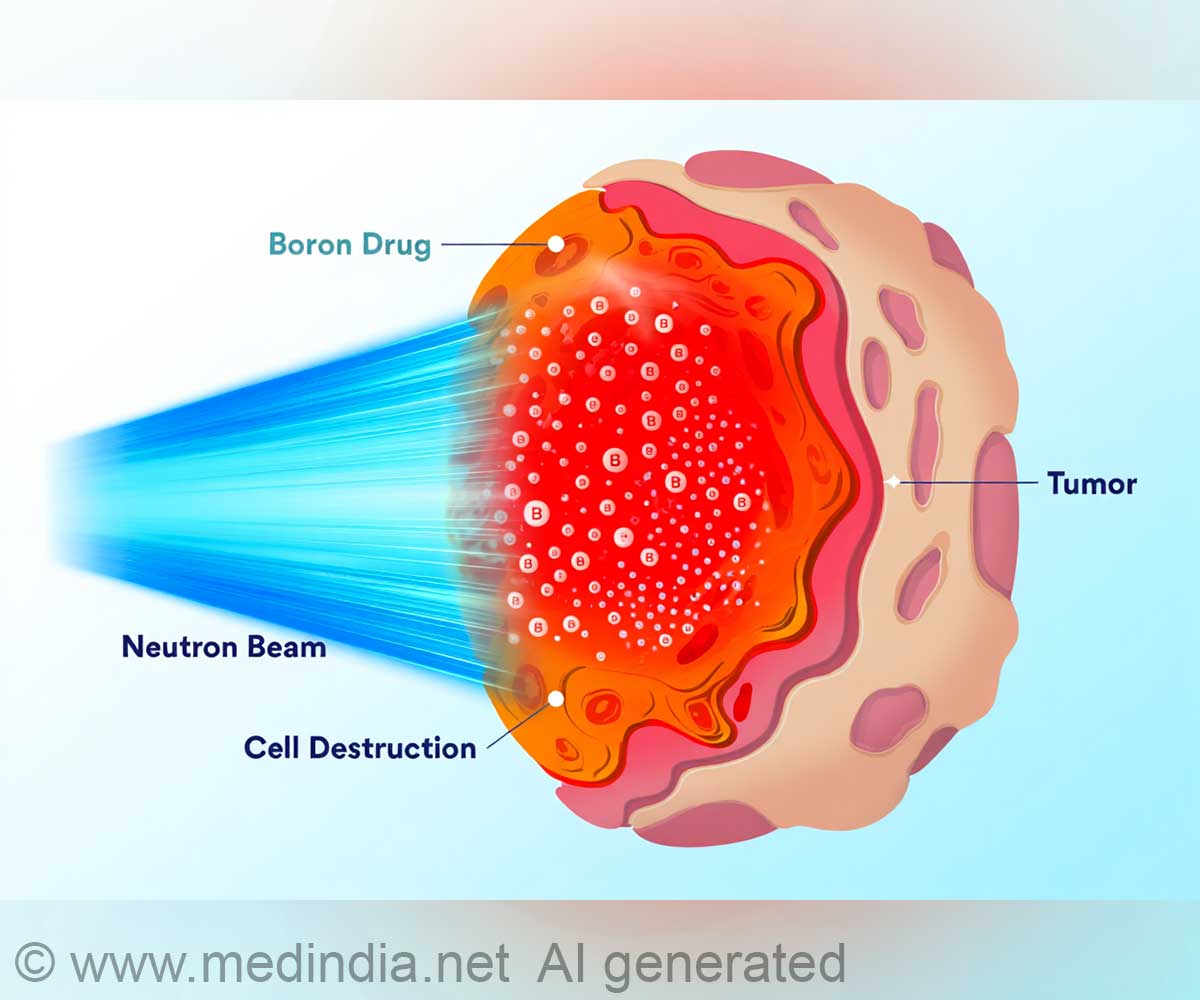
A boron drug is used to target tumors, where it gets gathered. On irradiation with neutrons, these tumor cells are killed.
Kinetic analysis of boron therapeutics in head and neck cancer cells by complementary bulk ICP-MS and single-cell (scICP-MS) approaches
Go to source). Scientists from a University of Birmingham traced boron in live tumor cells using a technology called single-cell ICP-MS, allowing them to observe when and how treatments for head and neck cancers enter and exit cells.

Head and Neck Cancers - Types, Risk Factors, Symptoms, Diagnosis, Treatments
Head and neck cancers usually occur in the squamous cells lining the moist, mucosal surfaces inside the head and neck.
Head and neck cancers usually occur in the squamous cells lining the moist, mucosal surfaces inside the head and neck.
TOP INSIGHT

Did You Know?
Keeping the #cells alive to measure #boron in head and neck cancer cells is the key challenge. Only the right environment can provide meaningful data.
#tumorcells #boron_cancercells #targetedtherapy
Irradiating Tumors, One Boron Cell at a Time
Boron Neutron Capture Therapy (BNCT) is a new form of therapeutic for head and neck cancer that involves patients taking a drug containing the element boron that accumulates in tumour cells.The tumour is subsequently irradiated with neutrons that interact with boron which selectively kills cancer cells. BNCT relies on the drug getting into cancer cells at a sufficient level and then remaining there long enough for the neutron irradiation to be administered.
With this newly tested technique, researchers can begin to understand how to most effectively deliver BNCT for patients with head and neck cancers as a precision treatment.

Boron Neutron Capture Therapy (BNCT) a New Treatment for Neck and Head Cancer
A new radiation therapy has been developed where large dose of radiation can be aimed to cancer using a well-tolerated boron compound
A new radiation therapy has been developed where large dose of radiation can be aimed to cancer using a well-tolerated boron compound
Improving the Cellular Environment for Keeping Cells Alive
“We believe the results are exciting because we now have the first direct evidence of how much boron is present in individual tumour cells, and how long it stays there. This information could help to optimise when neutron irradiation should be delivered relative to drug administration. By showing which transport pathways bring boron into cells, the work also offers clues for designing better drugs that accumulate more effectively. For the cancer drug discovery community, this study opens a new way of evaluating BNCT drug candidates.”
Lifetime Risk Calculator for Cancers
What are your chances for developing some common cancers in your lifetime - find out now.
What are your chances for developing some common cancers in your lifetime - find out now.
This challenge required the team to carefully optimise both the culture medium and the way cancer cells were introduced into the instrument. Without this step, the cells would rapidly deteriorate, making it impossible to capture meaningful data.

Quiz on Head and Neck Cancer
Head and neck cancers begin in squamous cells that line the moist, mucosal surfaces inside the head and neck. These kinds of cancers related to squamous cells are referred to as squamous cell carcinomas. Cancers of head and neck are ...
Head and neck cancers begin in squamous cells that line the moist, mucosal surfaces inside the head and neck. These kinds of cancers related to squamous cells are referred to as squamous cell carcinomas. Cancers of head and neck are ...
Reference:
- Kinetic analysis of boron therapeutics in head and neck cancer cells by complementary bulk ICP-MS and single-cell (scICP-MS) approaches - (https://pubs.rsc.org/en/content/articlelanding/2025/ja/d5ja00228a)
 Email
Email