MEDINDIA
 English
 हिन्दी
 Español
 français
 中文
中文
A new study has provided unexpected insight into a human immune response that is responsible for the failure of bone marrow transplant.
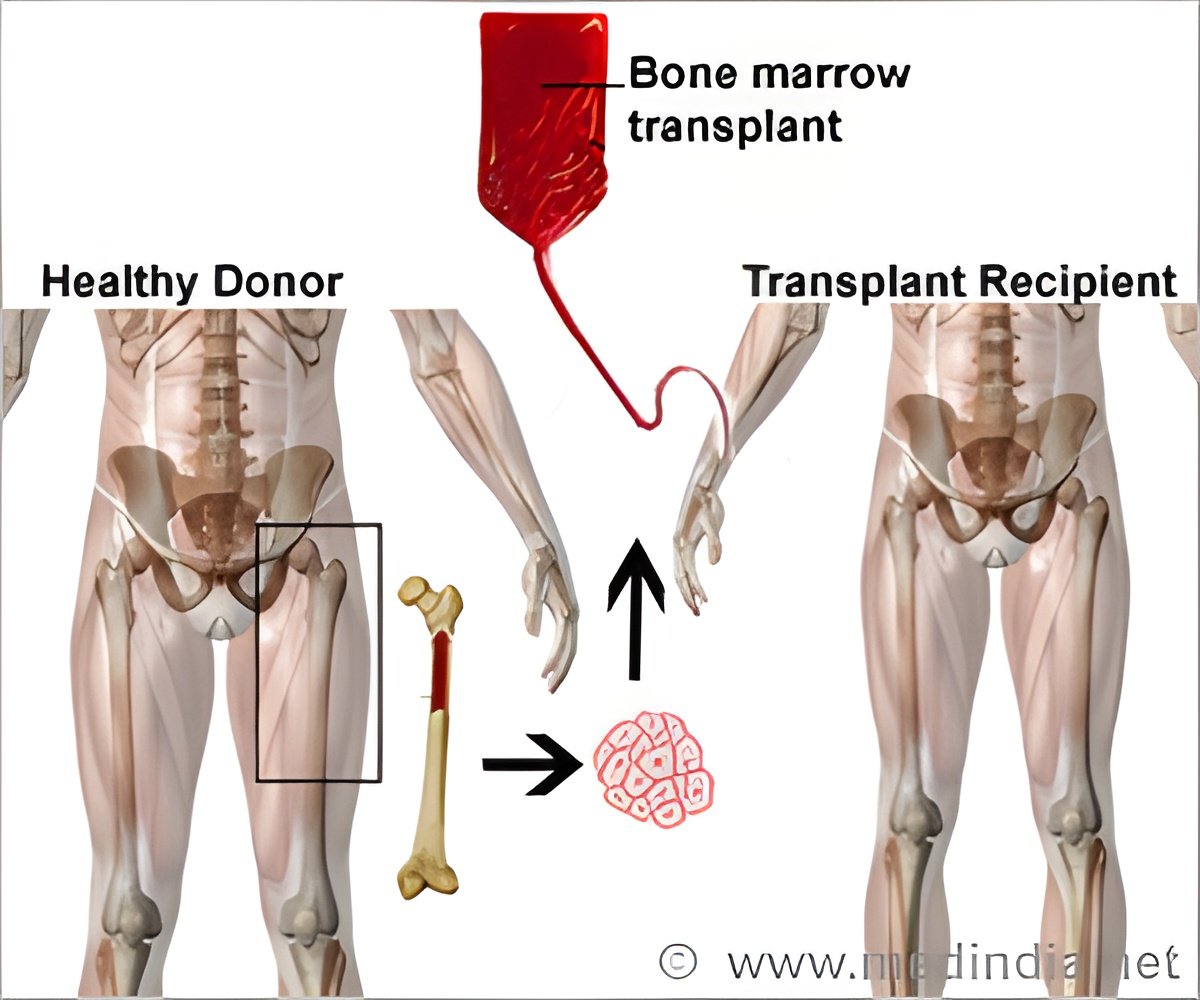
Bone Marrow Transplantation - Types - Procedure - Indications - Complications
Preferred Term is Hematopoietic stem cell transplantation. In this stem cell from bone marrow are injected into a recipient after treating them with growth factor.
Preferred Term is Hematopoietic stem cell transplantation. In this stem cell from bone marrow are injected into a recipient after treating them with growth factor.
TOP INSIGHT

On studying the X-ray crystal structure of the lethal factor present in stonefish venom, researchers have provided unexpected insight into a crucial human immune response that is responsible for the failure of bone marrow transplant therapies for treating leukemia.
In humans, perforin is an essential weapon unleashed to destroy virally infected and cancerous cells. Perforin proteins attach themselves to a diseased cell and assemble to form giant ring shaped holes, or pores, on the cell surface. Each pore contains around 20 perforin proteins that stick together in a symmetrical fashion. The pores are big enough to allow toxins to enter the cell, killing it from within. How these pores form is a mystery but the work on stonustoxin has revealed a key part of the pore assembly mechanism.
To make their discovery, the team used powerful synchrotron radiation to visualise the atomic structure of stonustoxin. Crucially, they found that the toxin contains two perforin-like proteins stuck together. By seeing how two of the proteins first interact, the researchers can build on this to understand how the full assembly of 20 perforin molecules forms a complete pore.
Breakthrough Treatments for Beta-Thalassemia Major
The month of May saw major announcements in breakthrough therapies by companies working on the Beta-Thalassemia curatives - LentiGlobin BB305 and Luspatercept.
The month of May saw major announcements in breakthrough therapies by companies working on the Beta-Thalassemia curatives - LentiGlobin BB305 and Luspatercept.
Co-lead author Dr Sheena McGowan said, "The lethal factor in stonefish venom is like a loaded gun - ready to fire as soon as it is injected into the foot of an unsuspecting victim."

Comparison of Outcomes of Peripheral and Bone Marrow Stem Cells Transplantation
Bone marrow transplant was first done successfully in 1968. The surgical procedure is required for treating those suffering from leukemia, aplastic anemia, Hodgkin’s disease.
Bone marrow transplant was first done successfully in 1968. The surgical procedure is required for treating those suffering from leukemia, aplastic anemia, Hodgkin’s disease.
An international group of researchers, led by the Peter MacCallum Cancer Institute and including Monash based Professor Whisstock and his team, are working to develop perforin inhibitors.

Myxoma Virus Improves Bone Marrow Transplants, Kills Some Cancer Cells
A virus named myxoma virus found in rabbits quells the unwanted side effects of a bone marrow transplant and destroys cancer cells, find researchers.
A virus named myxoma virus found in rabbits quells the unwanted side effects of a bone marrow transplant and destroys cancer cells, find researchers.
Source-Eurekalert
 Email
Email