MEDINDIA
 English
 हिन्दी
 Español
 français
 中文
中文
Shoulder replacement surgery was found to improve motion and reduce pain in patients with rheumatoid arthritis, finds Mayo Clinic study.
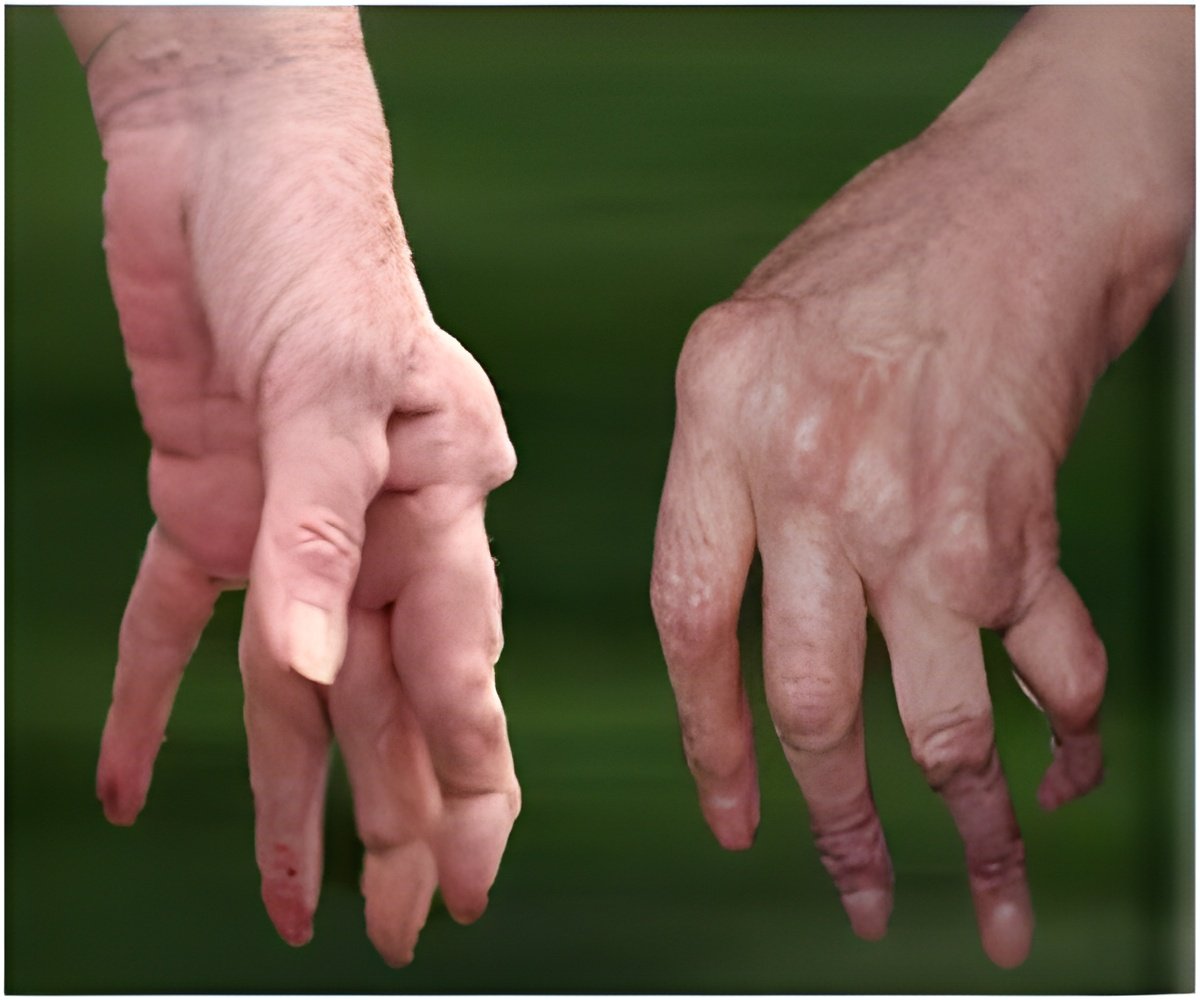

Rheumatoid Arthritis - Causes, Symptoms, Diagnosis, Treatment, FAQs
Rheumatoid arthritis is a chronic inflammatory disease that causes pain, swelling, stiffness and loss of function in the joints.
Rheumatoid arthritis is a chronic inflammatory disease that causes pain, swelling, stiffness and loss of function in the joints.
Shoulder replacement surgery usually is tried after simpler treatment techniques, such as medication, injections and physical therapy, fail and patients are in significant pain, Dr. Sperling says. It is important that the patient's rheumatologist, surgical team and physical therapist coordinate care to help the patient achieve the best outcome, he says. "Thankfully, the shoulder replacement surgery has really come a long way over the past 20 to 25 years. Typically now it's a one-hour surgery, one night in the hospital and the arm in a little soft sling for six weeks, and all the physical therapy can be done on their own at home," Dr. Sperling says. Many patients six weeks after surgery are able to drive again, sleep on the side that bothered them before and resume a wide variety of activities, such as golf and gardening, he says.
Source-Eurekalert

Quiz on Arthritis
Do you know that there are more than 100 types of arthritis? If you think that only old people suffer from arthritis, take this intriguing quiz to get your facts on arthritis.
Do you know that there are more than 100 types of arthritis? If you think that only old people suffer from arthritis, take this intriguing quiz to get your facts on arthritis.

Research Sheds Light on Pain Management of Hemiplegic Shoulder Pain Post Stroke
Previous research has shown that the incidence of shoulder pain post stroke is high.
Previous research has shown that the incidence of shoulder pain post stroke is high.

Breastfeeding Could Reduce Risk of Rheumatoid Arthritis
Breastfeeding for a longer duration has been associated with a reduced risk of rheumatoid arthritis (RA), reveals study published in Rheumatology.
Breastfeeding for a longer duration has been associated with a reduced risk of rheumatoid arthritis (RA), reveals study published in Rheumatology.
 Email
Email