MEDINDIA
 English
 हिन्दी
 Español
 français
 中文
中文
A new study identifies a genetic variant that can improve the safety and effectiveness of corticosteroids, the drug used to treat asthma and chronic obstructive pulmonary disease (COPD).

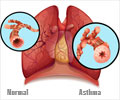
Asthma in Children and Adults - Facts, Treatment and Symptoms
Adult and childhood asthma are caused due to inflammation of the airways, but differences exist in their intensity and triggers.
Adult and childhood asthma are caused due to inflammation of the airways, but differences exist in their intensity and triggers.
TOP INSIGHT

Variation in a specific gene (platelet derived growth factor D; PDGFD) showed an increased risk of adrenal suppression, a side effect caused by corticosteroids.
In a world first scientists from the University's Institute of Translational Medicine, led by Professor Sir Munir Pirmohamed, conducted a genome-wide association study (GWAS) to pinpoint the genes responsible for increasing the risk of a person developing adrenal suppression.
This method searches a person's DNA (genome) for small variations, called single nucleotide polymorphisms (SNPs). Each person carries about three million SNPs, but if a particular SNP occurs more frequently in people with a particular condition than in people without the condition, it can pinpoint the underlying reason for the difference.

Asthma Patients Could Find Relief with New Drug Therapy
Novel drug that opens the lungs’ airways - an effective treatment for asthma patients
Novel drug that opens the lungs’ airways - an effective treatment for asthma patients
Individuals who had a particular variation in a specific gene (platelet derived growth factor D; PDGFD) had a markedly increased risk of adrenal suppression, both in the children with asthma and adults with COPD. This risk increased if the patient had two copies of the variation (one from their mother, one from their father). Children with two copies of the high risk variation in PDGFD were nearly six times more likely to develop adrenal suppression than children with no copies.
Pulmonary Function Tests to Diagnose COPD can Help Patients Reduce Health Care Costs
Testing airflow with pulmonary function testing is a key tool in diagnosing Chronic obstructive pulmonary disease (COPD), but it is underused.
Testing airflow with pulmonary function testing is a key tool in diagnosing Chronic obstructive pulmonary disease (COPD), but it is underused.
"Our highly novel findings offer the potential to develop personalized approaches therapy. This could involve screening patients to avoid or minimize steroid use if they are at high risk, or if steroids are needed, developing a specific plan to monitor their adrenal function.

Variations in Lung Branches may Increase the Risk of COPD
Higher risk of Chronic Obstructive Pulmonary Disease (COPD) might be associated with unusual lung branches finds a new study.
Higher risk of Chronic Obstructive Pulmonary Disease (COPD) might be associated with unusual lung branches finds a new study.
Source-Eurekalert
 Email
Email