MEDINDIA
 English
 हिन्दी
 Español
 français
 中文
中文
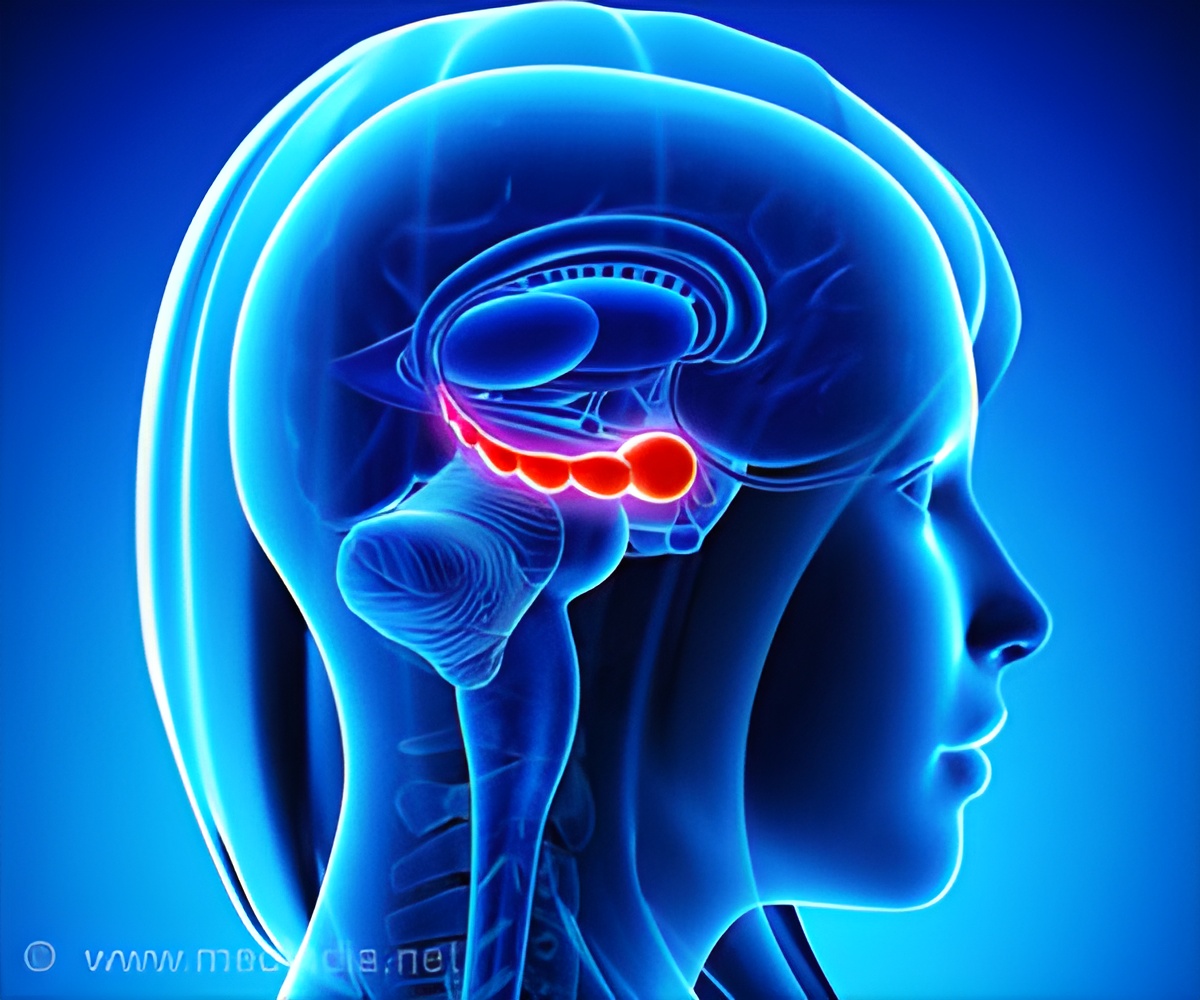
Cells in hippocampus are responsible for spatial perception and are activated in discrete positions of the environment, which which reason they are called place cells .
TOP INSIGHT

Basic knowledge on place cells could help in the development of technologies for the diagnosis and treatment of brain disorders related to hippocampal injury like Alzheimer's type dementia, amnesia, and cognitive impairment.
Read More..
In the first type of experiment, the researchers used a treadmill with a long belt, a well controlled spatial environment for mice, and trained the animals to run on the belt sequentially through a section cleared of any objects and another section furnished with small objects.
The second type of experiment was carried with rats foraging in a circular arena that was either completely empty or filled with objects.
To analyze neural activity, they implanted silicon probe electrodes in CA1, the subregion generating the main output of the hippocampus, and in CA3, a subregion of the hippocampus suspected of playing an important role in spatial memory formation.
Results of the two experiments were consistent. It was found that the hippocampus uses different neural circuits and information processing strategies depending on the environmental conditions.
In contrast, in a complex, object-strewn environment, a group of cells in the deep region of CA1 tend to be active and uses a phase code since the animal position is best predicted by the timing of a neuron action potentials relative to the ensemble of active neurons.

Hippocampus is the Link Between Family Income and Learning in Children
Hippocampus links low family income and decreased memory and learning in children from low socioeconomic areas. Changes in anterior hippocampus are responsible for the decrease in learning ability of children.
Hippocampus links low family income and decreased memory and learning in children from low socioeconomic areas. Changes in anterior hippocampus are responsible for the decrease in learning ability of children.
It is known that CA1 receive information from both the CA3 region and the entorhinal cortex. In this study, based on differences in fast network oscillations called "gamma", it was found that superficial CA1 cells receive information primarily from CA3 in the simple environments whereas deep CA1 cells receive information primarily from the entorhinal cortex in the complex environments.
Sebastien Royer, Principal investigator at KIST said "this study improves our understanding on how the hippocampus processes information, which is a critical step for understanding the general mechanisms of memory."
He added that "such basic level understanding will eventually help the development of technologies for the diagnosis and treatment of brain disorders related to hippocampal injury such as Alzheimer's type dementia, amnesia, and cognitive impairment, and might inspire the development of some AI."
The research team headed by Sebastien Royer, PhD has been gradually expanding the understanding of information storage and processing in memory-related brain areas using diverse approaches. In a study combining mouse experiment and neural network modeling published in the journal "Nature Communications", the same team identified the process by which granule cells in the dentate gyrus region of the hippocampus develop a uniform mapping of the space during spatial learning.
Source-Eurekalert
 Email
Email