MEDINDIA
 English
 हिन्दी
 Español
 français
 中文
中文
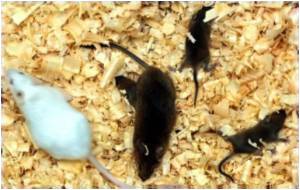
A research team has developed a novel mouse model to test cancer drugs.

About Chemotherapy Drugs
Chemotherapy drugs perform like ‘magic bullets’ to destroy cancer cells in the body.
Chemotherapy drugs perform like ‘magic bullets’ to destroy cancer cells in the body.
"Inducible RNAi-based mouse models represent an attractive way of reversibly con-trolling gene expression in order to study the targeted inactivation of genes. Our work is a feasibility study which considers whether inducible RNAi-based mouse models are suitable for predicting the toxicity of targeted cancer drugs," explained Klaus Strebhardt. "The similar results of the Plk1 knockdown in transgenic animals and cultivated primary cells have served to validate the preclinical relevance and the predictive value of the inducible iKD mouse model. This new animal model provides information on mechanism-based toxicities which could occur as a result of the pharmacological inhibition of Plk1. Our approach can be applied to many other can-cer-relevant target genes."
Source-Eurekalert

Quiz on Cancer
Cancer, is the second most leading cause of death worldwide. Cancer is not just one disease but many diseases. There are more than 100 different types of cancer. Take this quiz on and test how much you know about cancer.
Cancer, is the second most leading cause of death worldwide. Cancer is not just one disease but many diseases. There are more than 100 different types of cancer. Take this quiz on and test how much you know about cancer.
Treatment for Degenerative Diseases on the Anvil After Novel Mouse Model Study
A new mouse that may lead to new therapies for degenerative diseases has been developed by a team of researchers.
A new mouse that may lead to new therapies for degenerative diseases has been developed by a team of researchers.
New Type of Cancer Drugs Could Treat Half of Prostate Cancers
A new study involving an Indian-origin researcher has suggested that about half of prostate cancer patients could potentially benefit from a new class of cancer-fighting drugs.
A new study involving an Indian-origin researcher has suggested that about half of prostate cancer patients could potentially benefit from a new class of cancer-fighting drugs.
 Email
Email