MEDINDIA
 English
 हिन्दी
 Español
 français
 中文
中文
A new study involving an Indian-origin researcher has suggested that about half of prostate cancer patients could potentially benefit from a new class of cancer-fighting drugs.
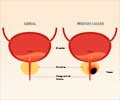
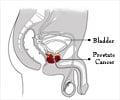
Prostate Cancer | Cancer of Prostate - Incidence, Prevention, Causes, Symptoms & Treatment
This cancer affects men over the age of 50 years and screening with rectal examination and PSA can help both in early detection and effective treatment
This cancer affects men over the age of 50 years and screening with rectal examination and PSA can help both in early detection and effective treatment
"This type of gene fusion occurs in about 50 percent of prostate cancers, but the genes involved have been notoriously difficult to target therapeutically. We found that instead of targeting the gene fusion product directly, we could block the function of critical interacting partners, such as PARP1," said Arul Chinnaiyan, a Howard Hughes Medical Institute researcher, director of the Michigan Center for Translational Pathology and S.P. Hicks Professor of Pathology at the U-M Medical School.
"Our studies suggest that the total population of patients who could benefit from PARP inhibition could be significantly expanded," says Chad Brenner, who is the first author on the study.
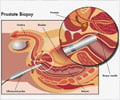
Prostate Biopsy-Preparations-Risks-Complications-Procedure-FAQ
Encyclopedia section of medindia gives general information about prostate gland
Encyclopedia section of medindia gives general information about prostate gland
Source-ANI
Prostate Cancer: Treatment Options - Surgery, Radiation Therapy, Hormone Therapy
Treatment options of prostate cancer includes waiting, surgery, radiation, hormone therapy, chemotherapy, cryosurgery or biologic therapy.
Treatment options of prostate cancer includes waiting, surgery, radiation, hormone therapy, chemotherapy, cryosurgery or biologic therapy.
 Email
Email


![Prostate Specific Antigen [PSA]](https://www.medindia.net/images/common/patientinfo/120_100/prostate-specific-antigen.jpg "Prostate Specific Antigen [PSA]")